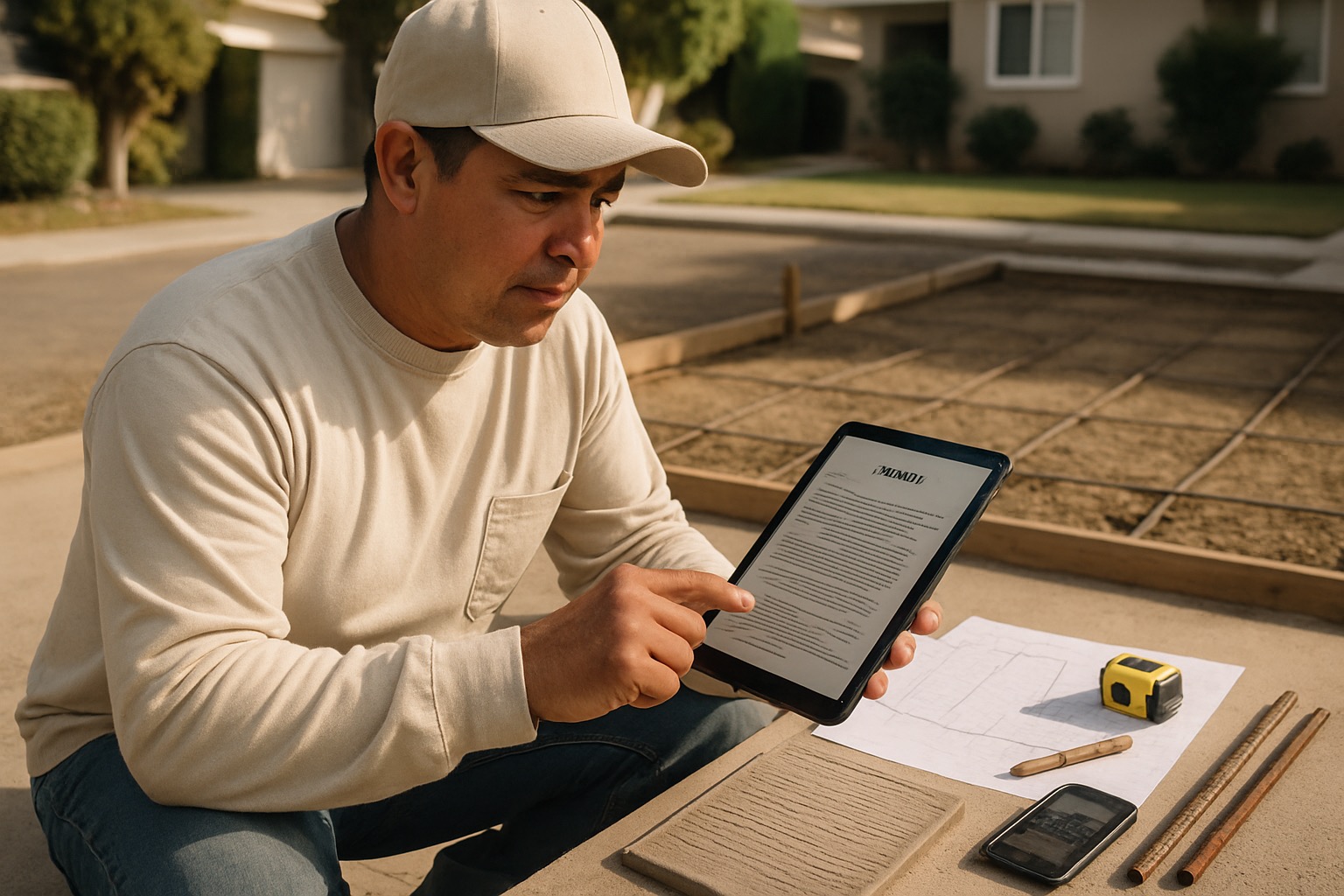
AI Estimating Software for Masonry Contractors in California: Faster Los Angeles Wall, Block, and Repair Bids
California masonry contractors can use AI-assisted estimating workflows to turn Los Angeles site photos, plans, and voice notes into tighter, reviewable bids.


AI estimating software for masonry contractors in California should help a contractor move from messy job inputs to a clear, reviewable bid faster. For a Los Angeles masonry company, that usually means turning plans, site photos, repair notes, wall dimensions, block counts, access constraints, and follow-up reminders into a scope the estimator can trust before it ever reaches the customer.
The goal is not to let software guess the final number. The goal is to make the first draft of the estimate faster, cleaner, and easier to check, especially when the job includes block walls, retaining walls, brick repair, stone veneer, stucco tie-ins, footings, drainage, demolition, or structural notes.
Direct answer: what AI estimating software should do for masonry bids
Good masonry estimating software should help you organize the work before you price it. A useful AI workflow can read the available inputs, pull out likely scope items, flag missing details, and help prepare a customer-ready estimate that the contractor reviews and adjusts.
For California masonry contractors, that means the software should help capture:
- Linear footage, height, thickness, openings, returns, corners, caps, and pilasters
- Material categories such as CMU block, brick, stone veneer, mortar, grout, rebar, anchors, caps, flashing, drainage board, and waterproofing where applicable
- Demolition, haul-off, surface prep, access, equipment, scaffold, and cleanup
- Plan notes, photos, and voice notes that change the scope
- Assumptions and exclusions that need to be clear before the customer signs
That is different from a simple square-foot calculator. Masonry bids often fail when a contractor prices the face of the wall but misses access, reinforcing, footing work, waterproofing, drainage, engineering notes, or the cleanup effort.
Why this matters for masonry contractors in California
California masonry work has real estimating pressure. In Los Angeles, a small wall repair might be straightforward, but many jobs involve tight driveways, hillside lots, property-line constraints, seismic considerations, retrofit details, stucco or veneer tie-ins, and permit or inspection questions. Even when the masonry portion looks simple, the surrounding conditions can change the bid.
A contractor looking at a block wall replacement in the Valley, a brick repair near an older Los Angeles home, or a stone veneer scope on a remodel cannot rely only on broad unit pricing. The estimate needs to separate what is known, what is assumed, and what must be verified.
Useful California-specific estimating questions include:
- Is this decorative masonry, a site wall, a retaining wall, a structural wall, a fireplace/chimney repair, or veneer?
- Are there engineering drawings, city notes, or inspection requirements tied to the work?
- Does the wall need footing repair, drainage, waterproofing, or reinforcement?
- Is access limited by a hillside lot, alley, neighbor property, landscaping, or existing hardscape?
- Will demo, dust control, debris haul-off, and protection of adjacent finishes take more time than the masonry itself?
When those details live in separate photos, text messages, plan sheets, and field notes, an estimator burns time just getting the job organized. AI-assisted estimating is valuable when it brings those inputs into one scope that can be reviewed without losing contractor judgment.
A practical AI-assisted workflow for masonry estimates
Use this workflow whether you estimate manually today or are comparing tools.
1. Collect the job inputs before pricing
Start with the raw information: plan sheets, wall elevations, site photos, repair close-ups, measurements, customer notes, and a short voice memo from the site visit. For Los Angeles jobs, include access photos whenever possible. A wall that looks easy from the street may take extra labor if materials must be carried through a side yard or staged on a slope.
2. Break the masonry scope into work zones
Do not price one blended line unless the job is tiny. Separate the estimate into logical zones, such as front wall, side return, damaged brick area, veneer section, retaining wall, footing, cap, drainage, or cleanup. This makes it easier to explain the bid and easier to adjust if the customer changes part of the scope.
3. Build quantities from the scope, not just the photo
Photos help, but they do not replace dimensions. For each zone, capture length, height, thickness, openings, corners, and whether one or both sides are finished. Then connect the quantities to real line items: block, brick, veneer, mortar, grout, rebar, wall ties, anchors, flashing, caps, waterproofing, drainage, demo, disposal, equipment, and labor categories.
4. Flag missing details before sending the number
The fastest bid is not always the best bid. A strong estimating workflow should surface questions like: Is the existing footing reusable? Is engineering required? Is waterproofing included? Who handles permits? Are repairs cosmetic or structural? Is matching existing brick or stone part of the scope?
Those questions protect the contractor from underbidding and help the customer understand what is included.
5. Turn the reviewed scope into a professional proposal
Once the contractor checks quantities and pricing, the estimate should become a clean proposal with scope, assumptions, exclusions, payment schedule, and next steps. Follow-up matters here. A clear bid that arrives quickly and explains the work is easier for a customer to approve than a vague number sent days later.
Common masonry estimating mistakes AI can help catch
AI will not replace an experienced masonry estimator, but it can help reduce avoidable misses when the system is built around contractor review.
Common mistakes include:
- Pricing a wall by square footage without adding demo and haul-off
- Missing footing, reinforcement, grout, caps, flashing, or drainage details
- Treating veneer, brick repair, CMU wall work, and retaining wall work as the same type of scope
- Forgetting access, staging, scaffold, protection, dust control, or cleanup
- Sending a bid without written assumptions and exclusions
- Failing to follow up while the customer is still comparing options
A good workflow should make these items visible before the estimate goes out.
How Estimado AI helps masonry contractors estimate faster
Estimado AI is built as AI estimating software for contractors who still want control of the final bid. A masonry contractor can bring in blueprints, job photos, videos, and voice notes. Estimado helps organize the scope, reason through the job, produce estimate structure, and prepare a professional estimate for contractor review.
The contractor stays in the loop. You review the quantities, labor, assumptions, and final customer-facing proposal before anything is sent. That matters for masonry because local conditions, access, repair judgment, and structural risk cannot be handled like a generic template.
For California contractors comparing broader tools, see Estimado's guide to AI estimating software for California contractors. If your masonry scope overlaps with flatwork, footings, pads, or hardscape, the related guide on AI estimating software for concrete contractors in California may also be useful.
Next step
If you want a faster way to turn masonry photos, plans, and voice notes into estimates your team can still review line by line, join the Estimado AI waitlist.
FAQ
What should masonry contractors look for in AI estimating software?
Look for software that can organize photos, drawings, scope notes, quantities, assumptions, exclusions, and follow-up tasks in one workflow. It should support contractor review instead of sending numbers automatically.
Can AI estimate block walls or brick repairs from photos alone?
Photos can help identify conditions and scope, but reliable estimates still need measurements, material choices, access details, and contractor review. If a dimension is missing, the better workflow is to ask for it instead of guessing.
Is masonry estimating software useful for small contractors?
Yes, especially when the owner is also the estimator. The biggest benefit is usually faster organization: fewer missed details, cleaner proposals, and less time spent turning field notes into a bid.
Should California masonry bids include assumptions and exclusions?
Yes. Masonry work can change once demo starts or once existing conditions are exposed. Written assumptions and exclusions help clarify what is included, what must be verified, and what would trigger a change order.