AI Estimating Software for Cabinets Contractors in California: Faster Los Angeles Bids From Photos, Plans, and Scope Notes
A practical workflow for California cabinet contractors using AI-assisted estimating to organize Los Angeles photos, plans, elevations, materials, hardware, install conditions, exclusions, and follow-up.

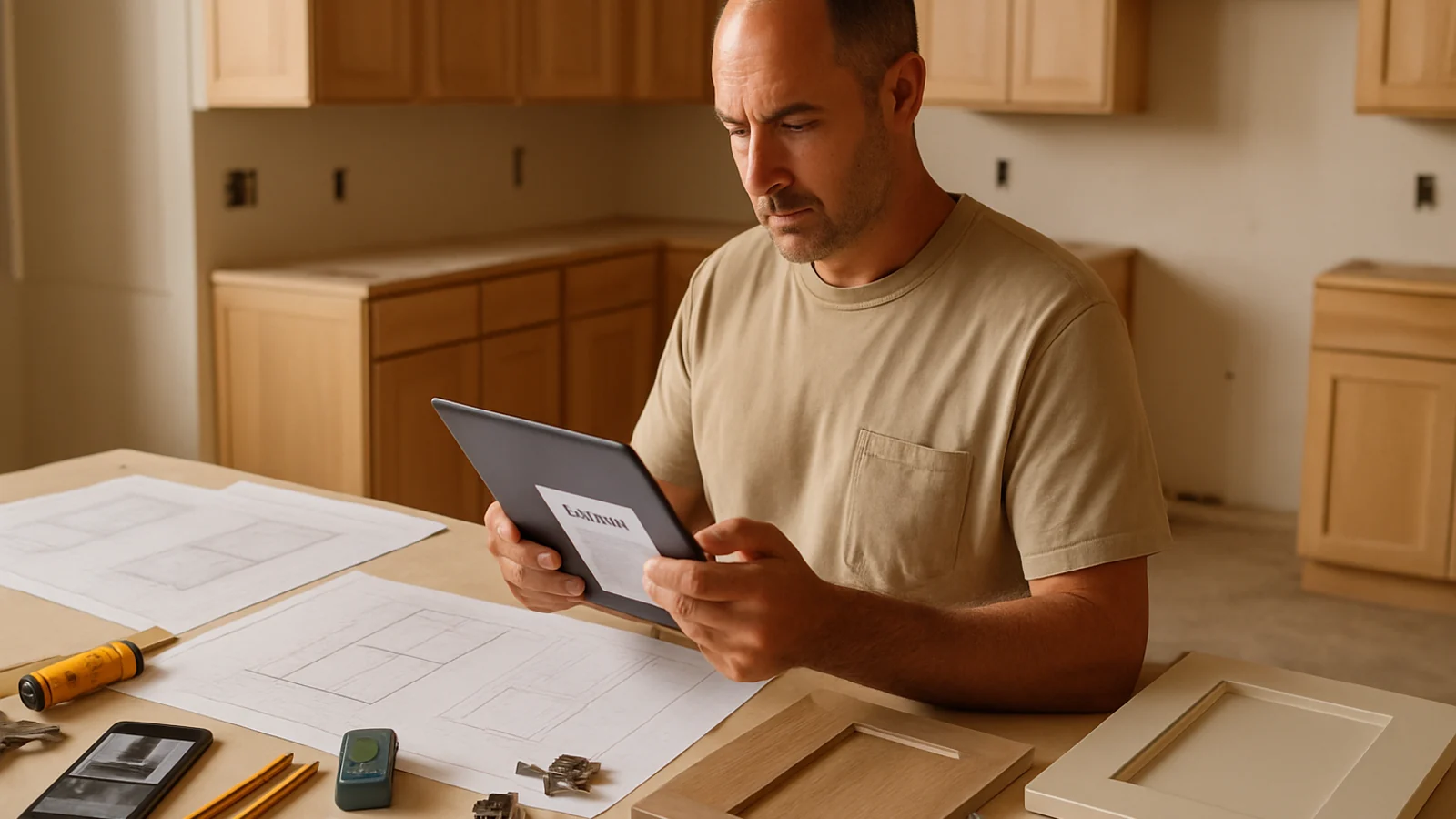
AI estimating software for cabinets contractors in California should help turn scattered project details into a cleaner bid draft: cabinet plans, field photos, elevations, door and drawer counts, finish selections, hardware, fillers, panels, crown, toe kicks, demolition, installation conditions, exclusions, and follow-up tasks. It should not pretend a cabinet estimate is just a linear-foot number or send a price without contractor review.
For Los Angeles cabinet contractors, that matters. A small ADU kitchenette, hillside custom kitchen, multifamily unit refresh, condo vanity package, retail millwork job, or whole-home remodel can all price differently because of access, wall conditions, appliance specs, finish expectations, seismic anchoring, countertop coordination, building rules, and customer decisions that are not final yet.
AI estimating software for cabinets contractors in California: the short answer
The best use of AI estimating software is to act like an organized junior estimator. It can help collect the job inputs, structure a first-pass cabinet bid, group the scope into useful sections, flag missing information, and prepare customer-friendly proposal language. The cabinet contractor still checks measurements, material choices, hardware, labor, installation risk, schedule, and margin before anything goes to the customer.
A review-ready cabinet estimate should usually make these items clear:
- cabinet locations by kitchen, bath, laundry, closet, garage, office, commercial counter, or built-in section
- box construction, face-frame or frameless style, door and drawer count, drawer box type, finish, panels, fillers, scribes, toe kicks, crown, light rail, and end panels
- hardware assumptions such as hinges, pulls, soft-close guides, pullouts, lazy susans, trash units, lift-ups, spice racks, and specialty organizers
- demolition, haul-off, wall patching exclusions, cabinet installation, appliance coordination, countertop readiness, plumbing or electrical responsibility, and finish touch-up
- open decisions the owner, designer, GC, architect, or countertop contractor must confirm before the price is locked
Why this matters for Los Angeles cabinet bids
California cabinet estimates get risky when the bid is rushed from a few photos, an old plan set, and a quick allowance. In Los Angeles, contractors may be quoting occupied homes, condo buildings with elevator reservations, narrow parking, ADUs, high-end custom finishes, commercial tenant improvements, tight GC schedules, or kitchens where appliance specs and countertops are still moving.
A photo can show the room, but it may not prove whether walls are plumb, whether floors are level, whether a soffit stays, whether a filler is wide enough, or whether the client expects custom panels on every appliance. A plan can show cabinet runs, but it may not show the final refrigerator model, hardware style, pullout package, crown detail, light rail, scribe conditions, finish match, or countertop overhang.
California also rewards clean scope language. If the work may require a properly licensed contractor, coordination with broader permitted remodel work, lead-safe precautions in older homes, or building-department review tied to plumbing, electrical, structural, or tenant-improvement scope, the estimate should avoid vague promises. The cabinet contractor does not need to turn a proposal into a code manual, but the bid should say what is included, what is excluded, and what others are responsible for.
A practical AI-assisted cabinet estimating workflow
Use this process when a California lead comes from a homeowner, designer, general contractor, property manager, architect, multifamily operator, or commercial tenant.
1. Capture the job like a cabinet estimator
Collect the inputs that usually live across texts, emails, paper notes, and plan folders: photos, cabinet elevations, floor plans, appliance specs, finish selections, hardware lists, pullout choices, site measurements, countertop requirements, delivery access, demolition notes, and voice notes from the walkthrough.
For a Los Angeles kitchen remodel, take wide photos of every wall and close-ups of corners, existing cabinets, soffits, uneven floors, plumbing locations, electrical locations, appliances, door swings, windows, stairs, elevator path, parking, and staging space. If the owner is still choosing painted shaker, white oak slab, inset doors, custom panels, or a hardware package, record it as an open decision instead of hiding it in memory.
A short voice note after the site visit can save office rework: “Los Angeles condo kitchen, frameless boxes, painted finish, quartz countertop by others, panels for refrigerator and dishwasher, two trash pullouts, one pantry pullout, elevator reservation required, appliance specs not final, old cabinets to be removed.”
2. Separate the cabinet package from install and coordination
A stronger cabinet bid separates fabrication or supply scope from delivery, installation, demolition, haul-off, trim, field fitting, countertop coordination, appliance panel coordination, finish touch-up, and exclusions. That makes the proposal easier to review and protects the contractor when the job changes.
If the price assumes cabinets are built from approved shop drawings, installed after rough plumbing and electrical are ready, and followed by countertop template by others, say that. If wall repair, flooring patch, plumbing reconnect, electrical work, appliance installation, countertop installation, tile backsplash, painting, or permit fees are excluded, list them before the customer compares your number to another bid.
3. Build line items that match the real work
AI can help organize cabinet estimating line items, but the contractor should verify each one. Review cabinet count, door and drawer count, panels, fillers, crown, toe kicks, scribes, exposed finished ends, drawer guides, hinges, pulls, specialty inserts, tall units, vanities, island panels, commercial millwork sections, delivery, installation crew time, protection, and disposal.
For plan-based work, check drawing dates and whether the cabinet elevations match the floor plan. For remodel work, mark which dimensions came from site measurements, which came from plans, and which are still assumptions. If a photo does not prove a measurement, the draft should ask for the missing dimension instead of inventing it.
4. Flag California and Los Angeles conditions before sending
Before the cabinet proposal goes out, check the conditions that can change labor, schedule, and risk:
- appliance specs, panel-ready requirements, clearances, fillers, and reveal expectations
- wall plumbness, floor level, old framing conditions, scribe work, and who fixes substrate problems
- condo, apartment, or commercial access rules, elevator reservations, delivery windows, parking, loading zones, and noise restrictions
- coordination with countertops, plumbing, electrical, backsplash, flooring, painting, and GC schedule
- finish approval, sample signoff, color match limits, field touch-up responsibility, and change-order triggers
- exclusions for hidden damage, hazardous materials, wall repair, cabinet modifications after approval, permit fees, after-hours work, and appliance installation
The goal is not to make the estimate complicated. The goal is to make the cabinet scope clear enough that the customer understands the price and the contractor has fewer surprises after fabrication or install begins.
5. Follow up around decisions that stall cabinet jobs
Many cabinet bids stall because the customer has not confirmed appliances, door style, finish, hardware, pullouts, countertops, layout revisions, or budget level. A useful follow-up should mention those exact decisions: “Once the refrigerator model, door style, and pullout package are confirmed, we can lock the cabinet scope and update the proposal.” That beats a generic “checking in” message.
AI-assisted follow-up can help keep those open decisions attached to the estimate, but the contractor still owns the relationship and the final price.
Common cabinet estimating mistakes to avoid
Watch for these California cabinet bid problems:
- quoting from linear feet alone without checking door and drawer counts, panels, fillers, hardware, finish, crown, toe kicks, installation, and access
- assuming walls are plumb, floors are level, appliances are final, and countertops are ready when they are not
- forgetting delivery, stairs, elevators, parking, protection, demolition, haul-off, occupied-home scheduling, and field scribing
- leaving appliance panels, pullouts, hardware, finish samples, countertop coordination, plumbing, electrical, and backsplash unclear
- failing to separate fabrication, supply, installation, demolition, haul-off, alternates, allowances, and exclusions
- responding late because photos, elevations, appliance specs, notes, and follow-up tasks are scattered across too many places
A polished PDF does not fix a thin cabinet scope. The strongest bid explains what is included, what is excluded, what is an allowance, what is an alternate, and what must be confirmed before production.
How Estimado AI helps
Estimado AI is being built as AI estimating software for contractors who want faster estimate drafts without giving up control. For cabinet contractors, that means using blueprints, elevations, job photos, videos, and voice notes to help prepare structured bid drafts with scope sections, material categories, hardware assumptions, install conditions, exclusions, alternates, and follow-up tasks.
Estimado is not meant to replace the estimator or auto-send cabinet bids. The contractor reviews measurements, materials, hardware, labor, access conditions, proposal wording, and final price before anything goes to the customer.
If your cabinet business wants to turn Los Angeles plans, job photos, walkthrough videos, voice notes, and scope decisions into review-ready bid drafts faster, join the Estimado AI waitlist.
For related workflows, see AI estimating software for California contractors, AI estimating software for cabinets contractors in Arizona, and the Estimado contractor estimating blog.
Next step
If cabinet bids are slowed down by scattered photos, unfinished appliance decisions, unclear hardware packages, missing elevations, access constraints, and late follow-up, tighten the intake and review process first. A faster bid only helps when the scope is clear enough to build and install without avoidable confusion.
FAQ
Can AI help estimate cabinets from kitchen photos?
AI can help organize visible scope from photos, videos, and notes, especially cabinet locations, demolition, access, existing conditions, and open decisions. A cabinet contractor should still confirm measurements, plans, hardware, finish, appliance specs, scribe conditions, and installation risk.
Can AI estimate cabinets from plans or elevations?
AI can help turn cabinet plans, elevations, and scope notes into a structured bid draft, but the contractor should verify drawing dates, dimensions, appliance specs, door and drawer counts, materials, hardware, panels, fillers, and install conditions before pricing.
What should a California cabinet estimate include?
It should include cabinet locations, materials, construction style, door and drawer counts, finish assumptions, hardware, panels, fillers, trim, delivery, installation, demolition, haul-off, exclusions, alternates, access constraints, and decisions that still need confirmation.
Is cabinet estimating software useful for experienced cabinet contractors?
Yes, when it reduces office workload and keeps job details organized. Experienced cabinet contractors can use AI to speed up the first bid draft while still reviewing measurements, shop drawings, finish details, labor, schedule, and margin themselves.
Does Estimado AI send cabinet bids automatically?
No. Estimado is designed to help prepare review-ready estimate drafts. The contractor checks the scope, edits where needed, approves the final number, and decides when to send it.