AI Estimating Software for Flooring Contractors in Arizona: Faster Phoenix Bids From Photos, Plans, and Voice Notes
A practical AI-assisted estimating workflow for Arizona flooring contractors bidding Phoenix tile, LVP, slab prep, transitions, exclusions, and follow-up.

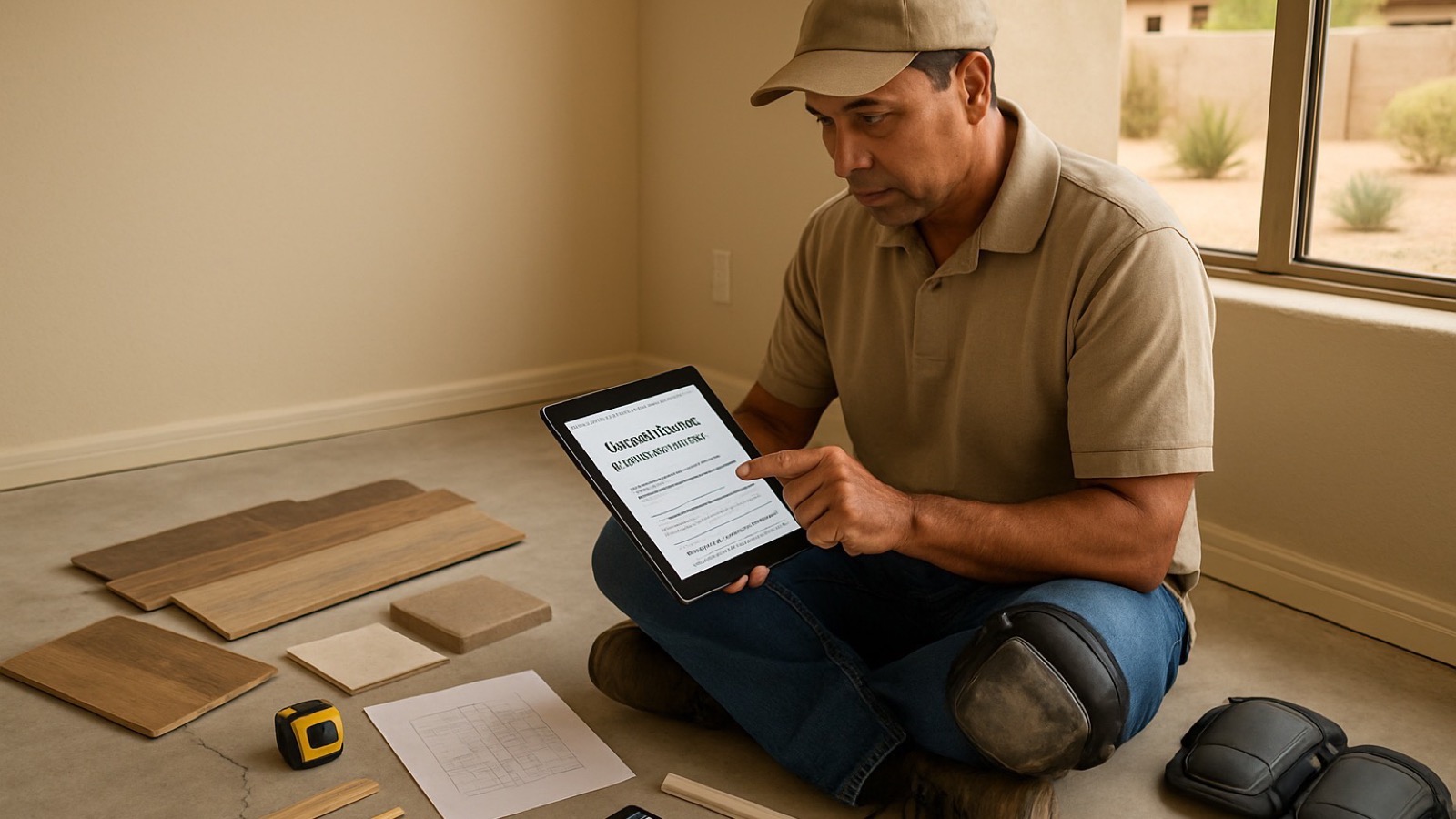
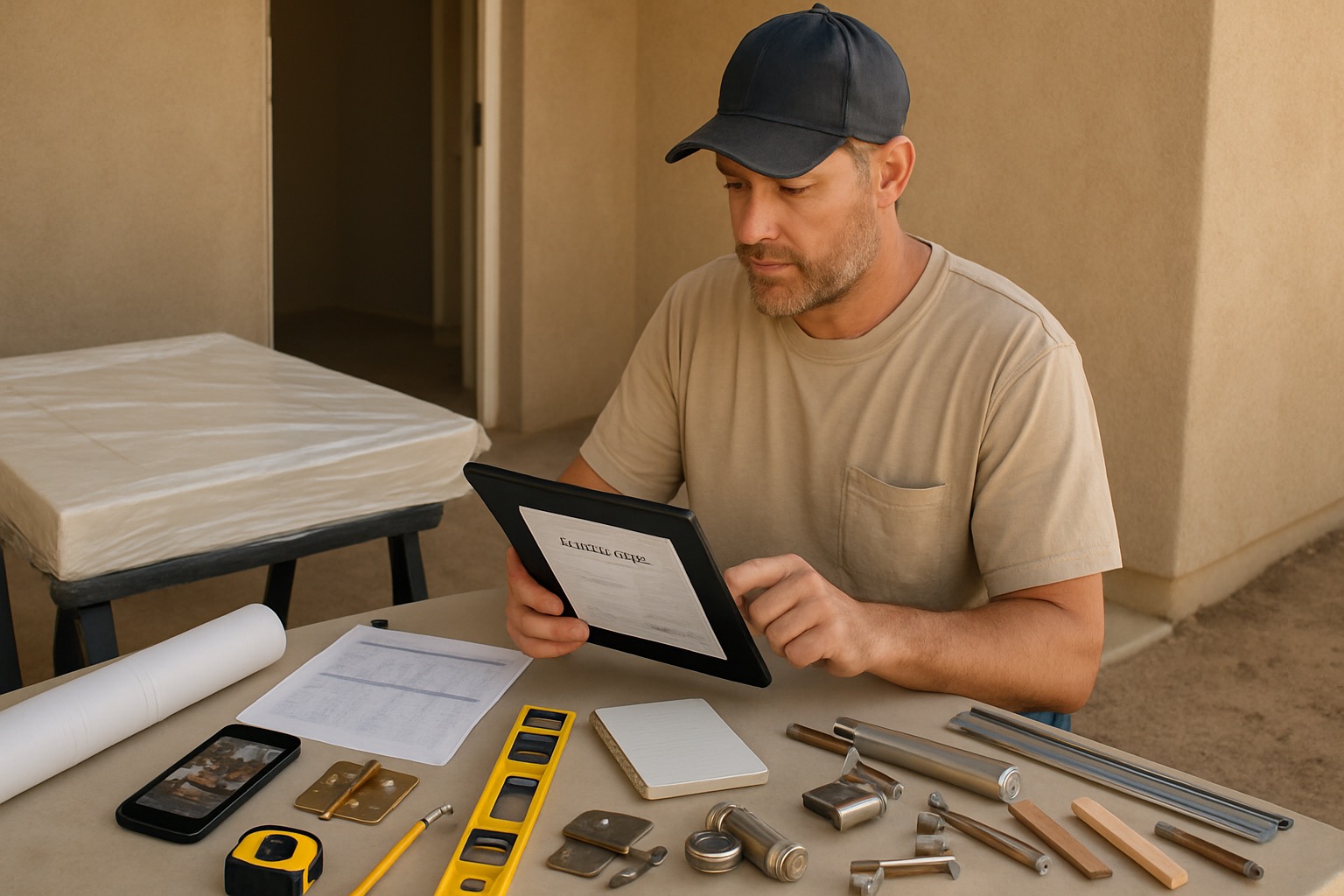
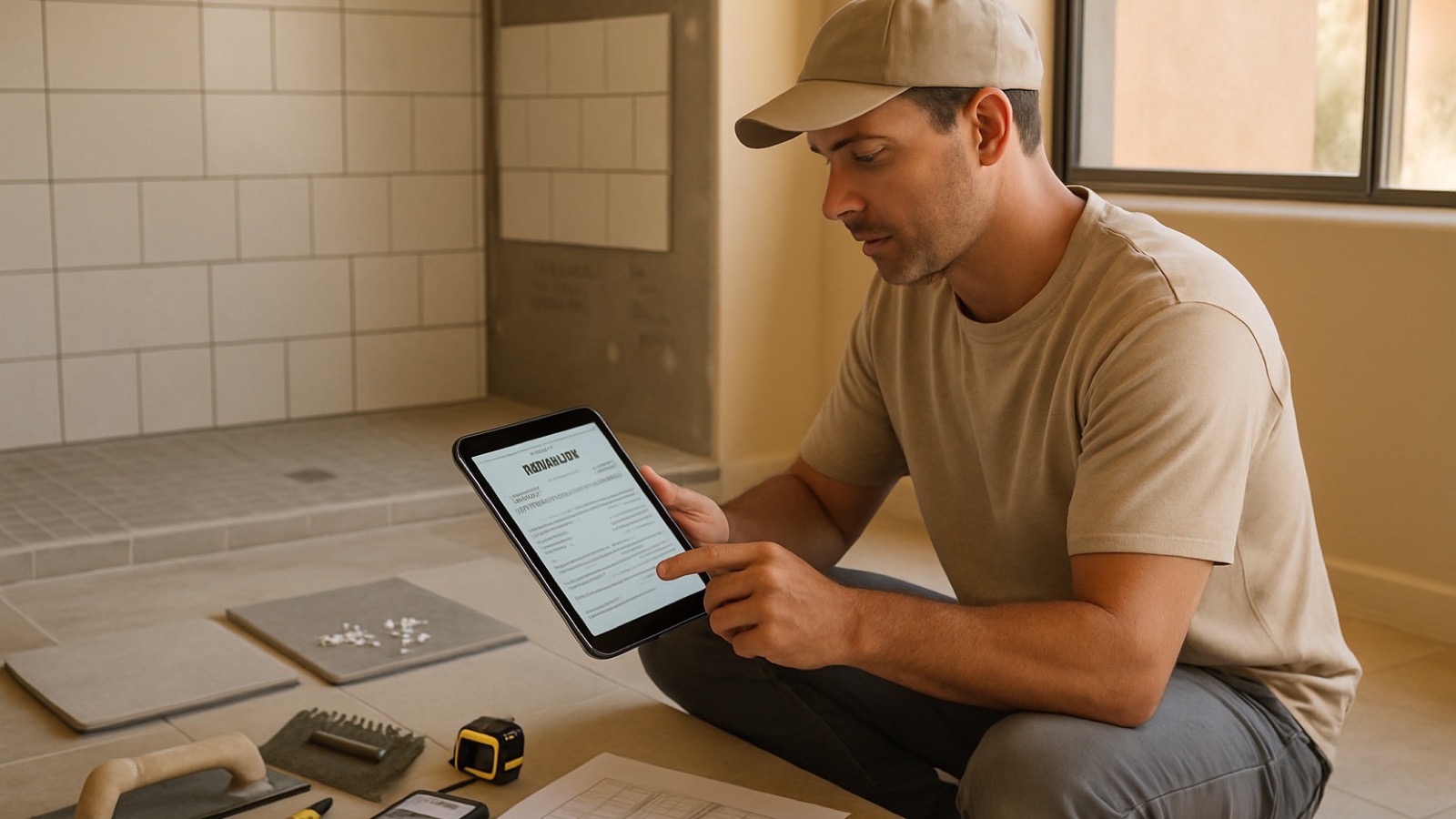
AI estimating software for flooring contractors in Arizona should help flooring pros turn scattered job information into a cleaner bid faster. The useful version is not a magic price button. It is a workflow that organizes photos, plans, room measurements, takeoff notes, substrate conditions, material choices, transitions, floor prep, exclusions, and follow-up into an estimate draft the contractor can review before sending.
For Phoenix flooring contractors, speed matters, but so does scope control. Arizona jobs can involve slab cracks, dust, heat, sun exposure at doors and windows, monsoon-season moisture questions, tile demo, self-leveling decisions, stair details, baseboard handling, and homeowners comparing several bids. A fast estimate still has to explain what is included, what is excluded, and what needs confirmation before work starts.
AI estimating software for flooring contractors in Arizona: the short answer
For Arizona flooring work, AI estimating software is most useful when it acts like an organized junior estimator. It can help sort job photos, blueprints, measurements, voice notes, material selections, and customer requests into reviewable estimate sections.
A flooring contractor still needs to check the final scope, quantities, labor, material selections, waste factor, prep assumptions, and risk. The contractor should decide the final number and approve the proposal before it goes to the customer.
A strong Arizona flooring estimate usually needs to make these details visible:
- Existing floor type, demo scope, haul-off, dust control, and protection
- Slab condition, cracks, moisture concerns, patching, grinding, leveling, and primer assumptions
- Material type, layout direction, pattern, underlayment, adhesive, grout, trim, stair nosing, and transitions
- Square footage by room, closets, hallways, waste factor, attic stock, and allowance notes
- Baseboards, quarter round, door cuts, appliance moves, toilets, furniture, and customer responsibilities
- Exclusions, alternates, change-order triggers, and follow-up after the bid
Why this matters for Phoenix and Arizona flooring contractors
Flooring bids in Arizona often look simple until the installer walks the slab. A Phoenix lead might start with a few photos of tile, a customer voice note asking for LVP, and a rough square footage from Zillow. That is not enough to price cleanly. The estimate should ask whether tile demo is included, whether thinset removal is included, whether slab grinding or leveling is included, where transitions happen, how baseboards are handled, and whether the material has already been selected.
Arizona climate adds real job context. Dry heat, strong sun exposure, dust, and seasonal monsoon moisture can all affect how contractors think about acclimation, substrate review, adhesive selection, thresholds, and customer expectations. The bid should not pretend every floor is ready for install just because the room dimensions are known.
Phoenix-area remodels also create coordination issues. Condos, tract homes, older slabs, occupied homes, short rental turns, and GC-led renovations all need different assumptions for access, staging, protection, work hours, furniture moving, disposal, and return trips. If those details stay buried in text messages, they are easy to miss.
A practical AI-assisted flooring estimating workflow
Use this workflow before sending an Arizona flooring proposal.
1. Capture the full job story
Collect wide photos of each room, close-ups of the existing flooring, doorway transitions, stairs, closets, baseboards, cracks, moisture stains, high spots, low spots, thresholds, appliances, toilets, and access paths. Add plans or a sketch when available. Record a short voice note while the walkthrough is fresh.
A useful Phoenix voice note might sound like: “Customer wants LVP in living room, hallway, three bedrooms, and closets. Existing carpet in bedrooms, tile in living room. Include carpet demo, tile demo as alternate, baseboards to be removed and reinstalled if reusable, slab prep allowance only, transitions at baths and patio door, furniture by owner, hidden slab issues excluded.”
That short note gives the estimate more context than square footage alone.
2. Separate measure, material, prep, and customer decisions
Flooring bids get messy when the proposal has one line for “install flooring.” Break the draft into sections the contractor can review:
- Measure and takeoff: room square footage, closets, hallways, waste, pattern, attic stock
- Demo and disposal: carpet, pad, tack strip, tile, thinset, baseboards, haul-off, dust control
- Substrate prep: cracks, grinding, patching, leveling, primer, moisture testing or mitigation by others
- Installation: LVP, laminate, engineered wood, tile, underlayment, adhesive, grout, spacers, trims
- Details: transitions, stair nosing, door undercuts, toilets, appliances, furniture, protection, cleanup
- Commercial terms: alternates, allowances, exclusions, payment schedule, timeline, follow-up tasks
This structure helps a busy owner-estimator review the bid quickly without losing the details that protect margin.
3. Use photos and plans to flag missing scope
AI can help compare the intake package against common flooring estimate categories. If photos show tile but the note only mentions new LVP, the draft should flag demo and thinset removal. If a plan shows closets and the customer only measured bedrooms, the draft should flag missing square footage. If a photo shows a sliding patio door or bathroom threshold, the estimate should call out transitions.
The point is not for software to guess hidden conditions. The point is to make missing assumptions visible before the contractor sends the number.
4. Build alternates for uncertain floor prep
Arizona flooring contractors should avoid hiding every unknown in the base price. Use alternates and allowances when scope is not confirmed. For example, a base bid can include carpet demo and LVP installation, with alternates for tile demo, extensive thinset removal, slab grinding, self-leveling, baseboard replacement, and moisture mitigation if needed.
That gives the customer a clearer bid and gives the contractor a better paper trail if the slab changes the job after demo.
5. Follow up with scope, not only price
After the proposal goes out, follow up on decisions that change cost: final material selection, pattern, baseboards, demo choice, furniture moving, stair details, transition style, slab prep allowance, and schedule. A follow-up message that reminds the customer what is included is more useful than just asking, “Are we good to go?”
Common flooring estimating mistakes to avoid
Watch for these problems on Arizona flooring bids:
- Pricing from rough square footage without confirming closets, hallways, cuts, pattern, and waste
- Forgetting tile demo, thinset removal, dust control, haul-off, and protection
- Treating slab cracks, high spots, low spots, moisture concerns, and leveling as vague “prep”
- Leaving baseboards, quarter round, door cuts, toilets, appliances, and furniture unclear
- Sending one lump-sum number with no alternates or exclusions
- Failing to follow up after the estimate with the scope decisions that matter
A cleaner estimate does not need to be longer. It needs to make the right assumptions easy to see.
How Estimado AI helps
Estimado AI is being built as AI estimating software for contractors who want faster bids without giving up control. For flooring contractors, that means using job photos, blueprints, videos, and voice notes to help create structured estimate drafts with line items, scope notes, alternates, exclusions, and customer-ready language.
Estimado is not a fully autonomous estimator. The contractor stays in the loop, reviews quantities, edits the scope, confirms material and labor assumptions, approves the proposal, and decides when to send it.
If your flooring team wants a faster way to turn photos, plans, measurements, voice notes, and scope decisions into reviewed estimate drafts, join the Estimado AI waitlist.
You can also compare related workflows on the Estimado blog, including AI estimating software for flooring contractors, AI estimating software for flooring contractors in Florida, and AI estimating software for Arizona contractors.
Next step
If flooring estimates are slowed down by incomplete photos, rough square footage, unclear prep, missing transitions, and late follow-up, tighten the intake first. Better job information makes AI-assisted estimating more useful and helps Arizona flooring contractors respond faster without bidding blind.
FAQ
Can AI estimate a flooring job from photos?
AI can help organize photos, room notes, measurements, material choices, and proposal language. A flooring contractor still needs to verify dimensions, substrate condition, prep assumptions, labor, materials, waste, and exclusions before sending the estimate.
What should Arizona flooring contractors include in an estimate?
A strong Arizona flooring estimate should define demo, disposal, slab prep, material, waste, underlayment or adhesive, transitions, baseboards, stairs, furniture, protection, allowances, exclusions, and change-order triggers.
Is flooring estimating software useful for experienced contractors?
Yes, when it reduces office work and keeps the estimate organized. Experienced contractors can use AI-assisted workflows to structure photos, plans, voice notes, line items, alternates, follow-up tasks, and customer-facing scope language faster.
Should slab prep be a separate line item?
Often yes. Slab cracks, high spots, low spots, grinding, patching, leveling, and moisture concerns can change the job. Separating prep assumptions helps the customer understand what is included and what may require an approved change.
Does Estimado AI send flooring estimates automatically?
No. Estimado is designed to help prepare estimate drafts. The contractor reviews, edits, approves, and decides when to send the final estimate.