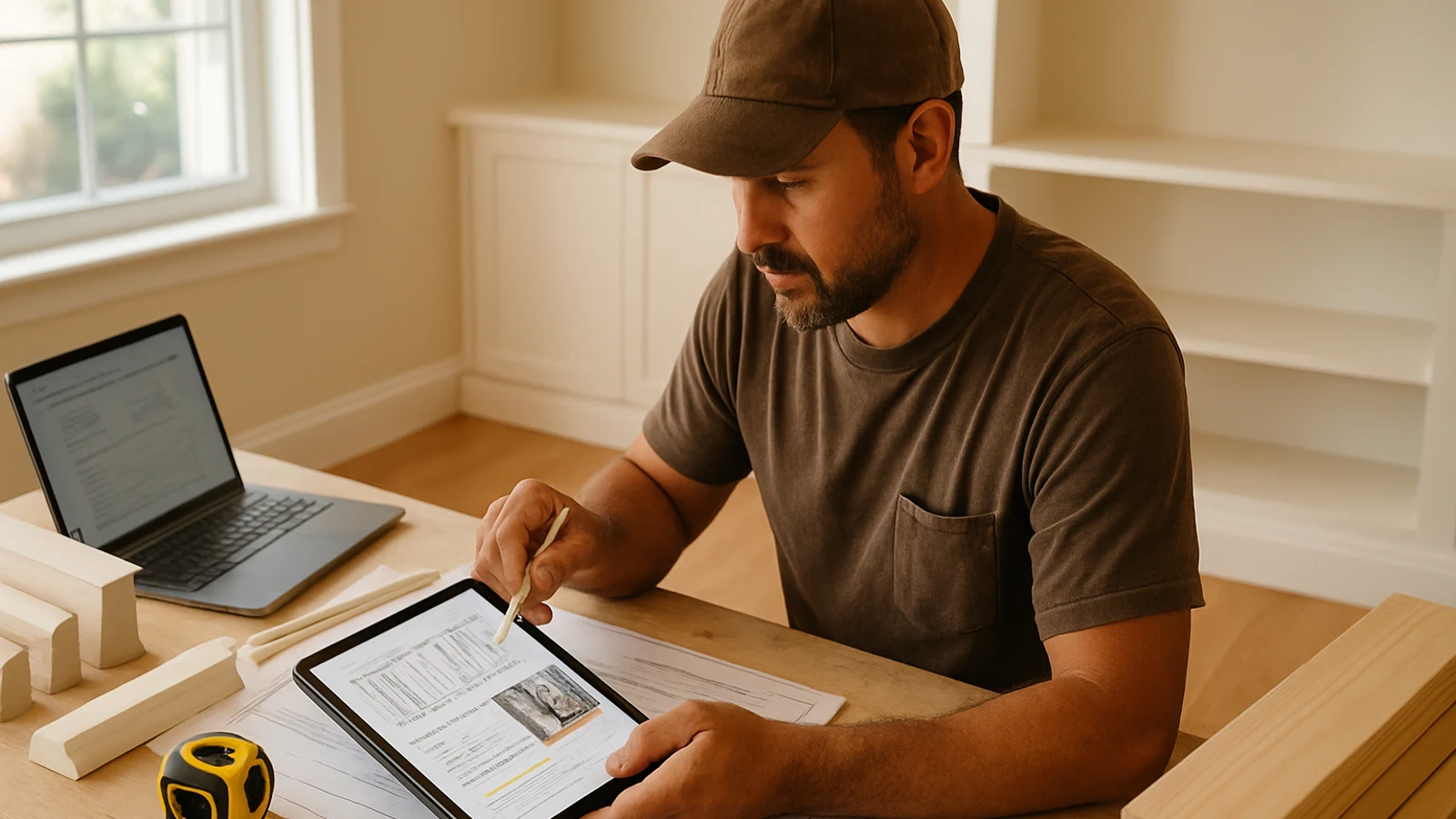
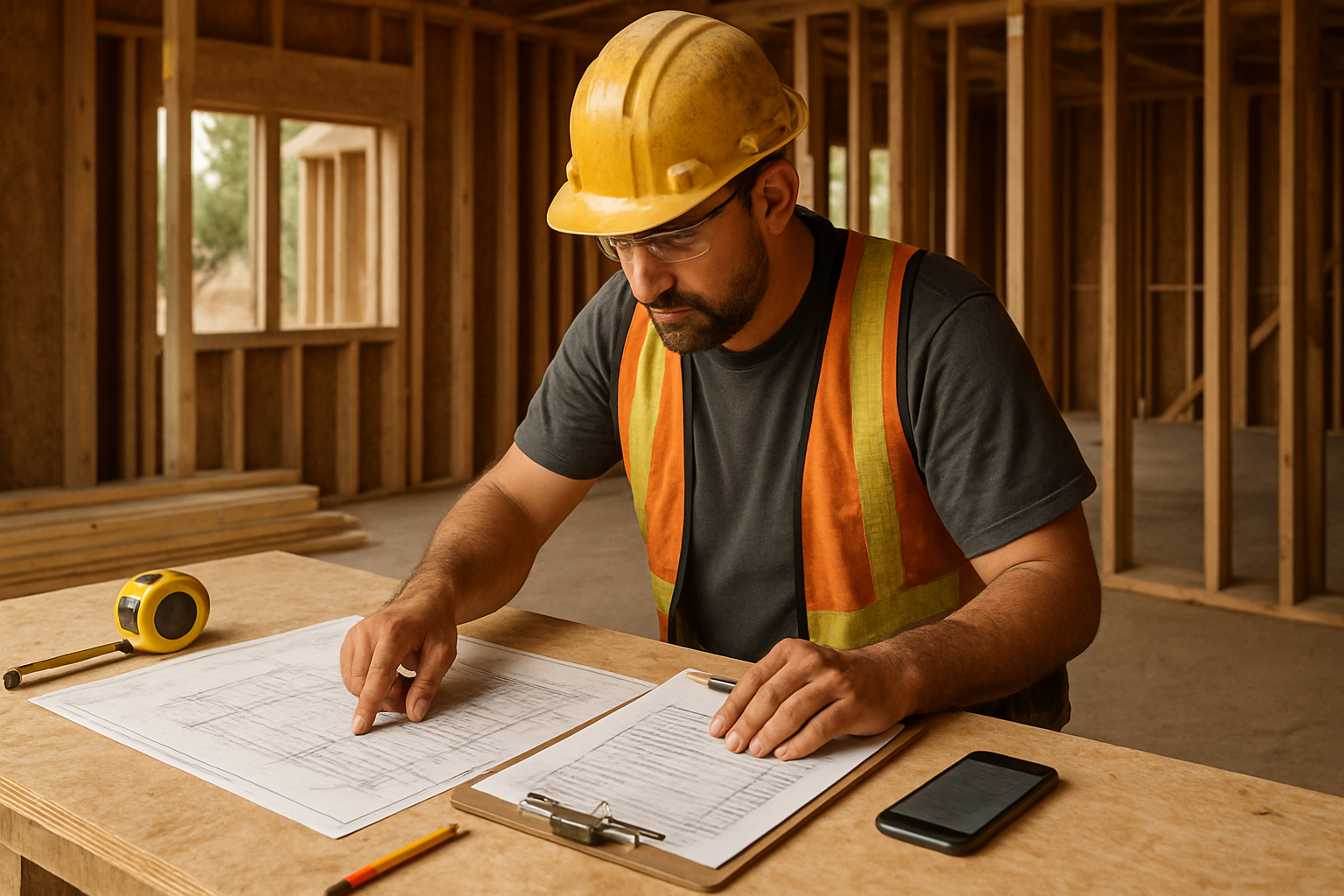
AI Estimating Software for Arizona Contractors: Faster Bids From Photos, Plans, and Field Notes
Arizona contractors work around heat, dust, monsoon damage, stucco, flat roofs, remodel demand, and fast Phoenix-area lead flow. This guide explains how AI estimating software can help turn photos, plans, videos, and field notes into cleaner review-ready bids without taking control away from the contractor.

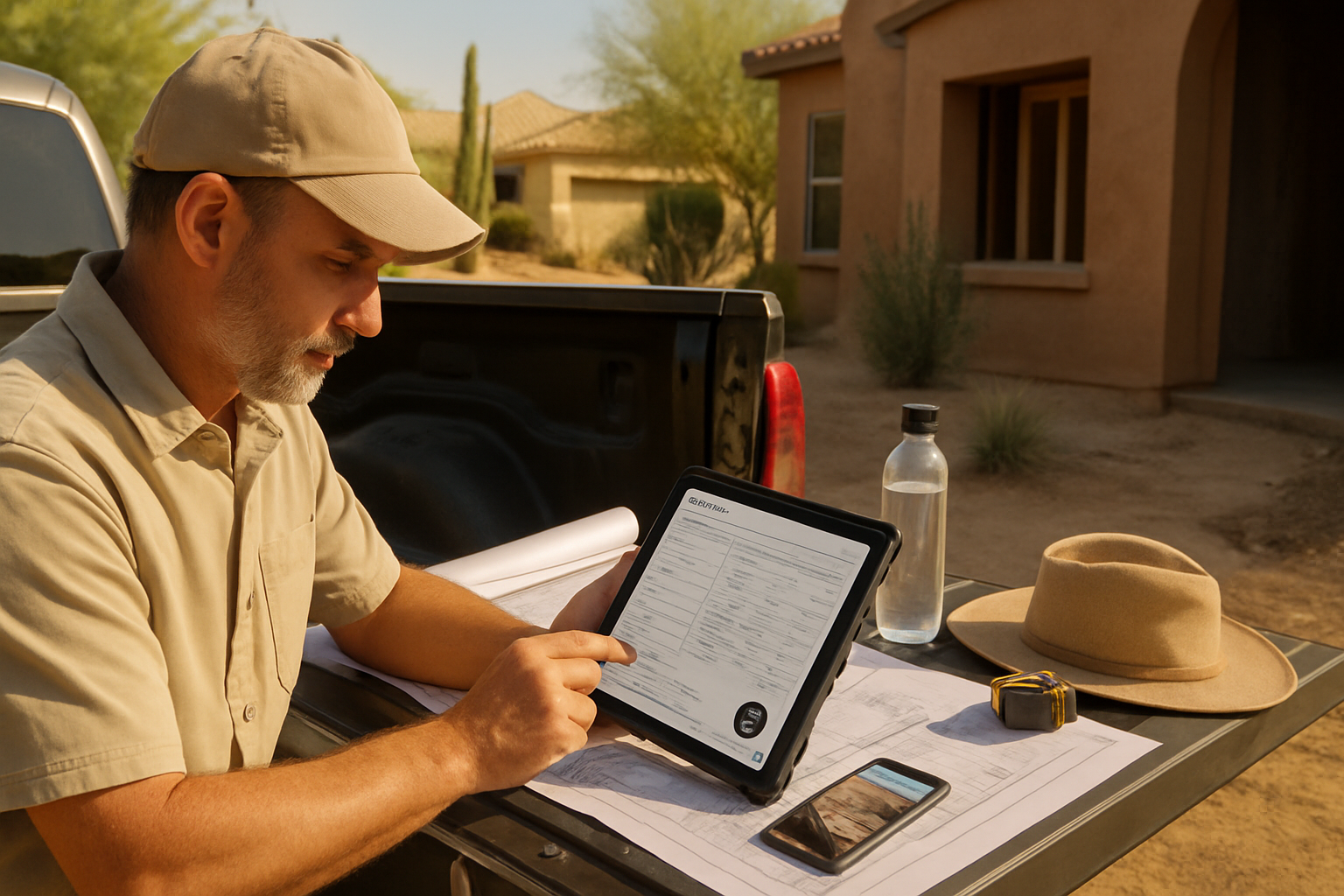
AI estimating software for Arizona contractors should help turn job photos, blueprints, videos, and field notes into a professional estimate faster, without pretending the software knows more than the contractor. In Arizona, a good bid has to account for more than square footage. Heat, dust, sun exposure, monsoon rain, stucco repairs, flat roof details, Phoenix-area permitting, and material availability can all change the real scope.
This guide is written for Arizona contractors who want faster estimates, cleaner proposals, and less office work while still reviewing every number before it goes to the customer.
AI estimating software for Arizona contractors: the short answer
AI estimating software for Arizona contractors is useful when it organizes messy job inputs into a scope, quantities, labor review, assumptions, exclusions, and a customer-ready proposal. The right workflow is not “let AI price the job and send it.” The right workflow is: capture the job clearly, let software draft the estimate structure, check the local risk items, adjust pricing, and approve the bid yourself.
For an Arizona contractor, the estimate should flag questions like:
- Is this a Phoenix remodel, a Tucson repair, a Scottsdale finish upgrade, or a job outside the normal service area?
- Does the work involve stucco patching, flat roof tie-ins, exterior coatings, block walls, pavers, shade structures, or dust control?
- Will summer heat, monsoon weather, drying time, or material staging affect labor and schedule?
- Does the job require a city permit, trade license check, inspection, HOA approval, or utility coordination?
- What assumptions need to be written down so the customer understands what is included?
AI helps most when it forces those items into a clear review checklist before the contractor sends the proposal.
Why this matters for Arizona contractors
Arizona contractors often bid in a fast-moving market. A Phoenix-area lead can come in with a few photos, a quick walkthrough video, and a text like “need this patio, bathroom, or rental turn fixed fast.” If the contractor waits too long to organize the bid, the customer may already be talking to someone else. But rushing a one-line number is risky.
Arizona work has its own estimating traps. Exterior scopes can be affected by UV exposure, faded coatings, cracked stucco, drainage, dust, and heat. Monsoon season can turn a small exterior repair into a water-intrusion conversation, and older remodels can reveal hidden MEP, framing, or finish problems after demo.
A cleaner Arizona estimate usually separates five buckets:
1. Base scope: what the customer asked you to do.
2. Quantities and materials: measured units, waste, equipment, disposal, and delivery.
3. Labor review: setup, protection, demo, install, cleanup, return trips, and supervision.
4. Arizona conditions: heat, sun exposure, dust, monsoon risk, access, permits, HOA rules, and schedule limits.
5. Assumptions and exclusions: what is included, what is not, and what becomes a change order.
When those buckets are clear, the customer sees a professional bid instead of a mystery number.
A practical estimating workflow for Arizona bids
Use this workflow whether you estimate by hand, in a spreadsheet, or with software.
1. Capture the job before leaving the site
Take wide photos, close-up photos, and a short video walkthrough. Record a voice note explaining what the customer wants, what you noticed, and what could change the price. For a Phoenix remodel, that might include access through a side yard, protection for tile or pavers, existing stucco cracks, roof tie-ins, panel location, plumbing access, or areas where dust control matters.
2. Turn the input into a written scope
A price should come after the scope. Write the work in plain English: demo, prep, repair, install, patch, protect, haul off, clean up, and final walkthrough. Then write what is excluded. Arizona exclusions may include concealed water damage, structural repairs, termite or pest damage, permit fees, HOA approvals, utility upgrades, customer-supplied material delays, or additional work discovered after opening walls.
AI can help draft this first version from photos, plans, video, and notes. The contractor still needs to read it like the person responsible for building the job.
3. Build quantities and material lists
Measure the work, list materials by unit, and add waste based on the trade and job conditions. If the job involves stucco, coatings, pavers, tile, drywall, concrete, roofing, cabinets, or finish carpentry, do not lump every material into one vague line.
4. Review labor against Arizona conditions
Labor is not just install time. Add setup, surface protection, heat-aware scheduling, cleanup, disposal, supervision, and return trips. In hot months, exterior production may need earlier starts, water breaks, shade planning, or shifted schedules. Software should not blindly set labor for you; use your own crew history, rates, and jobsite judgment.
5. Add a short risk and approval check
Before sending, read the estimate as if a customer will ask, “What exactly am I getting?” Add assumptions for permits, inspections, owner selections, change orders, material lead times, schedule windows, and concealed conditions. That small review step is where many underbids get caught.
Common mistakes that weaken Arizona bids
- Sending a number without scope: A one-line bid is easy to argue about after work starts.
- Forgetting heat and weather impacts: Summer work, exterior coatings, drying times, and monsoon exposure can affect sequencing.
- Ignoring permit and license checks: Verify applicable Arizona Registrar of Contractors and local city requirements before bidding regulated work.
- Leaving HOA, access, or concealed-condition issues vague: Gates, parking, material staging, hidden damage, and demo discoveries can change labor and price.
- Letting AI go unchecked: AI can organize the estimate, but the contractor must verify quantities, labor, scope, and local requirements.
How Estimado AI helps
Estimado AI is being built as AI estimating software for contractors. The goal is to help turn blueprints, job photos, videos, and voice notes into a structured estimate with scope of work, bill of materials, labor breakdown, and a customer-ready proposal. The contractor stays in control: you review, edit, approve, and decide when the estimate is ready to send.
For Arizona contractors, that means jobsite information does not have to stay scattered between your phone, plans, texts, and memory. Estimado can act like a junior estimator at your side, organizing the inputs so you can focus on judgment, pricing, and customer communication.
If you want a faster way to turn Arizona job photos, plans, videos, and voice notes into estimates you still review before sending, join the Estimado AI waitlist.
Next step
Arizona contractors do not need more office work just to send a clean bid. They need a faster way to capture the job, organize the scope, review the numbers, and follow up with confidence. For more contractor estimating workflow guides, visit the Estimado AI blog.
FAQ
Is AI estimating software accurate enough for Arizona contractors?
AI estimating software can help organize scope, quantities, and proposal structure, but Arizona contractors still need to review pricing, labor, permits, jobsite conditions, and exclusions. Accuracy depends on good inputs and contractor review.
What should Arizona contractors include in an estimate?
A strong Arizona estimate should include scope of work, material quantities, labor, equipment, disposal, delivery, permit assumptions, HOA or access notes when relevant, schedule constraints, exclusions, and change order terms.
Can AI estimate from photos, videos, and voice notes?
Yes. AI estimating workflows can use photos, videos, and voice notes to help draft scope and identify visible conditions. The contractor should still verify measurements, hidden conditions, quantities, and final pricing.
Does Estimado AI send estimates automatically?
No. Estimado AI is designed to help contractors build structured estimates faster while keeping the contractor in the loop. The contractor reviews, edits, approves, and sends the final proposal.