AI Estimating Software for Drywall and Framing Contractors in Texas: Faster Houston Bids From Plans, Photos, and Scope Notes
Texas drywall and framing contractors can use AI estimating software to organize plans, photos, wall types, ceiling scope, material lists, exclusions, and follow-up into cleaner Houston bids.

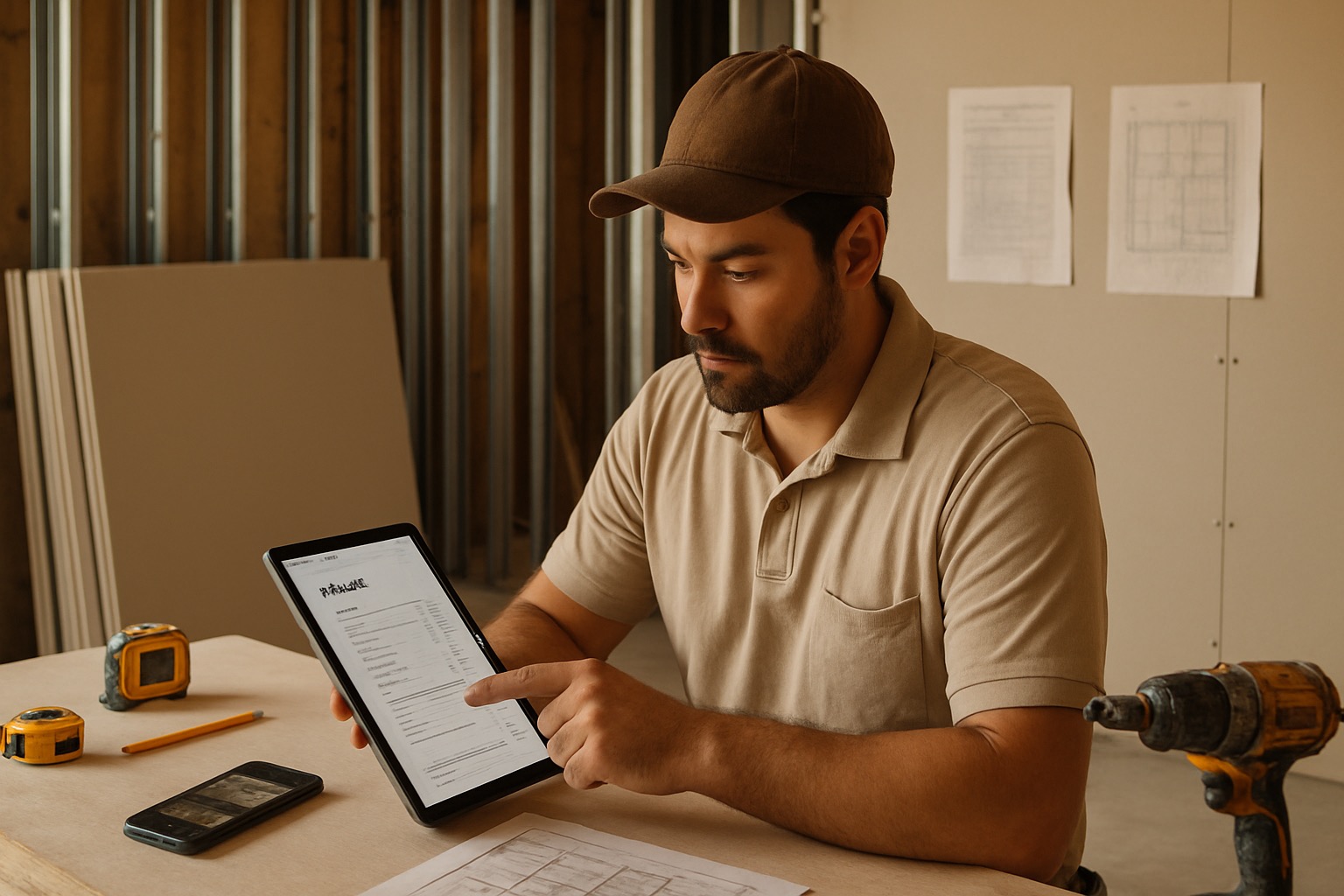
AI estimating software for drywall and framing contractors in Texas should help turn plan sheets, site photos, voice notes, wall schedules, ceiling details, repair scope, and follow-up tasks into a cleaner bid. It should not replace the estimator's judgment, guess hidden conditions, or send a proposal before the contractor reviews the scope.
For Houston drywall and framing contractors, the win is speed with control. A good AI-assisted workflow helps organize the information that usually gets scattered across email, texts, PDFs, photos, and field notes so the contractor can review a structured estimate instead of rebuilding the bid from scratch.
AI estimating software for drywall and framing contractors in Texas: the short answer
AI estimating software is useful for Texas drywall and framing contractors when it acts like a disciplined junior estimator. It can help read blueprints, group job photos, capture voice notes, draft takeoff sections, flag missing details, and prepare customer-ready estimate language for contractor review.
The software should make the bid easier to check. A strong drywall and framing estimate separates layout, studs or track, backing, shaft or rated assemblies, drywall board types, ceilings, insulation where included, finishing level, texture, access, protection, cleanup, exclusions, alternates, and follow-up reminders. That structure helps experienced contractors move faster without treating every wall as the same square-foot item.
Why this matters for Houston and Texas drywall bids
Texas drywall and framing work ranges from small residential repairs to multifamily turns, tenant improvements, retail buildouts, remodels, water-damage repairs, and new construction packages. Houston adds its own estimating pressure: humid weather, storm-repair work, older buildings with hidden substrate problems, busy commercial schedules, and customers who often need the bid quickly while several trades are still coordinating scope.
A rushed proposal can miss the details that protect margin. A customer may ask for "frame and drywall these rooms," but the plans show multiple wall types, soffits, backing, moisture-resistant board, sound insulation, patch areas, and a rated assembly. If the estimate only says "drywall and framing," the careful contractor and the cheap number look the same until the job starts.
A practical AI-assisted drywall and framing estimating workflow
Use this workflow before sending a Texas drywall and framing bid.
1. Capture the scope like an estimator
For remodels and repairs, take wide photos of each room, then close-ups of wall damage, ceiling damage, openings, penetrations, soffits, returns, texture, baseboards, protection issues, and access constraints.
Add a voice note while the job is fresh. Example: "Houston townhome, first-floor water repair, remove lower four feet of drywall in living room and hall, check metal studs at wet wall, texture match orange peel, paint by others, insulation only where opened, hidden mold remediation excluded." That note gives the office or estimating system context that photos alone may not explain.
For plan-based work, upload the architectural sheets, reflected ceiling plans, wall type schedule, details, finish schedule, addenda, and highlighted scope notes.
2. Break the estimate into reviewable sections
A cleaner bid usually needs more than one lump sum. Build sections for:
- Plan review, layout assumptions, and included areas
- Metal or wood framing, track, studs, headers, soffits, furring, and backing
- Drywall board type, thickness, layers, moisture-resistant board, shaft liner, or specialty board where included
- Ceilings, drops, bulkheads, returns, and patches
- Tape, bed, finish level, texture, sanding, and touch-up expectations
- Insulation, sound control, fire-rated assemblies, and penetrations when included
- Protection, dust control, occupied-space rules, disposal, and cleanup
- Access, lifts, high ceilings, tight staging, parking, after-hours work, and schedule constraints
- Exclusions, allowances, alternates, and follow-up tasks
This structure makes the estimate easier for the contractor to review and easier for the customer or GC to compare against the actual scope.
3. Flag missing information before pricing gets locked
Drywall and framing bids get risky when unclear drawings or photos are priced as if everything is known. Good AI estimating software should help create a missing-information list instead of guessing. It should ask for ceiling heights, wall types, board specs, finish level, texture match expectations, access hours, protection requirements, demo responsibility, insulation responsibility, patch boundaries, and whether hidden damage is excluded or handled by change order.
For Houston repair work, this matters when water damage is involved. Photos can show staining or removed drywall, but they may not confirm framing condition, insulation replacement, remediation responsibility, or whether paint is included.
4. Use alternates for scope choices
Many drywall and framing bids need options. A property manager might want one price for patching only and another for full room replacement. A GC may need separate numbers for framing, board hang, finish, texture, and ceiling work. A homeowner may ask for a repair price plus an alternate to add sound insulation while the wall is open.
Alternates protect the contractor from giving away scope. They also help customers approve the right level of work without forcing the estimator to rebuild the whole bid.
5. Follow up with the real decision points
The estimate is not finished just because the PDF was sent. Follow-up should mention the actual choices that affect approval: wall type confirmation, finish level, texture expectations, paint responsibility, patch boundaries, schedule, access, and hidden-condition exclusions. AI can help draft and track those reminders, but the contractor should still decide the message and timing.
Common drywall and framing estimating mistakes to avoid
The biggest mistake is bidding drywall and framing as a flat square-foot commodity. Assemblies, height, finish level, access, details, and exclusions decide the real job cost.
Watch for these mistakes:
- Counting wall area without checking wall types, layers, shaft walls, or rated assemblies
- Missing backing, blocking, headers, soffits, returns, and ceiling details
- Treating all board as standard drywall when moisture-resistant or specialty board is required
- Leaving finish level, texture match, sanding, and touch-up expectations vague
- Forgetting protection, dust control, disposal, occupied-space rules, and cleanup
- Ignoring high ceilings, lifts, tight staging, parking, after-hours work, or access limits
- Pricing water-damage repair without clear hidden-condition exclusions
- Sending one number when alternates would explain choices and protect scope
- Failing to follow up while the bid is still active
A better estimate tells the customer what is included, what is excluded, what is assumed, and what happens when drawings or hidden conditions change.
How Estimado AI helps
Estimado AI is being built as AI estimating software for contractors who want faster bids without giving up control of the final number. For drywall and framing contractors, that means using blueprints, job photos, videos, and voice notes to help prepare a structured estimate draft with scope, quantities to review, assumptions, exclusions, alternates, and follow-up tasks.
Estimado is not a fully autonomous estimator. The contractor stays in the loop, checks quantities, adjusts labor, reviews materials, edits exclusions, approves the final proposal, and decides when it is ready to send.
If you want drywall and framing estimates to move faster without losing control of the final scope or price, join the Estimado AI waitlist.
You can also compare related Texas workflows on the Estimado blog, including AI estimating software for roofing contractors in Texas, siding contractors in Texas, painting contractors in Texas, and tile contractors in Texas.
Next step
If your drywall and framing bids slow down because plans, photos, wall types, ceiling details, finish notes, exclusions, and follow-ups are scattered across your phone and inbox, tighten the intake process first. Better job information makes AI-assisted estimating more useful and helps Texas contractors respond faster without bidding blind.
FAQ
Can AI estimate drywall and framing from blueprints?
AI can help organize drywall and framing takeoffs from blueprints, especially when the plans include wall schedules, details, reflected ceiling plans, and finish notes. The contractor should still review quantities, assemblies, exclusions, and pricing before sending the estimate.
Can AI estimate drywall repair from photos?
AI can help sort visible drywall damage from photos and voice notes, but it should flag missing dimensions and hidden conditions for contractor review instead of guessing what is behind the wall.
What should a drywall and framing estimate include?
A drywall and framing estimate should define included areas, framing type, board type, ceiling scope, finish level, texture, insulation if included, protection, access, cleanup, assumptions, exclusions, alternates, and hidden-condition rules.
Is drywall estimating software useful for experienced contractors?
Yes, when it reduces admin and keeps scope organized. Experienced contractors can use AI to sort intake, draft bid sections, catch missing questions, prepare alternates, and follow up faster while still controlling the final estimate.
Does Estimado AI send drywall and framing bids automatically?
No. Estimado is designed to help prepare structured estimate drafts. The contractor reviews, edits, approves, and decides when to send the final proposal.