AI Estimating Software for Roofing Contractors in Texas: Faster Houston Bids From Photos, Plans, and Voice Notes
A practical Texas roofing estimating workflow for turning roof photos, plan sheets, measurements, and voice notes into cleaner bids without losing contractor control.

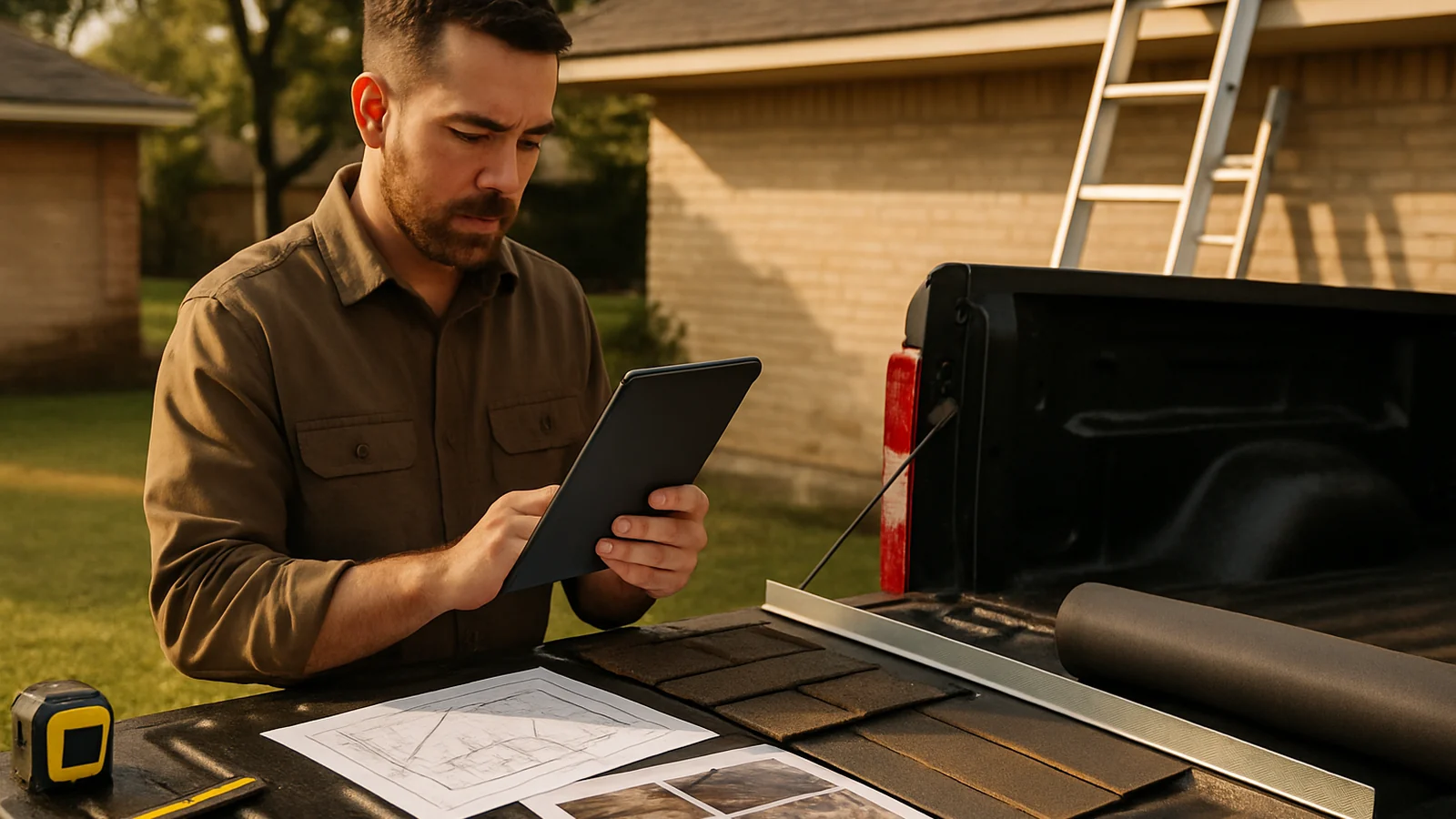
AI estimating software for roofing contractors in Texas should help a roofer move from inspection details to a scoped bid faster without turning estimating into a guessing game. For Houston roofing contractors, that means organizing roof photos, slope notes, measurements, plan sheets, storm-damage observations, material choices, crew access, disposal, and follow-up into one estimate workflow the contractor can still review and approve.
Texas roofing bids are not all the same. A simple laminate shingle replacement in a Houston subdivision, a low-slope tie-in on a small commercial roof, and a coastal wind-exposure job each need different assumptions. Heat, sudden rain, hail events, insurance documentation, steep pitches, ventilation problems, decking surprises, and dump logistics can all change the number. The estimating system has to capture those conditions before the proposal leaves your office.
Key takeaway: AI should structure the roof bid, not make unchecked decisions
AI estimating software for roofing contractors in Texas is useful when it acts like a junior estimator beside the owner or sales rep. It can help read job photos, pull scope from notes, organize line items, flag missing information, and draft customer-facing proposal language. The roofer still confirms measurements, material selections, tear-off assumptions, labor productivity, code or permit requirements, exclusions, and the final price.
That contractor review is the difference between a helpful workflow and a risky shortcut. A roof photo might show missing shingles, but it cannot always confirm soft decking, ventilation balance, code-triggered details, or what the insurance scope includes. AI can organize the bid package; the roofing contractor has to make the judgment calls.
Why this matters for Houston roofing contractors
Houston roofers often work in a fast-response market. After heavy rain, wind, or hail, homeowners may call several contractors in one day. The contractor who can inspect, document, estimate, and follow up clearly has an advantage, but speed only helps if the bid is complete.
Common Texas roofing scope details that should be captured before pricing include:
- Roof type, pitch, stories, access, and tear-off difficulty.
- Shingle, metal, modified bitumen, TPO, tile, or coating system assumptions.
- Underlayment, drip edge, starter, ridge cap, vents, pipe boots, flashing, valleys, and wall details.
- Decking replacement allowances and how hidden rotten wood will be handled.
- Dump trailer, haul-off, magnet cleanup, material delivery, and crew staging.
- Insurance-scope references, photos, and notes without promising claim outcomes.
- Local permit, HOA, windstorm, or inspection requirements where applicable.
- Follow-up notes that explain options instead of sending one confusing lump sum.
When those details live across camera rolls, texts, PDFs, handwritten notes, and sales-rep memory, missed scope becomes easy. A structured estimating workflow keeps the job record together.
A practical roofing estimate workflow from inspection to follow-up
Use this workflow for residential reroofs, roof repairs, storm restoration, and smaller commercial roofing bids in Houston and other Texas markets.
1. Capture roof evidence in a consistent order
Before writing a price, collect the same core information every time: address, roof type, approximate squares, pitch, stories, access, existing layers if visible, ventilation, roof penetrations, flashing conditions, gutters, decking concerns, interior leak photos, and any insurance or plan documents. Use wide photos for context and close-ups for problem areas.
A short voice note after the inspection can save the office from guessing later: "Two-story rear slope, steep front, chimney flashing looks bad, customer wants architectural shingles, possible decking at valley, limited driveway access, insurance scope received." That kind of field narration is exactly the raw material an AI-assisted workflow can organize.
2. Separate measurement, scope, and pricing
Do not let the estimate start as a single total. Break it into phases:
1. Measurement and takeoff: squares, waste, ridge, hip, valley, eave, rake, starter, underlayment, and accessory counts.
2. Scope definition: tear-off, deck inspection, underlayment system, flashing, ventilation, disposal, cleanup, and warranty notes.
3. Pricing review: material package, labor, equipment, overhead, margin, permit or inspection cost, and contingency for known risks.
This separation makes the bid easier to review and easier to explain to the customer.
3. Write assumptions directly into the proposal
Roofing proposals get expensive when assumptions are hidden. If decking replacement is not included except by approved change order, say that. If gutters, fascia, chimney masonry, interior drywall, solar panel handling, or HVAC curb work are excluded, say that. If the roof requires special access, steep charges, or a separate low-slope crew, spell it out.
For Texas work, also be careful with weather and scheduling language. A good bid can explain that final start dates depend on material availability, safe weather, inspections when required, and contractor approval of final scope. Keep the language practical and avoid promising outcomes you do not control.
4. Use options to make follow-up easier
A clean estimate should give the salesperson a reason to follow up. Instead of one number with no explanation, consider options such as:
- Base architectural shingle reroof.
- Upgraded underlayment or ventilation package.
- Gutter replacement or add-on gutter guards.
- Separate low-slope repair or replacement option.
- Decking allowance language with unit pricing if discovered.
Now the follow-up call can be specific: "Do you want to keep the ventilation upgrade in the scope, or should I send the base shingle package only?" That is much stronger than asking whether they looked at the proposal.
Common roofing estimating mistakes to avoid
Bidding from photos without confirming measurements. Photos can reveal condition, but quantities still need measurement review. Squares, waste, valleys, ridge, pitch, and access drive the real number.
Forgetting accessories and details. Pipe boots, flashing, drip edge, starter, cap, vents, fasteners, sealants, and cleanup materials can quietly eat margin when they are not listed.
Ignoring tear-off and disposal logistics. A tight Houston driveway, townhome access, steep roof, multiple layers, or long carry can change crew time and dump cost.
Leaving decking and hidden damage vague. The customer should understand what is included, what is an allowance, and what becomes a change order after tear-off.
Overpromising insurance or timing. Keep the estimate clear, documented, and professional, but do not guarantee claim decisions, exact weather windows, or outcomes outside the contractor's control.
How Estimado AI fits into the workflow
Estimado AI is being built as AI estimating software for contractors who want faster estimate drafts while keeping the contractor in control. For roofing contractors, the useful workflow is straightforward: upload roof photos, plan sheets, inspection videos, and voice notes; let the system organize the visible scope and questions; then review quantities, labor, exclusions, options, and customer-facing language before sending.
Estimado is not a magic bid button and it does not replace the roofer's judgment. It is closer to a junior estimator that helps turn scattered job information into a cleaner draft so the contractor can spend less time rebuilding the estimate from memory. The contractor remains the senior estimator and approves the final proposal.
For related contractor workflows, browse the Estimado blog and the broader AI estimating software hub.
Next step
If your roofing team wants estimate drafts built from photos, plans, measurements, and voice notes without hiring another office person, join the Estimado AI waitlist.
FAQ
What should roofing estimating software help with?
Roofing estimating software should help organize measurements, photos, roof type, pitch, materials, accessories, tear-off assumptions, disposal, labor, exclusions, options, and follow-up. For roofers, the details around flashing, ventilation, decking, access, and cleanup matter as much as the shingle count.
Can AI estimate a roof from photos alone?
Photos are useful for documenting conditions, damage, access, and scope, but they should not replace measurement review or contractor judgment. A roofing contractor still needs to confirm dimensions, pitch, material system, hidden risks, and any local requirements before pricing.
What is different about roofing estimates in Texas?
Texas roofing estimates often need to account for heat, hail and wind events, fast storm-response timelines, insurance documentation, disposal logistics, local permit requirements, and coastal windstorm considerations where applicable. The estimate should make those assumptions clear without promising outcomes outside the contractor's control.
Should roofers include exclusions in every proposal?
Yes. Clear exclusions protect the contractor and the customer. Decking replacement, gutter work, fascia, interior repairs, solar removal, chimney masonry, permit handling, and hidden conditions should be addressed directly instead of left to assumptions.
How can faster roofing estimates help win more jobs?
Faster estimates help when they are also clear and complete. A roofer who sends a scoped proposal with photos, line items, options, and a specific follow-up question can keep the customer moving without sacrificing review quality.