AI Estimating Software for Tennessee Contractors: Faster Bids for Nashville, Storm, and Remodel Jobs
Tennessee contractors need estimates that move quickly across Nashville remodels, Memphis repairs, Knoxville hillsides, Chattanooga jobs, storms, humidity, and permit differences. Here is how AI estimating software can tighten the workflow without taking the contractor out of control.

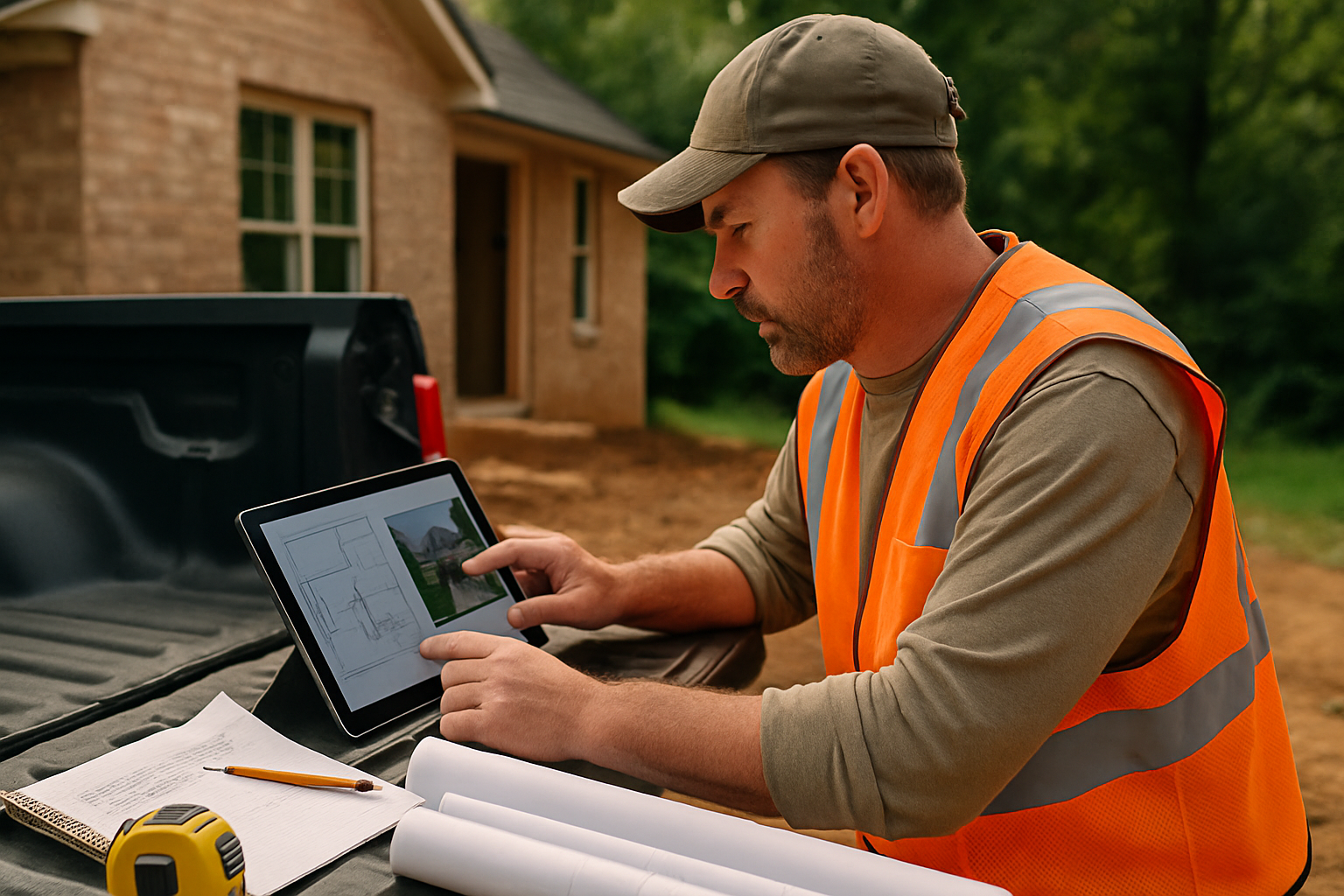
AI estimating software for Tennessee contractors is most useful when it helps turn job photos, blueprints, short videos, and voice notes into a clean estimate faster, while the contractor still controls scope, assumptions, labor, markup, and the final price. In a state where one week may bring a Nashville remodel, a Memphis repair, a Knoxville hillside job, and storm-response work outside the city, speed only helps if the estimate stays clear and job-specific.
This guide is for Tennessee general contractors, remodelers, and trade contractors who already know their work but need a better way to move from lead to professional bid without adding office overhead.
The direct answer: what should AI estimating software do for Tennessee contractors?
The best AI estimating software for Tennessee contractors should organize messy job information into a structured estimate draft: scope of work, quantities, material list, labor line items, assumptions, exclusions, and questions the contractor must answer before sending.
It should not replace your judgment. It should act like a junior estimator that can read plans, summarize photos, listen to field notes, and prepare a draft you review before it ever reaches a customer.
For Tennessee contractors, that matters because projects can vary a lot by location. A Nashville addition may involve tight scheduling and local permit coordination. A Memphis repair may include older framing, moisture issues, or commercial tenant constraints. Knoxville and Chattanooga jobs can involve steep access, crawlspaces, drainage, or hillside logistics. Rural work can add travel time, supplier distance, and more unknowns from limited site documentation.
Why Tennessee contractors need a tighter bid workflow
Tennessee is not one estimating environment. Contractors are bidding fast-growth residential work around Nashville and Middle Tennessee, older housing stock in Memphis, university and medical-related remodels in Knoxville, Chattanooga renovations near hills and older neighborhoods, and rural jobs where one missing detail can mean a costly second trip.
A tighter workflow helps you respond faster without sending a thin quote. It also helps keep state and local issues visible before pricing. Depending on the job, a Tennessee estimate may need notes about local permitting, inspection sequence, stormwater or erosion control, utility coordination, humidity-sensitive materials, crawlspace conditions, steep site access, or post-storm repair assumptions.
The point is not to make every bid longer. The point is to make the estimate complete enough that your customer understands what is included, what is excluded, and what still needs confirmation.
A practical AI-assisted estimate workflow
Use this workflow when a Tennessee lead comes in and you want a faster, cleaner bid packet.
1. Capture the lead in one place. Save the address, customer goal, deadline, photos, plan sheets, videos, texts, and voice notes together. Do not leave half the job in your phone and half in email.
2. Separate facts from assumptions. Facts are things you can see or measure: room dimensions, damaged fascia, a roof slope shown on plans, or a photo of a cracked slab. Assumptions are things you still need to verify: hidden rot, subfloor condition, utility location, or permit requirements.
3. Build a scope before pricing. Write the actual work sequence before adding numbers. For example: protect existing finishes, demo damaged material, inspect substrate, replace framing as needed, install specified material, haul off debris, final cleanup.
4. Create line items that match the work. Group material, labor, equipment, disposal, travel, and subcontractor items clearly. Tennessee jobs with steep access, long travel, or storm cleanup should not be buried inside a single lump sum.
5. Flag local checks. Add notes for the contractor to verify licensing, permit, inspection, HOA, utility locate, and local code requirements with the proper authority before sending the bid.
6. Review risk before sending. Look for unknowns that can change the price: moisture behind siding, crawlspace access, old plumbing, lead-safe work, electrical panel capacity, drainage, or material lead times.
7. Send a professional estimate and follow up. The faster you send a clear bid, the easier it is to follow up while the project is still active in the customer’s mind.
Nashville example: turning a messy remodel lead into a bid draft
Say a Nashville homeowner sends ten photos of a kitchen remodel, a short video walking through the space, and a voice note: “We want new flooring, cabinet changes, backsplash, paint, and maybe moving this doorway.”
A manual workflow can stall because the information is scattered. A better workflow turns that input into a reviewable draft:
- existing conditions from photos and video
- customer intent from the voice note
- flooring, cabinet, tile, paint, trim, and possible framing scope
- measurements needed before final pricing
- permit or structural questions if a doorway move affects framing
- allowances or exclusions for hidden electrical, plumbing, or substrate issues
- a customer-ready estimate structure the contractor can edit
That does not mean the software knows every hidden condition. It means the contractor gets a stronger starting point and a checklist of what must be verified before the final number goes out.
Common estimating mistakes to avoid in Tennessee bids
Quoting from photos without listing assumptions. Photos help, but they do not show everything behind walls, under floors, or inside crawlspaces. Put assumptions in writing.
Ignoring access and travel. A job outside Nashville, Knoxville, Chattanooga, or Memphis may need extra travel, staging, supplier runs, or delivery planning.
Treating storm repair like normal repair. Wind, water, and fallen-tree work can involve hidden damage, sequencing problems, insurance documentation, and urgent scheduling.
Forgetting humidity and substrate conditions. Flooring, paint, drywall, siding, and exterior work can all be affected by moisture, ventilation, and preparation.
Sending a lump-sum bid with no scope clarity. A single number may be fast, but it can create disputes when the customer assumes more work is included than you priced.
How Estimado AI helps
Estimado AI is being built as AI estimating software for contractors who want faster bids without handing the final decision to a black box. The goal is to help turn blueprints, job photos, videos, and voice notes into structured estimate drafts that the contractor reviews, edits, approves, and sends.
For Tennessee contractors, that means Estimado can support a more organized path from lead intake to scope, quantities, line items, assumptions, and a professional estimate packet. The contractor stays in control of labor, markup, final pricing, and customer communication.
If your team wants Tennessee bids that move faster while still protecting scope clarity and contractor review, join the Estimado AI waitlist.
Next step
Start by tightening your intake process. Require photos, measurements when available, a clear customer goal, deadline, address, and any plans or videos before pricing. Then use estimating software to organize that information into a scope you can trust, review, and send with confidence.
For more context, see the Estimado blog hub on AI estimating software for contractors, plus nearby state guides for North Carolina contractors and Arkansas contractors.
FAQ
Is AI estimating software accurate enough for Tennessee contractors?
AI estimating software can speed up the first draft, but the contractor still needs to verify measurements, site conditions, labor, material choices, permit requirements, and final pricing. It should support your estimating process, not replace your review.
Can AI estimate from photos and videos?
AI can help extract visible conditions, summarize the requested work, and identify missing measurements from photos and videos. It should also flag what it cannot confirm so the contractor can ask questions before sending a quote.
Does Tennessee require contractors to check local permitting before bidding?
Permit and licensing requirements can vary by project type, location, and scope. Contractors should verify requirements with the Tennessee Board for Licensing Contractors and the local authority having jurisdiction before sending work that depends on permits or inspections.
What types of Tennessee jobs benefit most from AI-assisted estimating?
Remodels, repairs, storm-response work, plan-based projects, and jobs with scattered customer inputs benefit the most because AI can organize photos, drawings, notes, and assumptions into a cleaner estimate draft.