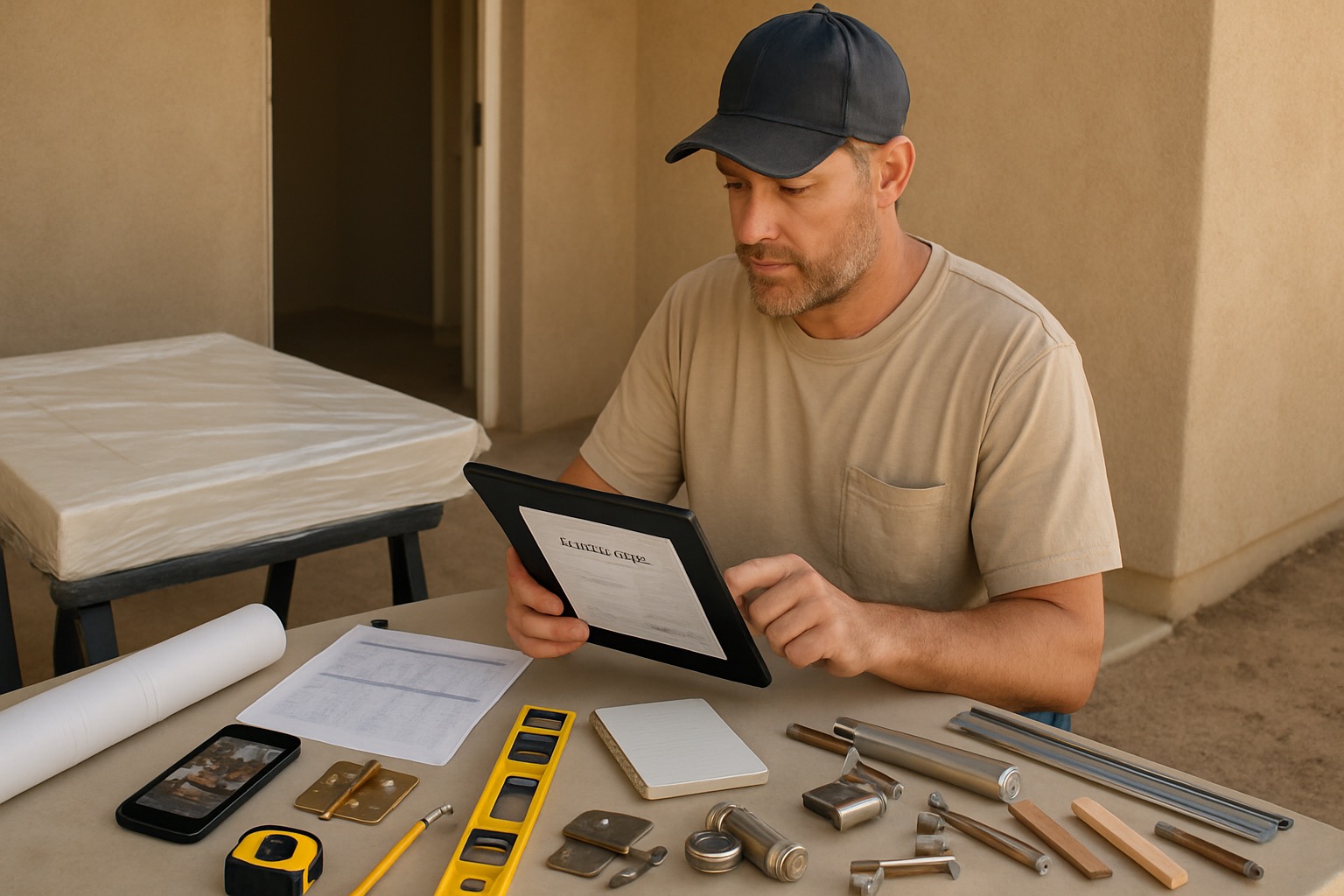
AI Estimating Software for Stucco Contractors in Arizona: Faster Phoenix Bids From Photos, Plans, and Voice Notes
A practical AI-assisted estimating workflow for Arizona stucco contractors bidding Phoenix repairs, re-stucco work, lath, foam details, finish coats, exclusions, and follow-up.

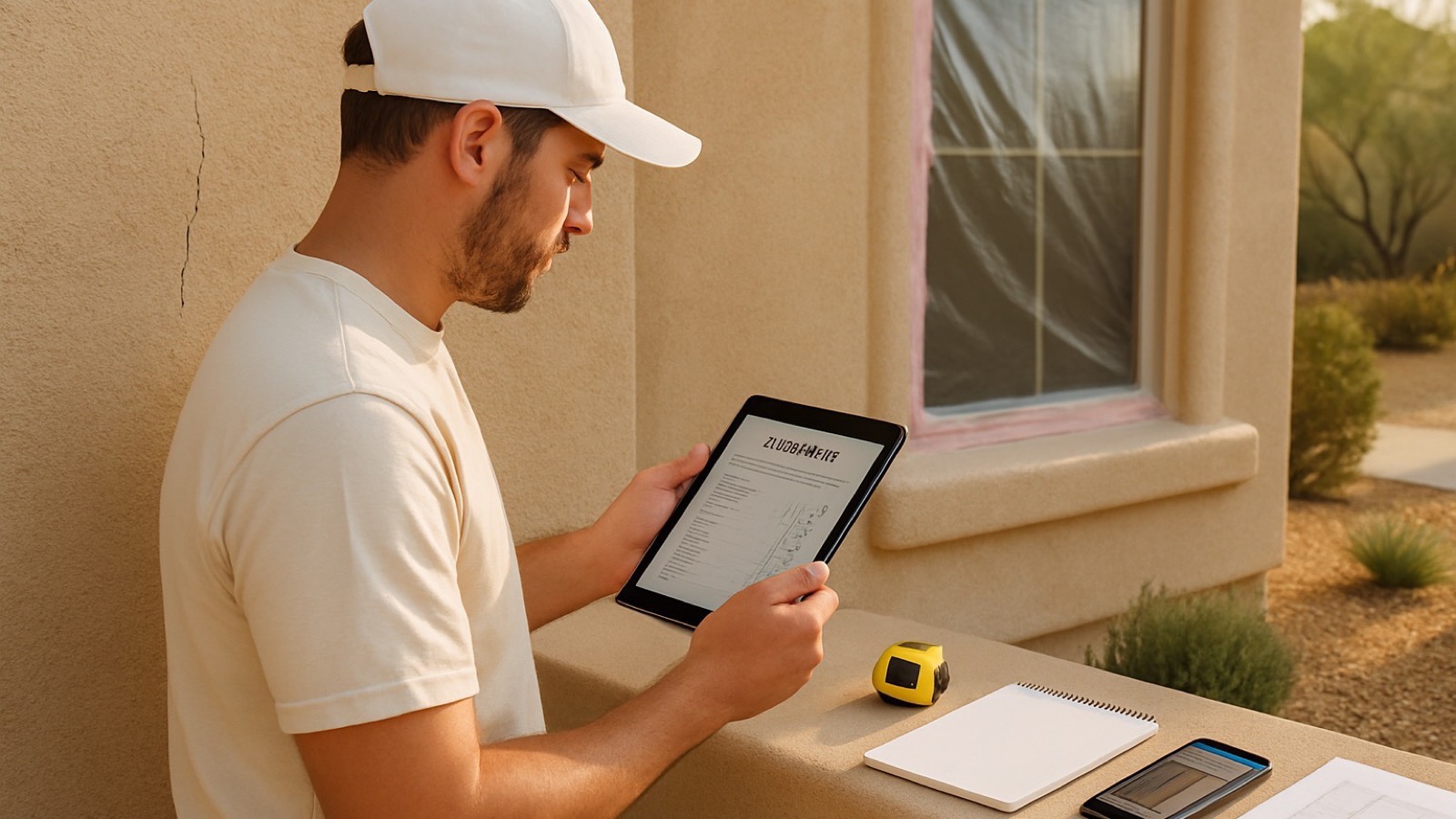
AI estimating software for stucco contractors in Arizona should help stucco pros turn job photos, plans, wall measurements, field notes, and customer requests into a cleaner bid faster. The useful version is not a magic price button. It is a workflow for organizing repair scope, lath or foam details, flashing questions, finish texture, access, exclusions, and follow-up into an estimate draft the contractor can review before sending.
For Phoenix stucco contractors, speed matters because homeowners, GCs, property managers, and restoration leads often want a number quickly. But Arizona stucco work can hide margin-killers: heat exposure, parapet details, cracked exterior walls, foam pop-outs, window returns, water intrusion clues, patch blending, color matching, scaffolding, HOA expectations, and unclear responsibility between painter, roofer, framer, and stucco crew.
AI estimating software for stucco contractors in Arizona: the short answer
For Arizona stucco work, AI estimating software is most useful when it acts like an organized junior estimator. It can help sort photos, drawings, measurements, voice notes, and customer messages into reviewable estimate sections.
A stucco contractor still needs to verify quantities, substrate condition, access, materials, labor, finish match, patch limits, exclusions, and final price. The contractor should approve the proposal before it goes to the customer.
A strong Arizona stucco estimate usually needs to make these details visible:
- Repair versus full elevation re-stucco, with limits of work clearly marked
- Existing stucco condition, cracks, delamination, stains, impact damage, or water intrusion signs
- Lath, WRB, flashing, weep screed, control joint, foam trim, and window return assumptions
- Finish type, texture, color, patch blend expectations, primer, paint, or coating responsibilities
- Access, protection, dust control, masking, scaffolding, lift needs, cleanup, and haul-off
- Exclusions, alternates, warranty limits, change-order triggers, and follow-up tasks
Why this matters for Phoenix and Arizona stucco contractors
Stucco bids in Arizona can look simple from a few phone photos. A customer might send three close-ups of a cracked wall and ask, “How much to fix this?” That is not enough to price cleanly. The estimate should ask where the crack starts and stops, whether the crack is cosmetic or movement-related, whether water is involved, whether foam trim is damaged, whether the patch must blend into an existing finish, and who is painting after repair.
Phoenix-area homes also bring regional context. Strong sun, dry heat, dust, monsoon storms, block walls, parapets, exterior foam details, and older stucco systems all affect how contractors think about inspection, prep, access, finish match, and customer expectations. A fast bid should not pretend every wall is ready for a simple patch.
Many stucco projects are also coordination jobs. A GC-led remodel may need lath and brown coat around new openings. A roofer may expose parapet or flashing issues. A painter may be waiting on patches before coating. A property manager may need several elevations priced separately. If those details stay in text messages, the estimate becomes easy to underbid.
A practical AI-assisted stucco estimating workflow
Use this workflow before sending an Arizona stucco proposal.
1. Capture the wall story, not just the damaged spot
Collect wide photos of each affected elevation, close-ups of cracks or impact damage, window and door returns, foam trim, parapets, weep screed areas, grade conditions, roof-to-wall transitions, control joints, access paths, landscaping, pool equipment, gates, and areas that need masking or protection. Add plans, sketches, or elevation notes when available. Record a short voice note while the walkthrough is fresh.
A useful Phoenix voice note might sound like: “South elevation only. Repair crack from window corner to patio door, patch two foam bands, include masking windows and pavers, texture to match as close as possible, paint by others, hidden water damage excluded, price alternate for full elevation skim and texture.”
That note gives the estimate more protection than a square-foot number by itself.
2. Split the bid into scope buckets
Stucco proposals get risky when everything is buried under one line for “stucco repair.” Break the draft into sections the contractor can review:
- Inspection and intake: elevations, photos, plans, dimensions, access, and known damage
- Demo and prep: loose stucco removal, grinding, crack prep, masking, protection, and cleanup
- Assembly work: lath, fasteners, WRB, flashing coordination, foam details, corners, and accessories
- Coats and finish: scratch, brown, skim, texture, color, cure time, primer, paint, or coating by others
- Access and logistics: scaffold, ladder work, lift, occupied home constraints, parking, and staging
- Commercial terms: alternates, allowances, exclusions, schedule, warranty language, and follow-up
This structure helps an owner-estimator move faster without losing the details that protect margin.
3. Use photos and plans to flag missing assumptions
AI can help compare the intake package against common stucco estimating categories. If photos show a window return but the customer note only mentions a wall crack, the draft should flag return repair and masking. If plans show new exterior openings, the draft should flag lath, flashing coordination, foam trim, and finish blending. If a photo shows water staining, the draft should avoid guessing and ask for confirmation on source repair before patching.
The point is not for software to diagnose hidden conditions. The point is to make missing assumptions visible before the contractor sends the number.
4. Build alternates for uncertain repair depth
Arizona stucco contractors should avoid hiding every unknown in the base price. Use alternates when scope is not confirmed. A base bid might include localized crack repair and texture match, with alternates for full elevation skim coat, foam trim replacement, scaffolding, additional lath repair discovered after demo, or painting after stucco cure.
That gives the customer a clearer proposal and gives the contractor a paper trail if the wall opens up worse than expected.
5. Follow up with scope decisions, not only price
After the estimate goes out, follow up on decisions that change the job: patch-only versus full elevation, finish expectations, paint responsibility, start date, access, HOA requirements, water-source repair, and whether the customer accepts texture blend limitations. A follow-up that restates scope is more useful than simply asking, “Ready to move forward?”
Common stucco estimating mistakes to avoid
Watch for these problems on Arizona stucco bids:
- Pricing from photos without confirming elevations, dimensions, access, and patch limits
- Forgetting masking, protection, scaffolding, foam trim, returns, corners, and cleanup
- Treating water stains, movement cracks, or loose stucco as simple surface repair without qualifications
- Leaving finish match, color, paint, coating, cure time, and customer expectations unclear
- Sending one lump-sum number with no alternates or exclusions
- Failing to follow up after the bid with the scope decisions that affect margin
A cleaner estimate does not need to be complicated. It needs to show what is included, what is not included, and what must be confirmed before work starts.
How Estimado AI helps
Estimado AI is being built as AI estimating software for contractors who want faster bids without giving up control. For stucco contractors, that means using job photos, blueprints, videos, and voice notes to help create structured estimate drafts with line items, scope notes, alternates, exclusions, and customer-ready language.
Estimado is not a fully autonomous estimator. The contractor stays in the loop, reviews quantities, edits the scope, confirms material and labor assumptions, approves the proposal, and decides when to send it.
If your stucco team wants a faster way to turn photos, plans, measurements, voice notes, and scope decisions into reviewed estimate drafts, join the Estimado AI waitlist.
You can also compare related workflows on the Estimado blog, including AI estimating software for stucco contractors in Florida, AI estimating software for stucco contractors in Texas, and AI estimating software for Arizona contractors.
Next step
If stucco estimates are slowed down by scattered photos, vague crack descriptions, unclear finish expectations, missing access notes, and late follow-up, tighten the intake first. Better job information makes AI-assisted estimating more useful and helps Arizona stucco contractors respond faster without bidding blind.
FAQ
Can AI estimate a stucco repair from photos?
AI can help organize photos, measurements, notes, scope sections, alternates, exclusions, and proposal language. A stucco contractor still needs to verify the wall condition, repair depth, access, materials, finish expectations, labor, and final price.
What should Arizona stucco contractors include in an estimate?
A strong Arizona stucco estimate should define repair limits, lath or foam details, prep, finish texture, color or paint responsibility, access, protection, cleanup, exclusions, alternates, and change-order triggers.
Is stucco estimating software useful for experienced contractors?
Yes, when it reduces office work and keeps the estimate organized. Experienced contractors can use AI-assisted workflows to structure photos, plans, voice notes, line items, follow-up tasks, and customer-facing scope language faster.
Should patch blending be called out separately?
Often yes. Existing texture, age, sun exposure, color, and repair size can affect how a patch looks. Calling out blend limitations, painting responsibility, or a full-elevation alternate helps set expectations.
Does Estimado AI send stucco estimates automatically?
No. Estimado is designed to help prepare estimate drafts. The contractor reviews, edits, approves, and decides when to send the final estimate.