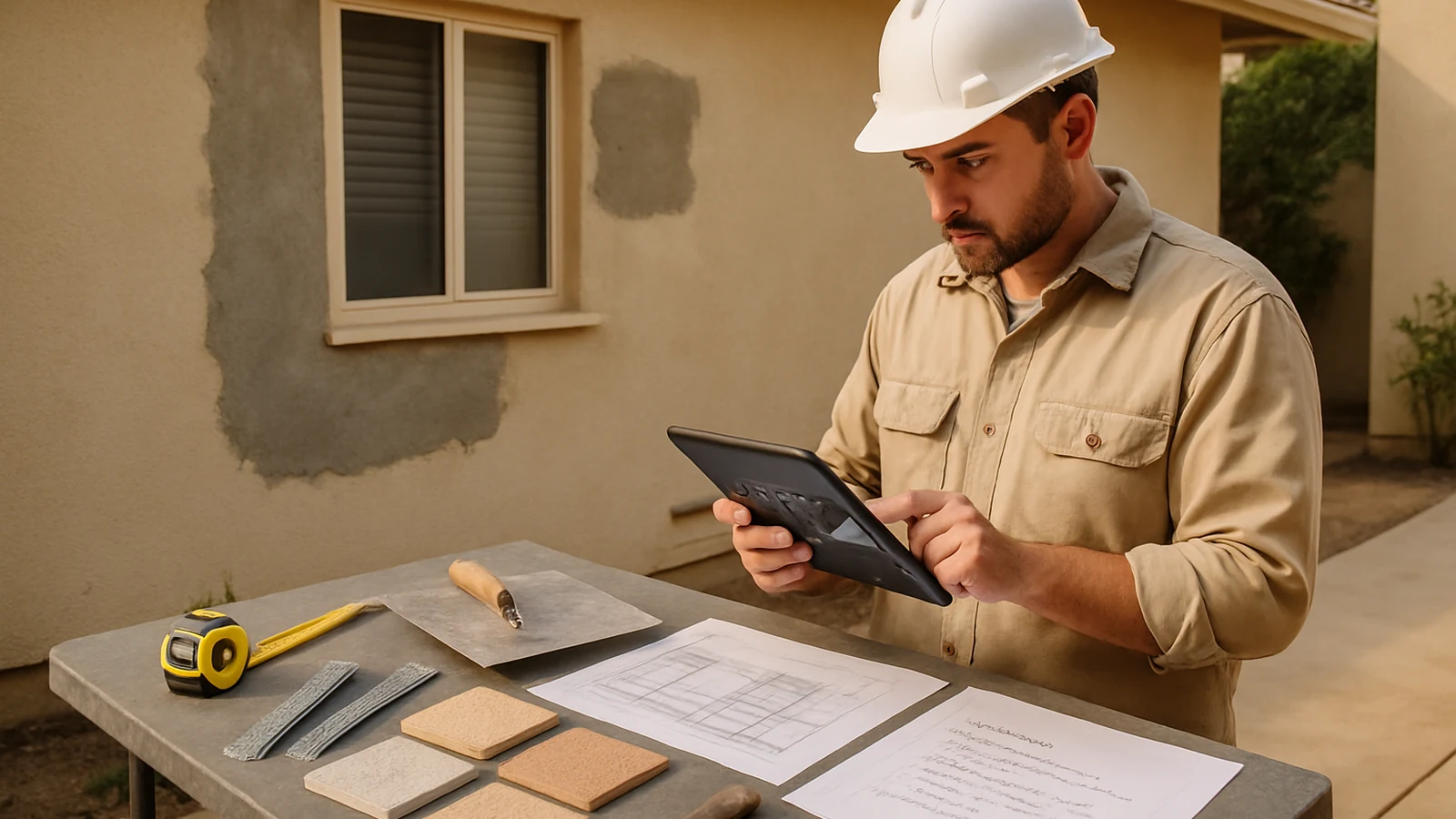
AI Estimating Software for Landscaping Contractors in California: Faster Los Angeles Bids From Photos, Plans, and Site Notes
A practical AI-assisted estimating workflow for California landscaping contractors bidding Los Angeles installs, irrigation, drainage, planting, hardscape coordination, exclusions, and follow-up.

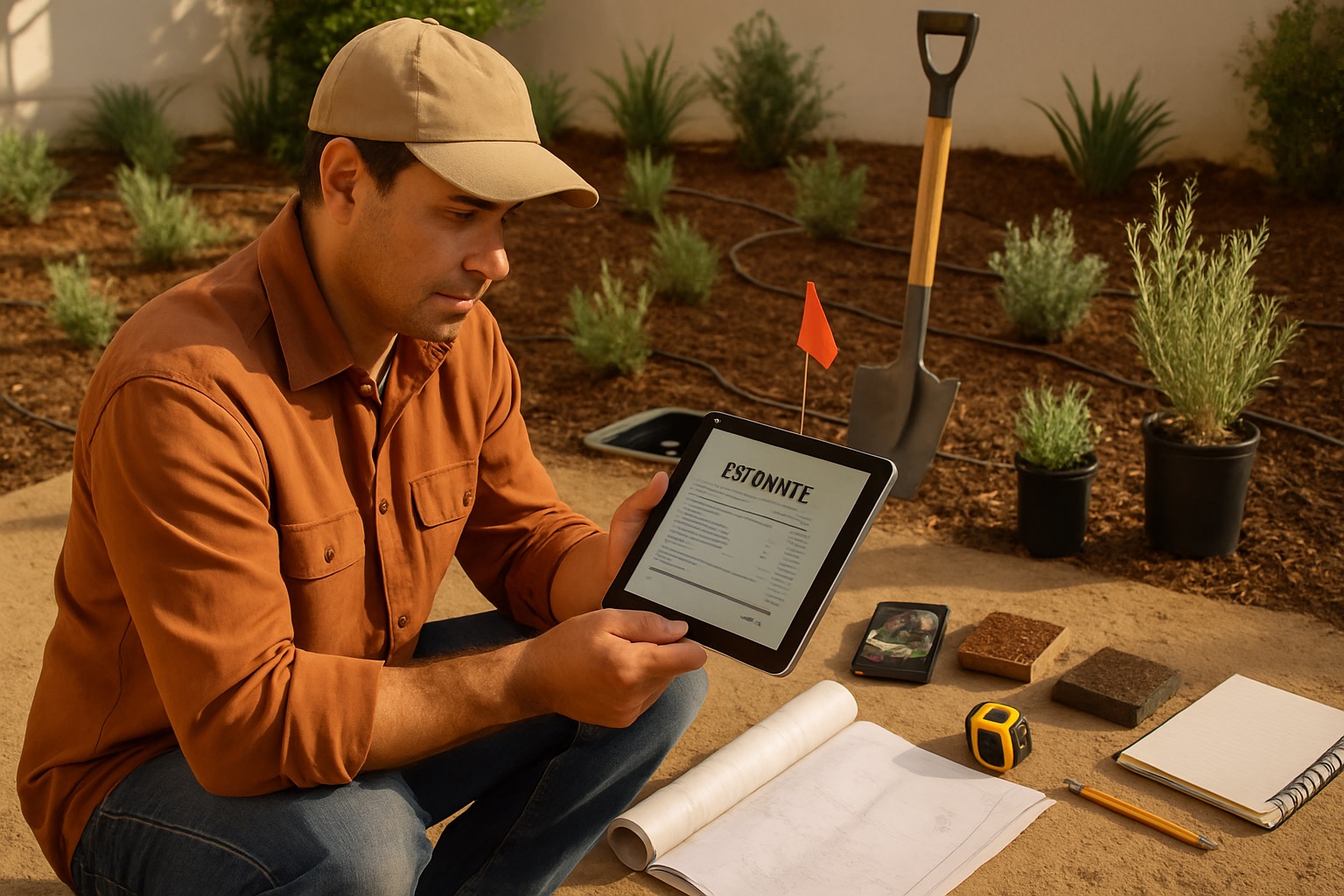
AI estimating software for landscaping contractors in California should help a landscape contractor move from scattered job information to a cleaner bid draft without hiding the site conditions that change the number. A useful system organizes photos, plans, measurements, voice notes, irrigation details, plant selections, drainage, access notes, assumptions, exclusions, and follow-up into a draft the contractor reviews before sending.
For Los Angeles landscaping work, the estimate is rarely just a plant list and labor number. Slope, tight access, drought-conscious planting, irrigation repair, drainage, haul-off, hardscape tie-ins, utility conflicts, HOA rules, hillside staging, and defensible-space concerns can all change scope. The software should help you capture those details faster, not encourage a blind lump-sum bid.
AI estimating software for landscaping contractors in California: the short answer
For California landscaping contractors, AI estimating software is most useful when it acts like an organized junior estimator. It can take photos, plans, walkthrough notes, and customer requests and turn them into a structured first draft with line items, open questions, alternates, exclusions, and follow-up tasks.
A strong landscape estimate still needs the contractor to verify:
- Square footage, linear footage, material quantities, plant counts, soil prep, mulch, edging, weed barrier, and disposal
- Irrigation zones, valves, controller work, pressure concerns, drip conversion, sleeves, backflow responsibility, and repair assumptions
- Grading, drainage, swales, catch basins, soil export, erosion control, and whether another trade must finish first
- Access, staging, parking, hillside labor, equipment limits, hauling distance, noise windows, and occupied-property protection
- Water-use, fire-risk, HOA, permit, utility, and customer-selection questions that affect the final bid
The goal is not to let software price California landscaping jobs by itself. The goal is to create a better draft faster so the contractor can spend review time on production, risk, and margin.
Why this matters for Los Angeles and California landscaping bids
California landscaping has real local context. Los Angeles contractors may bid small front-yard conversions, hillside planting, irrigation upgrades, commercial maintenance add-ons, multifamily courtyards, outdoor living tie-ins, retaining-wall coordination, drought-tolerant installs, fire-conscious vegetation work, and jobs where landscape scope touches concrete, drainage, lighting, masonry, fencing, or pools.
Those projects can turn messy when the estimate does not separate what is included. A customer may ask for “new landscaping,” but the bid may need to define demolition, root removal, soil amendment, plant sizes, irrigation conversion, controller replacement, drip lines, drainage correction, gravel depth, mulch depth, edging, disposal, and maintenance after install.
California also makes water and fire context harder to ignore. Contractors should verify current local water rules, turf replacement requirements, defensible-space guidance, tree rules, permits, and licensing questions with the proper authority for the specific job. The proposal should state who handles permits, rebates, utility marking, tree approvals, backflow work, drainage engineering, maintenance, and hidden-condition changes.
A practical AI-assisted landscaping estimating workflow
Use this workflow before sending a California landscaping bid.
1. Capture the site like an estimator
Take wide photos of every work area, then close-ups of slopes, drains, valves, controller, sprinkler heads, damaged pipes, existing plants, roots, hardscape edges, gates, stairs, retaining walls, utilities, access paths, parking, street loading, soil conditions, and disposal route. For plan-based jobs, capture the plan sheet, revision date, planting schedule, irrigation notes, and any detail that affects quantities.
Before leaving, record a short voice note. For example: “Los Angeles backyard refresh, remove old lawn, convert two zones to drip, keep existing olive tree, install drought-tolerant plants and gravel, repair low spot near patio drain, access through side gate only, customer choosing between 5-gallon and 15-gallon plants, lighting excluded.” That note keeps the office from guessing later.
2. Break the bid into scope sections
A cleaner landscaping estimate usually separates:
- Mobilization, protection, demolition, haul-off, disposal, and site cleanup
- Grading, soil prep, amendments, weed treatment, fabric, edging, mulch, gravel, and DG or decomposed granite
- Plant material by size, count, species substitute rules, warranty assumptions, and watering responsibility
- Irrigation repairs, drip conversion, controller, valves, emitters, sleeves, pressure concerns, and testing
- Drainage, erosion control, hardscape coordination, lighting exclusions, utility marking, permits, and inspections
- Alternates, exclusions, allowances, change-order triggers, and customer decisions still open
This makes the bid easier to review and harder to misunderstand.
3. Flag missing decisions before pricing gets locked
AI can help surface open items, but the landscape contractor decides what matters. The draft should flag missing plant sizes, irrigation scope, valve count, controller type, drainage responsibility, soil export, access limitations, material depth, tree work, HOA approval, utility marking, maintenance period, and whether damaged lines or hidden roots are included.
For Los Angeles hillside or tight-access work, include access assumptions in plain language. If equipment cannot reach the area, soil export is unknown, or roots may appear after demo, say how changes will be handled.
4. Use alternates instead of vague allowances
Alternates help customers compare choices without muddying the base bid: larger plant sizes, extra drip zones, smart controller upgrade, mulch versus decorative gravel, additional drainage, soil export, landscape lighting, root barrier, extended maintenance, and hardscape edge repair.
Avoid broad lines like “yard cleanup included” or “irrigation included” unless the scope is tight. Better wording might say: “Includes drip conversion for two existing zones using accessible lines visible during walkthrough; replacement of buried damaged mainline, new backflow device, electrical work, and city inspection fees excluded unless added by change order.”
5. Follow up around decisions, not just price
A strong follow-up after a landscaping bid helps the customer choose. Instead of only asking whether they saw the estimate, name the open items: plant size, gravel color, irrigation controller, drainage alternate, access date, rebate paperwork, HOA approval, or whether they want the maintenance add-on.
AI-assisted follow-up can help keep those tasks from getting lost, but the contractor still owns the relationship, the final number, and the send button.
Common landscaping estimating mistakes to avoid
Watch for these California landscaping bid problems:
- Pricing from rough area measurements without documenting demolition, haul-off, soil prep, access, slope, and disposal distance
- Treating irrigation as a simple add-on instead of defining zones, valves, controller work, pressure, testing, sleeves, and repairs
- Leaving drainage, erosion, utility conflicts, tree work, permits, HOA approvals, water rules, and fire-risk responsibilities vague
- Forgetting plant substitutions, plant-size changes, warranty limits, maintenance responsibility, and watering instructions after install
- Sending one lump sum that hides alternates for gravel depth, smart controllers, drainage, lighting, and larger plant material
- Letting warm Los Angeles leads sit because photos, notes, plan details, and follow-up tasks are scattered across phones and texts
A stronger estimate makes assumptions visible before material is ordered and crews are scheduled.
How Estimado AI helps
Estimado AI is being built as AI estimating software for contractors who want faster estimate drafts without giving up control. For landscaping contractors, that means using blueprints, job photos, videos, and voice notes to help prepare structured bid drafts with scope sections, quantities, assumptions, exclusions, alternates, follow-up tasks, and customer-ready language.
Estimado does not replace the estimator. The contractor checks measurements, materials, labor, water and permit assumptions, risk, proposal wording, and the final send.
If your landscaping company wants to turn Los Angeles site photos, plans, measurements, irrigation notes, plant choices, and follow-up tasks into reviewed estimate drafts faster, join the Estimado AI waitlist.
For related workflows, see AI estimating software for California contractors, landscaping contractors in Arizona, and the Estimado contractor estimating blog.
Next step
If California landscaping estimates are slowed down by scattered photos, unclear irrigation details, missing plant selections, drainage questions, access limits, and late follow-up, tighten the intake process first.
FAQ
Can AI help estimate landscaping jobs from photos and plans?
AI can help organize photos, plans, measurements, voice notes, plant schedules, irrigation details, scope sections, exclusions, alternates, and follow-up tasks. A landscaping contractor still needs to verify quantities, site conditions, labor, material choices, and final pricing before sending the bid.
What should a California landscaping estimate include?
A California landscaping estimate should define demolition, haul-off, grading, soil prep, plant material, irrigation, drainage, access, staging, material depths, exclusions, alternates, maintenance responsibility, and change-order triggers.
Should Los Angeles landscaping bids mention irrigation and water rules?
Yes when they affect the job. Irrigation zones, drip conversion, controller work, rebates, watering restrictions, inspection responsibility, and customer maintenance should be clearly included, excluded, or assigned to the right party.
Is landscaping estimating software useful for experienced contractors?
Yes, when it reduces office work and keeps job details organized. Experienced landscaping contractors can use AI to structure site photos, plan notes, irrigation scope, materials, open questions, and proposal language faster.
Does Estimado AI send landscaping estimates automatically?
No. Estimado is designed to help prepare structured estimate drafts. The contractor reviews the scope, edits where needed, approves the final version, and decides when to send it.