AI Estimating Software for Stucco Contractors in California: Faster Los Angeles Bids From Photos, Plans, and Wall Repair Notes
A practical Los Angeles workflow for California stucco contractors who want faster estimates, cleaner scope, tighter exclusions, and better follow-up using AI-assisted estimating.

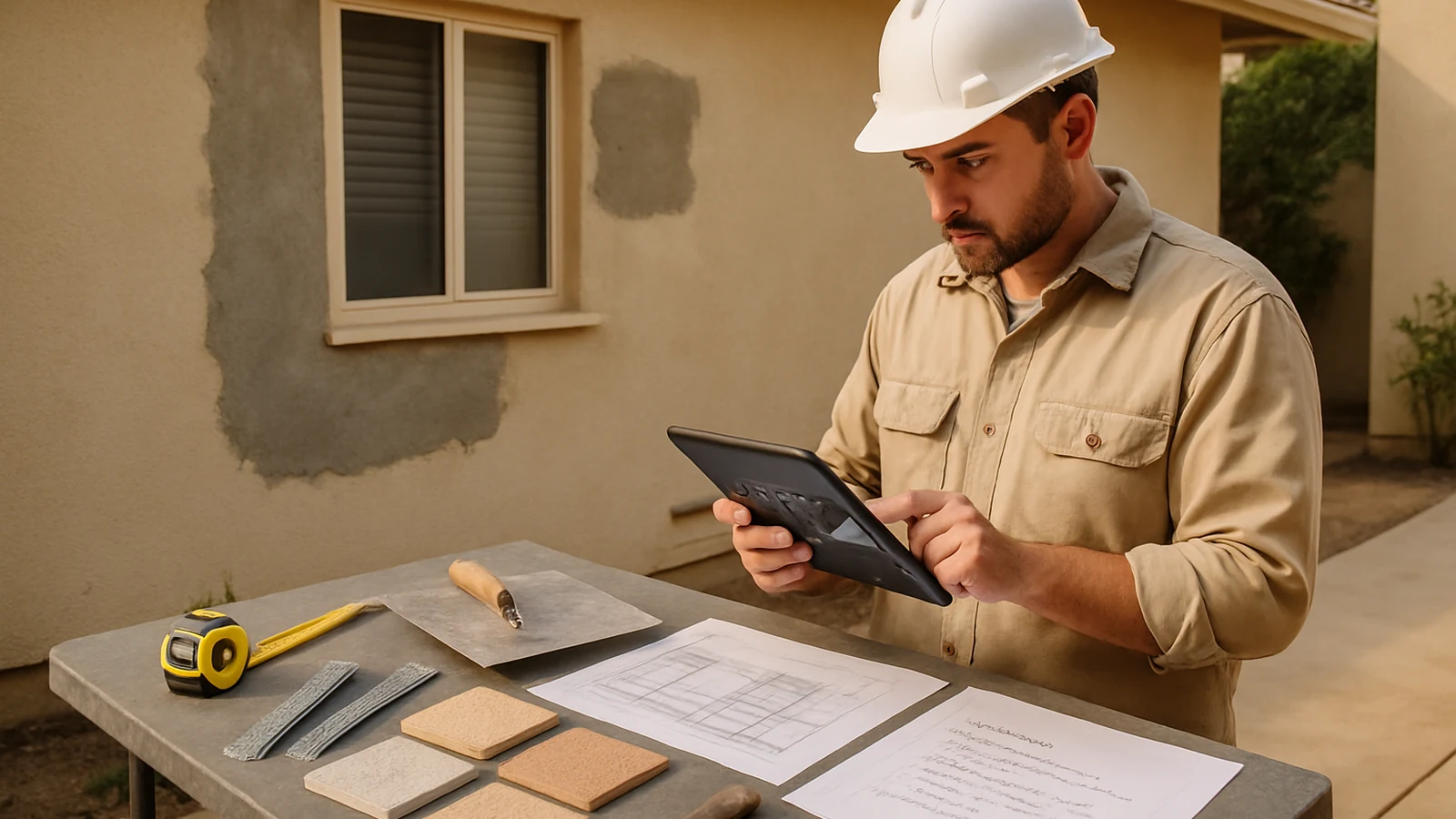
AI estimating software for stucco contractors in California should help a stucco company turn job photos, plans, wall repair notes, finish details, and follow-up reminders into a cleaner estimate faster. It should not take the contractor out of the decision. The contractor still checks the wall conditions, quantities, labor assumptions, access plan, exclusions, and final price before anything goes to the customer.
For Los Angeles stucco contractors, speed matters because many leads start with a few phone photos, a remodeler sending plans, an ADU detail, a window replacement patch, or a property manager asking for a quick repair number. The risk is that a fast number can miss the real work: lath, paper, flashing tie-ins, corner bead, texture match, scaffolding, crack repair, substrate damage, or customer expectations around color and finish.
AI estimating software for stucco contractors in California: the practical takeaway
A useful AI-assisted estimating workflow for California stucco work should organize the inputs, convert messy notes into scope, flag missing questions, separate base scope from alternates, and create a cleaner bid plus follow-up path. That means photos, plans, elevations, voice notes, repair lists, measurements, finish references, demo, lath, weather barrier assumptions, accessories, finish coat, access, cleanup, exclusions, and customer-ready wording all need a place in the estimate review.
The goal is not to make stucco estimating automatic. The goal is to make the review faster and more complete, like giving the contractor a disciplined junior estimator who keeps the job organized.
Why California stucco bids need more than square footage
Stucco is common across Southern California, but a Los Angeles bid may involve a Spanish-style home in Mid-City, a hillside repair near the canyons, a multi-family patch after plumbing work, an ADU addition, or a window-and-door replacement project where the stucco contractor is only one part of the envelope.
Existing wall conditions drive labor. Hairline cracks, delamination, damaged lath, soft substrate, rusted metal accessories, failed sealant, or water stains can change the bid. The estimate should state what is visible, what is assumed, and what requires field confirmation.
Tie-ins and texture expectations matter. Stucco repairs near windows, doors, vents, decks, parapets, and roof-to-wall areas can create flashing and water-management questions. Small patches also need plain language about texture, color, curing, paint, and blend limits so the customer understands what a reasonable match means.
Access and California compliance need review. Hillside lots, narrow side yards, occupied apartments, parking limits, courtyard work, and two-story elevations all affect production. Stucco contractors should also confirm applicable licensing, local permit, inspection, fire-zone, and building-envelope requirements for the exact job instead of guessing.
A faster Los Angeles stucco estimate workflow
Here is a practical workflow for stucco contractors who want speed without sending loose bids.
1. Capture every job input before pricing
Before building the estimate, gather photos from close-up and wide angles, any plans or elevations, walkthrough voice notes, approximate dimensions, finish samples, access notes, and concerns such as cracks, water staining, window or door changes, framing repair, and areas that need field verification.
This step is where AI can help first. It can pull scattered photos, plan notes, and voice notes into a structured checklist so the contractor is not pricing from memory.
2. Break the stucco bid into reviewable sections
A cleaner stucco estimate separates the work so it can be reviewed, revised, and explained. Common sections include:
- Protection, masking, setup, and access
- Demolition or removal of loose stucco
- Substrate inspection and repair allowance
- Lath, paper, accessories, weep screed, corner bead, control joints, or foam trim
- Scratch and brown coat scope
- Finish coat, texture match, color coat, paint, or fog coat assumptions
- Cleanup, debris, and customer walkthrough
- Exclusions for hidden rot, framing, waterproofing defects, structural movement, or unrelated trades
When the bid is structured this way, a GC or property manager can see what is included. It also makes change orders easier if the wall opens up and conditions are worse than expected.
3. Use AI to surface missing questions
AI estimating software for contractors is most useful when it slows down the right part of the process. It can review the photos and notes and ask questions such as:
- Is this a patch, full wall recoat, or complete new stucco assembly?
- Are windows, doors, vents, deck ledgers, or roof edges involved?
- Is the texture match expected to be exact, close, or painted after curing?
- Is there evidence of water intrusion or substrate damage?
- Who owns flashing, sealant, framing repair, painting, and permit coordination?
- Are access equipment, scaffolding, staging, or tenant notices included?
- Is the work in a hillside, coastal, high-fire, HOA, or multi-family context that needs extra review?
These are not software-only decisions. They are contractor review prompts that reduce missing scope before the price leaves the office.
4. Price with your own crew reality
Once the scope is organized, the contractor should review quantities, production rates, material choices, access cost, risk allowance, overhead, markup, and minimum job size. A small patch crew, a high-end smooth-finish specialist, and a production new-construction crew will not price the same way. Fast estimating is valuable only if the scope is clear enough for the contractor to trust the number.
Common stucco estimating mistakes to avoid
Pricing from one photo. One close-up can hide elevation height, access problems, adjacent openings, and the real patch boundary.
Forgetting texture and color expectations. Texture match, color coat, repainting, and blend limits should be stated plainly.
Leaving waterproofing responsibility vague. Window flashing, deck transitions, roof-to-wall areas, and water intrusion should be included only when they are truly in scope.
Ignoring access. Narrow yards, hillside lots, multi-family courtyards, occupied units, and staging restrictions can change labor quickly.
Skipping follow-up. A clean stucco bid still needs a follow-up message that explains assumptions, alternates, and the next step for approval.
How Estimado AI helps stucco contractors estimate faster
Estimado AI is built as AI estimating software for contractors who want faster estimate drafts while keeping the contractor in control. For stucco work, that means using photos, blueprints, videos, and voice notes to help organize wall conditions, patch limits, lath and finish assumptions, access, exclusions, and proposal structure before the contractor reviews the final estimate.
Estimado is not a replacement for field judgment. The contractor stays in the loop, checks the assumptions, edits the numbers, and approves before sending. The value is reducing office workload and making the estimating review cleaner when leads arrive through texts, photos, emails, plan sets, and walkthrough notes.
You can also browse more contractor workflows on the Estimado blog.
Next step
If your California stucco company wants to turn job photos, plans, and wall repair notes into cleaner estimate drafts faster, join the Estimado AI waitlist and see how Estimado is approaching contractor-controlled estimating workflows.
FAQ
What should AI estimating software do for a stucco contractor?
It should help organize photos, plans, notes, wall conditions, patch areas, lath and finish assumptions, exclusions, quantities, and follow-up tasks so the contractor can review and price faster.
Can AI estimate stucco repairs from photos?
AI can help identify visible patch areas, access issues, openings, texture concerns, and missing questions from photos. The contractor should still confirm measurements, substrate condition, water intrusion risk, and final scope before pricing.
What makes California stucco estimates different?
California stucco estimates often need closer review of existing wall assemblies, weather exposure, hillside or coastal access, fire-zone context, local permits, inspection requirements, and responsibility around flashing or waterproofing transitions.
How should stucco contractors handle exclusions in an estimate?
State exclusions clearly. Common examples include hidden rot, framing repair, waterproofing defects, structural movement, paint after patching, permit fees, access equipment, or work by other trades unless those items are included.