AI Estimating Software for Insulation Contractors in California: Faster Los Angeles Attic, Wall, and Retrofit Bids
A practical workflow for California insulation contractors using AI-assisted estimating to organize Los Angeles photos, plans, R-value targets, access conditions, air-sealing notes, exclusions, and follow-up.

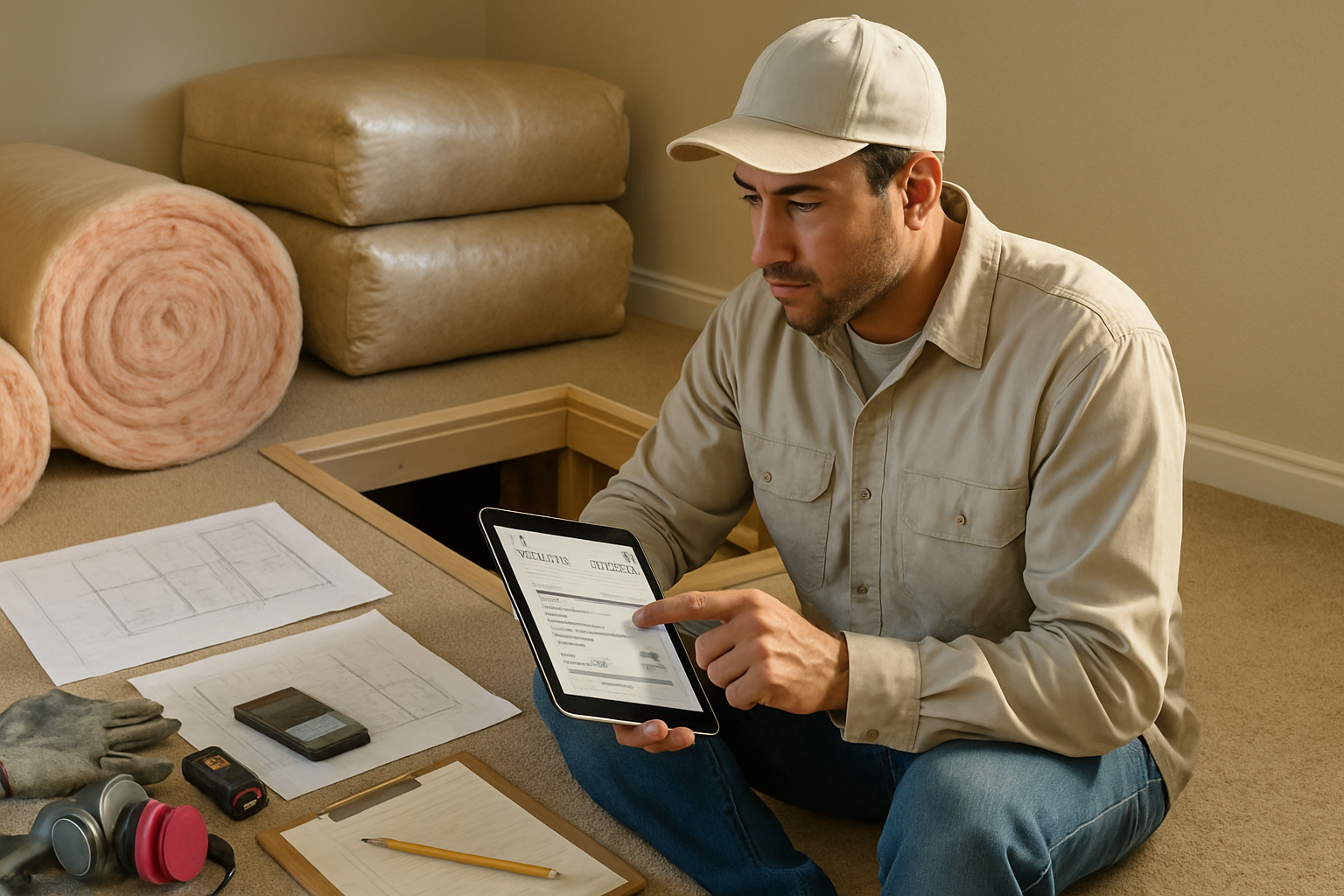
AI estimating software for insulation contractors in California should help turn scattered job details into a clear bid draft: attic photos, wall conditions, plan sheets, R-value targets, square footage, cavity depth, access notes, air-sealing scope, removal, disposal, ventilation, exclusions, and follow-up tasks. It should not guess hidden conditions or send a price without contractor review.
For Los Angeles insulation contractors, that matters because retrofit and remodel work can change quickly. One lead might be an attic top-off in a Valley single-family home. The next might be dense-pack wall insulation for an older bungalow, garage conversion insulation for an ADU, multifamily unit turnover work, sound attenuation in an apartment, or plan-based insulation on a remodel tied to California energy-code requirements.
AI estimating software for insulation contractors in California: the short answer
The best use of AI estimating software is to act like an organized junior estimator. It can help collect the job inputs, structure a first-pass insulation estimate, separate scope from assumptions, flag missing information, and prepare cleaner proposal language. The insulation contractor still verifies measurements, product choice, R-value requirements, access, labor, safety conditions, markup, and final price before anything goes to the customer.
A review-ready insulation bid should usually make these items clear:
- areas included: attic floor, rafter bays, exterior walls, interior sound walls, garage, crawlspace, rim joists, knee walls, or new-framing cavities
- material assumptions: blown fiberglass, cellulose, batt, mineral wool, spray foam, rigid foam, sound batts, vapor retarder, netting, fire blocking, or air-sealing products
- target performance: requested or required R-values, cavity depth limits, existing insulation condition, and whether removal is included
- job conditions: access size, attic clearance, ductwork, wiring, recessed lights, debris, rodent contamination, ventilation, occupied-home protection, parking, and staging
- exclusions and open decisions: permit responsibility, hazardous-material testing, drywall repair, electrical work, duct repairs, ventilation upgrades, and change-order triggers
Why this matters for Los Angeles insulation bids
California insulation estimates are not just material coverage multiplied by square footage. State energy rules, local inspection expectations, older housing stock, wildfire and ventilation concerns in some areas, and tight access in Los Angeles homes can all affect scope and risk.
An attic photo may show existing insulation, but it may not prove depth across the whole attic, whether air sealing is included, whether old material needs removal, whether recessed cans are insulation-contact rated, whether there is enough ventilation, or whether debris and rodent contamination will slow the crew. A plan sheet may show wall assemblies, but it may not tell you whether the general contractor expects sound batts, fire-rated assemblies, spray foam at rim areas, or insulation certificates ready for closeout.
Older Los Angeles homes can also create bid risk. If the work disturbs old drywall, plaster, flooring, ducts, or existing insulation, the estimate should avoid casual promises about hazardous materials. The contractor does not need to turn every proposal into a code manual, but the bid should state what is included, what must be verified, and what is excluded until testing or owner approval is complete.
A practical AI-assisted insulation estimating workflow
Use this process when a California lead comes from a homeowner, remodeler, builder, property manager, architect, designer, or general contractor.
1. Capture the job like an insulation estimator
Collect the inputs that normally live across texts, emails, photos, plan folders, and truck notes: wide photos, close-ups, plan pages, wall sections, room list, attic access, measurements, target R-values, existing insulation depth, removal notes, air-sealing requests, ventilation issues, parking, staging, and customer timing.
For a Los Angeles attic retrofit, take photos of the access opening, attic floor, existing insulation, ducts, wiring, can lights, soffit vents, roof vents, obstructions, debris, and the route from truck to access point. For an ADU or remodel, capture plan sheets, wall types, ceiling types, garage separation details, sound walls, inspection timing, and who is responsible for drywall or fire-rated assemblies.
A short voice note after the walkthrough can save office rework: “Los Angeles ADU garage conversion, walls open, R-13 batts in 2x4 exterior walls, R-30 ceiling batts, sound batts at bathroom and bedroom wall, air sealing at penetrations, drywall by GC, inspection before cover, parking in alley.”
2. Separate coverage, prep, and exclusions
A stronger insulation bid separates the insulation material from prep, removal, air sealing, access work, protection, disposal, ventilation, and closeout paperwork. That makes the estimate easier to review and protects the contractor when the job changes.
If the price assumes open framing, dry cavities, no hazardous materials, clear access, and normal working hours, say that. If old insulation removal, rodent cleanup, mold remediation, asbestos or lead testing, drywall patching, electrical corrections, duct repairs, ventilation upgrades, permit fees, or after-hours work are excluded, list them before the customer compares your number to another bid.
3. Build line items that match the real work
AI can help organize insulation line items, but the contractor should verify each one. Review square footage, depth, cavity type, bag count or batt count, waste, netting, air-sealing products, baffles, blockers, protective covering, crew hours, equipment, disposal, certificates, and follow-up.
For plan-based work, check drawing dates and assembly notes. For remodel work, mark which measurements came from plans, which came from field measurements, and which are assumptions. If a photo does not prove a dimension or an R-value target, the draft should ask for the missing information instead of inventing it.
4. Flag California and Los Angeles conditions before sending
Before the proposal goes out, check conditions that can change labor, schedule, and liability:
- attic clearance, access opening, roof pitch, crawlspace clearance, and crew safety
- existing insulation depth, contamination, moisture, pests, debris, and removal responsibility
- recessed lights, electrical junctions, knob-and-tube concerns in older homes, duct access, and ventilation
- Title 24 or plan-spec requirements tied to remodel, addition, ADU, or new-construction scope
- WUI, fire, sound, garage separation, or assembly requirements when shown on plans or requested by the GC
- exclusions for hazardous materials, remediation, drywall repair, permit fees, hidden damage, and work outside visible or documented scope
The goal is not to make the bid complicated. The goal is to make the insulation scope clear enough that the customer understands the price and the contractor has fewer surprises when the crew arrives.
5. Follow up around decisions that stall insulation jobs
Many insulation bids stall because the customer, GC, or property manager has not confirmed R-value targets, wall assemblies, drywall schedule, access, air sealing, removal, ventilation, hazardous-material responsibility, or inspection timing. A useful follow-up should mention those exact decisions: “Once the attic access, existing-insulation removal, and target R-value are confirmed, we can lock the scope and update the proposal.” That beats a generic “just checking in” message.
AI-assisted follow-up can help keep those open decisions attached to the estimate, but the contractor still owns the relationship and the final number.
Common insulation estimating mistakes to avoid
Watch for these California insulation bid problems:
- pricing from square footage alone without checking depth, access, product type, prep, air sealing, removal, disposal, and ventilation
- assuming old insulation can stay when contamination, moisture, pests, or depth variation may change the job
- leaving Title 24, inspection timing, certificates, sound batts, fire-rated assemblies, and closeout requirements unclear
- forgetting baffles, blockers, netting, protective covering, recessed-light clearance, duct obstructions, crawlspace access, parking, and staging
- hiding exclusions for hazardous materials, remediation, drywall repair, electrical corrections, duct repairs, permit fees, and hidden damage
- responding late because photos, plan sheets, measurements, notes, and follow-up tasks are scattered across too many places
A polished PDF does not fix a thin insulation scope. The strongest bid explains what is included, what is excluded, what must be verified, and what changes the price.
How Estimado AI helps
Estimado AI is being built as AI estimating software for contractors who want faster estimate drafts without giving up control. For insulation contractors, that means using blueprints, job photos, videos, and voice notes to help prepare structured bid drafts with material categories, coverage areas, access conditions, prep notes, exclusions, open questions, and follow-up tasks.
Estimado is not meant to replace the estimator or auto-send insulation bids. The contractor reviews measurements, materials, labor, risk, proposal wording, and final price before anything goes to the customer.
If your insulation company wants to turn Los Angeles photos, plan sheets, walkthrough videos, voice notes, and scope decisions into cleaner bid drafts faster, join the Estimado AI waitlist.
For related workflows, see AI estimating software for California contractors, AI estimating software for roofing contractors in California, and the Estimado contractor estimating blog.
Next step
If insulation bids are slowed down by scattered photos, unclear R-values, old plan sheets, attic access questions, removal uncertainty, and late follow-up, tighten the intake and review process first. A faster bid only helps when the scope is clear enough for the crew to execute without avoidable surprises.
FAQ
Can AI help estimate insulation from attic or crawlspace photos?
AI can help organize visible conditions from photos, videos, and notes, especially access, existing insulation, obstructions, debris, and open questions. An insulation contractor should still verify measurements, depth, product type, R-value targets, safety conditions, and hidden risks.
Can AI estimate insulation from plans?
AI can help turn plan sheets, wall sections, ceiling assemblies, and scope notes into a structured bid draft, but the contractor should verify drawing dates, assembly requirements, square footage, R-values, inspection needs, and exclusions before pricing.
What should a California insulation estimate include?
It should include covered areas, material type, target R-values, existing conditions, prep, removal if included, air sealing, access limits, disposal, ventilation assumptions, exclusions, open decisions, and inspection or certificate requirements when they apply.
Is insulation estimating software useful for experienced contractors?
Yes, when it reduces office workload and keeps job details organized. Experienced insulation contractors can use AI to speed up the first bid draft while still reviewing measurements, labor, safety, materials, schedule, and margin themselves.
Does Estimado AI send insulation bids automatically?
No. Estimado is designed to help prepare review-ready estimate drafts. The contractor checks the scope, edits where needed, approves the final number, and decides when to send it.