AI Estimating Software for Flooring Contractors in California: Faster Los Angeles Bids From Photos, Plans, and Voice Notes
A practical AI-assisted estimating workflow for California flooring contractors bidding Los Angeles remodels, apartments, slab jobs, material upgrades, substrate prep, exclusions, and follow-up.

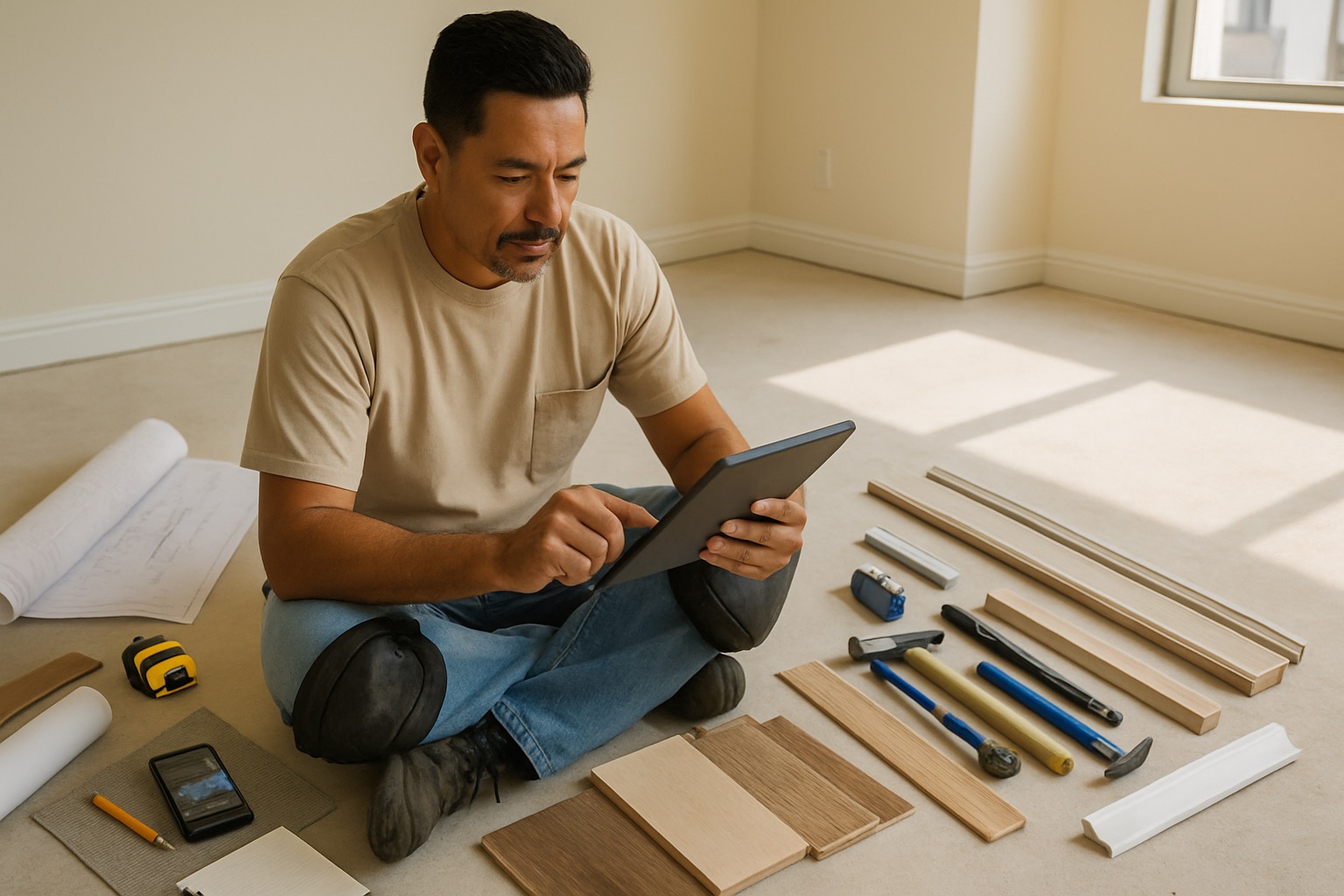
AI estimating software for flooring contractors in California should help a contractor price faster without hiding the details that make flooring jobs expensive. A useful system organizes job photos, floor plans, room measurements, material selections, demolition notes, substrate conditions, moisture concerns, stairs, transitions, trim, exclusions, and follow-up into a draft the contractor can review before sending.
For a Los Angeles flooring contractor, the hard part is rarely “how many square feet are there?” The hard part is getting a clean enough scope to protect the bid: what is being removed, what stays, what prep is included, what material is selected, what building rules apply, what access looks like, and what happens when the slab, subfloor, or old finish is worse than expected.
AI estimating software for flooring contractors in California: the short answer
For California flooring work, AI estimating software is most valuable when it acts like an organized junior estimator. It can pull scattered job information into a structured bid draft, separate scope into reviewable line items, flag missing decisions, prepare customer-ready wording, and help remind the contractor what still needs follow-up.
A strong flooring estimate still needs the contractor to verify:
- Net square footage, waste factor, room breaks, closets, hallways, stairs, landings, and transitions
- Existing flooring removal, haul-off, furniture moving, appliance moving, baseboards, shoe molding, doors, and undercutting
- Slab or subfloor condition, leveling, crack repair, moisture testing, underlayment, sound control, and adhesive requirements
- Product selection, color, thickness, wear layer, installation method, lead time, attic or elevator access, parking, and building work hours
- Assumptions, exclusions, alternates, payment schedule, change-order triggers, and final contractor approval
The point is not to let software bid blind. The point is to get a better first draft faster so the contractor can spend review time on scope, risk, production time, and margin.
Why this matters for Los Angeles and California flooring bids
California flooring contractors see a wide spread of job conditions: single-family remodels, older bungalows, hillside homes, condos, apartments, retail spaces, offices, tenant improvements, and insurance-related replacements. Los Angeles adds practical estimating friction: traffic windows, parking, high-rise or multi-family access, HOA rules, noise limits, elevator reservations, tight staging space, and occupied-unit scheduling.
State and local requirements also affect how a flooring proposal should be written. Contractors should verify licensing, permit, building-department, HOA, lead-safe, asbestos, indoor-air, sound-control, and product-compliance questions with the proper authority for the job. The estimate does not need a legal essay, but it should make responsibility clear. If testing, permits, abatement, acoustic underlayment approval, floor-leveling beyond a stated allowance, or after-hours work is not included, the proposal should say so.
California projects also make substrate and material details important. Slab moisture, coastal humidity, older adhesive residue, uneven subfloors, second-floor sound requirements, and owner-selected imported products can all change labor and schedule. A cheaper bid that skips those issues may look good on day one and become a dispute later.
A practical AI-assisted flooring estimating workflow
Use this workflow before sending a California flooring bid.
1. Capture the job while you are still on site
Take photos of each room, transitions, stairs, closets, doorways, baseboards, appliances, floor vents, damaged areas, access path, parking, elevator, and staging area. For slab work, photograph visible cracks, moisture concerns, uneven areas, old adhesive, and any spot where leveling may be needed.
Add a short voice note with the actual recommendation. For example: “Los Angeles condo, replace carpet with LVP in living room, hall, and two bedrooms; elevator reservation required; acoustic underlayment likely required by HOA; baseboards stay with shoe molding; furniture moving excluded; slab leveling allowance only; need final product selection.” That note saves office time and prevents someone from guessing from photos alone.
2. Separate measurement from scope
Square footage is only one part of the bid. Build the draft in sections so the contractor can review each cost driver:
- Area takeoff: rooms, closets, hallways, stairs, landings, waste, pattern direction, and transitions
- Demolition: carpet, pad, tack strip, tile, hardwood, laminate, glue-down material, baseboards, and haul-off
- Prep: scraping, patching, leveling allowance, moisture testing, underlayment, sound mat, primer, adhesive, and protection
- Installation: product type, installation method, trims, reducers, stair nosing, thresholds, door undercuts, and cleanup
- Project rules: access, parking, elevator, HOA approval, work hours, occupied-unit protection, and other-trade responsibility
This structure helps the customer compare real scope instead of only the bottom-line number.
3. Flag missing decisions before the number goes out
AI can help surface open items, but the flooring contractor decides what matters. The draft should flag missing product selection, unclear transitions, unknown subfloor condition, unanswered HOA sound requirements, lead time risk, furniture-moving responsibility, appliance handling, door trimming, patch-back, or old material removal.
For plan-based work, record which drawings, revisions, finish schedules, and room names were used. For remodel work, separate what was visible during the walk-through from what may change after demolition.
4. Use alternates instead of vague allowances
California customers often compare upgrades: LVP versus engineered wood, glue-down versus floating, baseboards replaced versus left in place, full leveling versus spot patching, standard underlayment versus acoustic underlayment, or weekday work versus after-hours building access. Alternates keep the base bid clean while giving the customer choices.
Allowances can be useful, but they should be narrow. “Floor prep included” is too vague. “Includes up to X hours of minor scraping and patching; leveling, moisture mitigation, abatement, and hidden subfloor repair by change order” is much safer.
5. Follow up around decisions, not just price
A useful follow-up is specific: “Before we lock the schedule, we need final flooring selection, HOA underlayment approval, confirmation on furniture moving, and approval on the leveling alternate.” That message helps the customer move forward and protects your crew from unclear scope.
AI-assisted follow-up can help track those open items, but the contractor still owns the relationship, the final number, and the send button.
Common flooring estimating mistakes to avoid
Watch for these California flooring bid problems:
- Pricing from square footage without documenting demolition, stairs, transitions, baseboards, door cuts, trim, and access
- Ignoring slab moisture, cracks, old adhesive, leveling, sound-control rules, or subfloor repair risk
- Leaving furniture, appliances, toilets, closets, haul-off, protection, and occupied-unit cleanup unclear
- Treating HOA approvals, elevator reservations, parking, work hours, and building access as office details instead of cost drivers
- Sending one lump sum with no exclusions for abatement, hidden damage, product delays, or change orders
- Letting a warm Los Angeles lead sit because photos, notes, measurements, and follow-up are scattered across phones and texts
A stronger flooring estimate makes assumptions visible before material is ordered and crews are scheduled.
How Estimado AI helps
Estimado AI is being built as AI estimating software for contractors who want faster estimate drafts without giving up control. For flooring contractors, that means using blueprints, job photos, videos, and voice notes to help prepare structured estimate drafts with room-by-room scope, materials, labor buckets, assumptions, exclusions, alternates, and customer-ready language.
Estimado is not a fully autonomous estimator. The contractor stays in the loop, checks the measurements, confirms materials, reviews labor and risk, edits the proposal, approves the final version, and decides when to send it.
If your flooring company wants to turn site photos, plans, scope notes, material choices, and follow-up into cleaner estimate drafts without giving up review control, join the Estimado AI waitlist.
You can also compare related workflows on the Estimado blog, including AI estimating software for California contractors, AI estimating software for flooring contractors, and AI estimating software for flooring contractors in Arizona.
Next step
If California flooring estimates are slowed down by scattered photos, plan sheets, material choices, HOA questions, slab notes, exclusions, and late follow-up, tighten the intake process first. Better job information makes AI-assisted estimating more useful and helps flooring contractors respond faster without hiding risk.
FAQ
Can AI help estimate flooring from photos and plans?
AI can help organize room photos, plan sheets, finish schedules, measurements, demolition notes, material selections, exclusions, and proposal language. A flooring contractor still needs to verify quantities, product specs, labor, substrate risk, and final pricing before sending the bid.
What should a California flooring estimate include?
A California flooring estimate should define measured areas, product selection, removal, prep, underlayment, sound-control assumptions, transitions, baseboards, stairs, haul-off, access rules, exclusions, alternates, and change-order triggers.
Is flooring estimating software useful for experienced contractors?
Yes, when it reduces office work and keeps job details organized. Experienced flooring contractors can use AI to structure photos, notes, measurements, materials, exclusions, follow-up tasks, and customer-ready proposal language faster.
Should Los Angeles flooring bids mention HOA or building access rules?
Yes when they affect the job. Condo, apartment, retail, and office projects may involve elevator reservations, parking, work-hour limits, acoustic underlayment approval, protection requirements, or occupied-space scheduling. Those items should be included, excluded, or assigned clearly.
Does Estimado AI send flooring estimates automatically?
No. Estimado is designed to help prepare structured estimate drafts. The contractor reviews the scope, edits where needed, approves the final version, and decides when to send it.