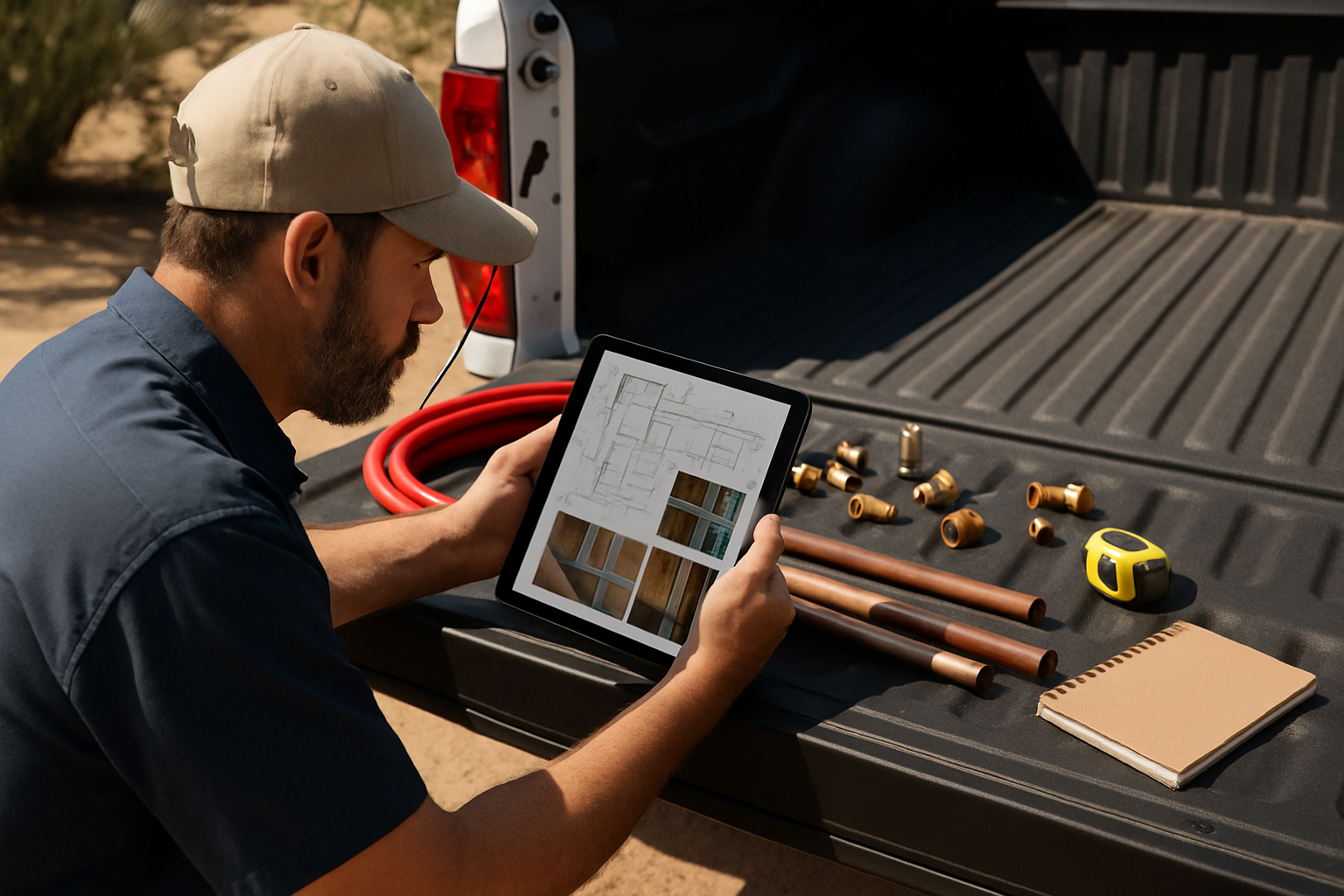
AI Estimating Software for HVAC Contractors in Arizona: Faster Phoenix Changeout, Duct, and Service Bids
A practical HVAC estimating workflow for Arizona contractors who need faster Phoenix bids, cleaner scope, and better follow-up without losing control of the final number.

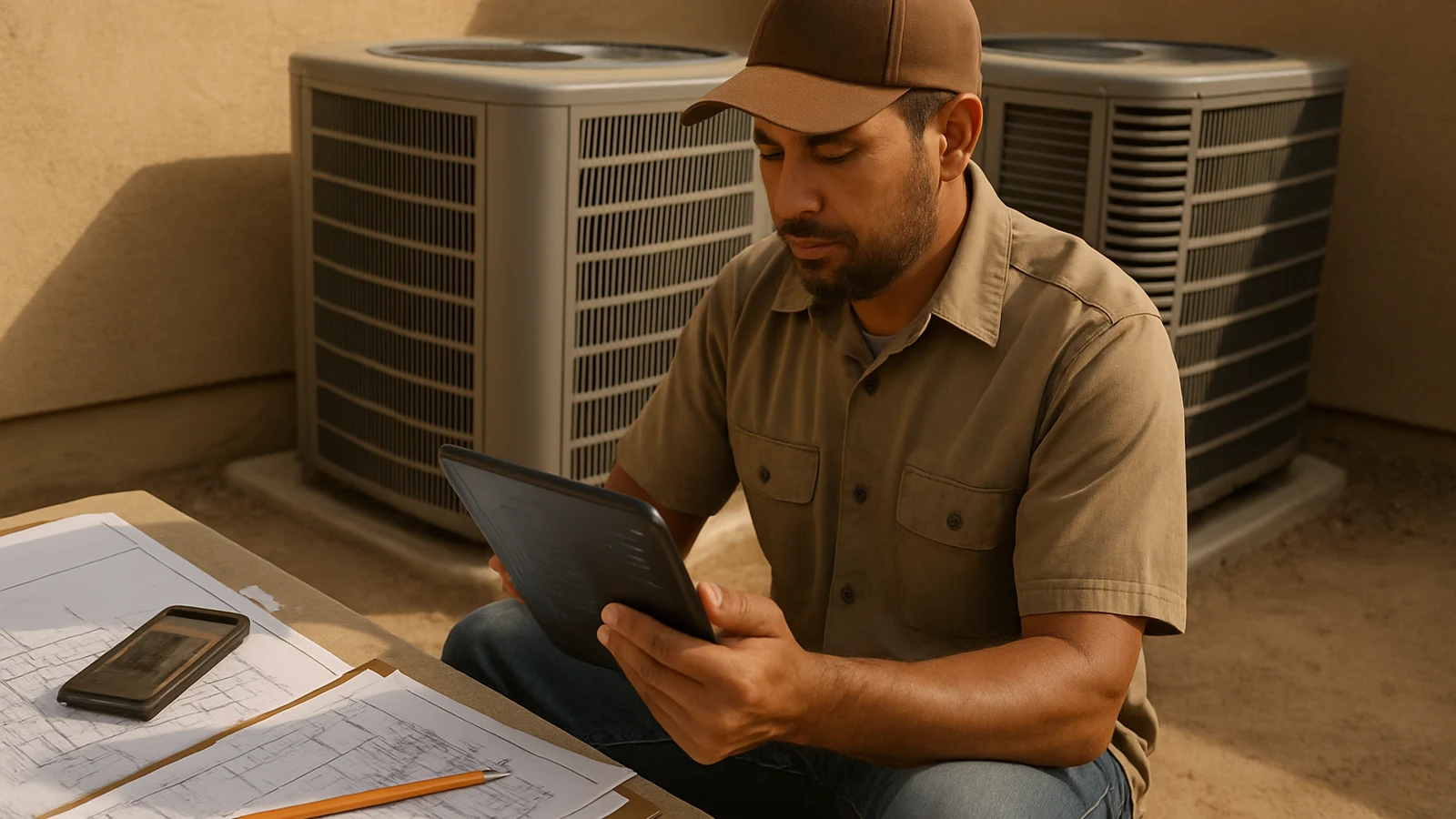
AI estimating software for HVAC contractors in Arizona is useful when it helps a real HVAC contractor move from lead details to a clear, reviewed proposal faster. For an Arizona crew, that usually means turning job photos, equipment notes, blueprint sheets, voice memos, and follow-up reminders into a bid that still gets checked by the contractor before it goes to the customer.
Phoenix HVAC work is full of small estimating decisions: changeout access, condenser pad condition, duct modifications, attic work, controls, line-set condition, condensate routing, electrical coordination, crane or lift access, startup, disposal, and permitting questions. AI does not remove those decisions. Good AI estimating software helps organize them so the estimator can price with fewer missed details.
Direct answer: what AI estimating software should do for Arizona HVAC contractors
For HVAC contractors in Arizona, AI estimating software should help capture the job, structure the scope, build a draft estimate, and prepare follow-up without pretending to size equipment or approve code decisions on its own.
A practical workflow should help you:
1. Turn job photos, videos, plan sheets, and voice notes into a usable scope draft.
2. Separate changeout, duct, controls, electrical, disposal, and startup line items.
3. Flag unknowns before you send a number.
4. Keep the contractor in the loop for sizing, code, brand, labor, margin, and final approval.
5. Send a professional estimate packet and follow up while the job is still warm.
That is the difference between useful AI estimating software and a generic chatbot. HVAC estimating has too many jobsite variables for copy-and-paste proposals.
Why this matters for Phoenix HVAC bids
In the Phoenix market, speed matters because customers often call when comfort is urgent. But rushing the estimate can create scope gaps. A same-day changeout quote may look simple until the crew discovers a tight attic access, a deteriorated disconnect, a slab that needs leveling, a line set that should be replaced, or duct issues that were not included.
Commercial tenant improvements and light commercial service bids have a different problem. The plans may show equipment schedules, duct runs, roof curbs, controls notes, and electrical coordination across multiple sheets. If the estimator does not connect those details, the proposal may be missing work that shows up later as unpaid labor.
AI-assisted estimating helps most when it reduces administrative drag without flattening the trade. The software should make the estimate easier to review, not hide assumptions. For Arizona HVAC contractors, that means the draft should surface:
- Equipment type, capacity notes, and who verifies final sizing
- Existing condition notes from photos or site visit comments
- Duct modification scope and access constraints
- Electrical and controls coordination
- Line-set, drain, pad, curb, and disposal requirements
- Permit or inspection items to confirm locally
- Exclusions, alternates, and customer decisions
A cleaner estimate also makes follow-up easier. When the customer asks why your price is higher than another bid, you can point to the work included instead of sounding defensive.
A practical HVAC estimating workflow using photos, plans, and notes
Use this workflow before any AI tool drafts the proposal. It keeps the estimate grounded in real job conditions.
1. Capture the job like your installer will see it
For a residential replacement, collect photos of the air handler or furnace location, condenser, disconnect, pad, line-set entry, thermostat, filter rack, attic or closet access, drain termination, and any damaged duct or insulation. Add a short voice note explaining the customer's complaint and what you recommended.
For a plan-based bid, upload the mechanical sheets, equipment schedules, roof plan, reflected ceiling plan if relevant, electrical sheets for power coordination, and any addenda. The goal is not just to count equipment. It is to understand the complete work package.
2. Split the estimate into scope buckets
A better HVAC estimate is easier to review when the work is grouped. Common buckets include:
- Equipment and accessories
- Ductwork and air distribution
- Refrigerant piping and condensate
- Controls and thermostat work
- Electrical coordination or allowance
- Startup, testing, and commissioning notes
- Demo, haul-off, crane, lift, roof access, or attic access
- Permit, inspection, and documentation items to verify
This structure helps a contractor spot what is missing before the customer does.
3. Mark assumptions and unknowns clearly
Do not let the estimate bury uncertainty. If the line set is assumed reusable, say so. If electrical work is by others, say so. If final equipment sizing depends on Manual J or engineer review, say so. If duct leakage or poor airflow may require extra work, call it out as an alternate or field condition.
AI can help list these unknowns, but the contractor still decides what belongs in the base bid.
4. Review labor and margin manually
Labor is where many HVAC bids get hurt. Attic work in summer, rooftop access, difficult closet replacements, long line-set runs, drywall patch coordination, occupied home protection, and after-hours work all change the real labor burden.
The contractor should review production hours, crew size, travel, equipment pickup, warranty process, and markup before sending. AI can organize the draft, but it should not override your labor judgment.
5. Follow up with the scope, not just the price
After the estimate goes out, follow up with a short message that explains what is included: equipment, install, disposal, startup, permits to confirm, and any alternates. Customers often compare bids by price first, but clear scope helps them understand risk.
If you want more workflow ideas beyond HVAC, the Estimado contractor estimating articles cover related trades and bid process topics.
Common mistakes HVAC contractors should avoid
The biggest estimating mistake is treating a changeout like a one-line price. One-line pricing may be fast, but it can leave the contractor exposed when access, electrical, duct, or drainage details change the job.
Watch for these common gaps:
- Reusing a previous quote without checking current site conditions
- Missing pad, curb, disconnect, whip, breaker, or condensate work
- Failing to specify whether duct repairs are included or excluded
- Not separating base scope from customer-requested upgrades
- Leaving permits, inspections, or utility coordination vague
- Sending a proposal before final sizing and compatibility are reviewed
- Forgetting to schedule follow-up after the estimate is sent
For Arizona contractors who also coordinate plumbing or attic work, the related guides on AI estimating software for plumbing contractors in Arizona and AI estimating software for insulation contractors in Arizona can help connect cross-trade scope.
How Estimado AI helps without taking the contractor out of the loop
Estimado AI is being built as AI estimating software for contractors who want faster bids without adding more office overhead. The contractor brings the job inputs: photos, plans, videos, voice notes, and written scope. Estimado helps turn those inputs into a structured estimate draft with scope, material and labor sections, assumptions, and a customer-ready proposal format.
The important part is control. Estimado is not positioned as a fully autonomous estimator that sends numbers for you. It works more like a junior estimator at your side. It helps organize the estimate, flags missing details, and gives you a cleaner starting point. You review, edit, price, approve, and send.
That is especially important for HVAC. Equipment selection, sizing, code compliance, commissioning, warranty requirements, and jobsite judgment still belong with the contractor.
Next step
If you are an Arizona HVAC contractor trying to turn leads into clearer estimates faster, start by tightening your intake process: photos, plan sheets, voice notes, assumptions, exclusions, and follow-up. Then use software to organize the work instead of replacing your judgment.
For contractors who want estimating help that keeps them in control of the final number, join the Estimado AI waitlist.
FAQ
What is AI estimating software for HVAC contractors?
AI estimating software for HVAC contractors helps convert job information such as photos, plans, notes, and customer requests into an organized estimate draft. The contractor still verifies equipment, scope, labor, code requirements, pricing, and final approval.
Can AI estimate HVAC changeouts from photos?
AI can help organize what is visible in photos, such as equipment location, access, pad condition, line-set routing, drain details, and potential coordination items. It should not guess hidden conditions or final system sizing without contractor review.
Should Arizona HVAC contractors use AI for commercial plan bids?
AI can be useful for organizing plan sheets, equipment schedules, scope notes, and addenda into a cleaner estimate workflow. The estimator still needs to verify quantities, sheet coordination, local requirements, labor, and exclusions.
What should be included in an HVAC estimate?
A strong HVAC estimate usually identifies equipment, accessories, duct or air distribution work, line-set or condensate scope, controls, electrical coordination, startup, disposal, permits to confirm, exclusions, alternates, and payment terms.
Does Estimado AI send estimates automatically?
No. Estimado is designed to keep the contractor in control. It can help draft and organize the estimate, but the contractor reviews, edits, approves, and sends the final proposal.