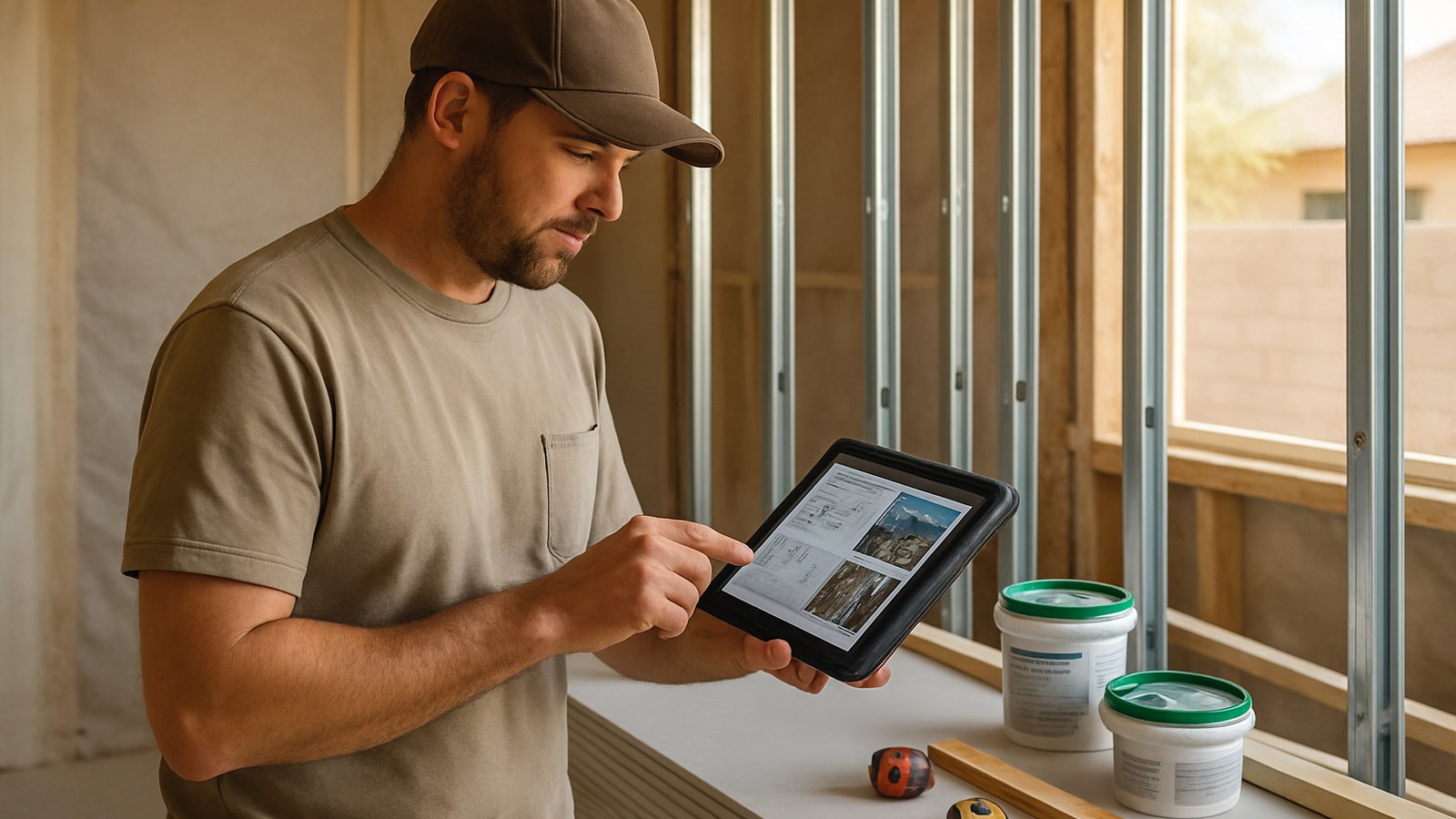
AI Estimating Software for Roofing Contractors in Arizona: Faster Phoenix Bids With Cleaner Scope
A practical AI-assisted estimating workflow for Arizona roofing contractors bidding Phoenix reroofs, repairs, tile, shingle, foam, flat roof, and follow-up work.

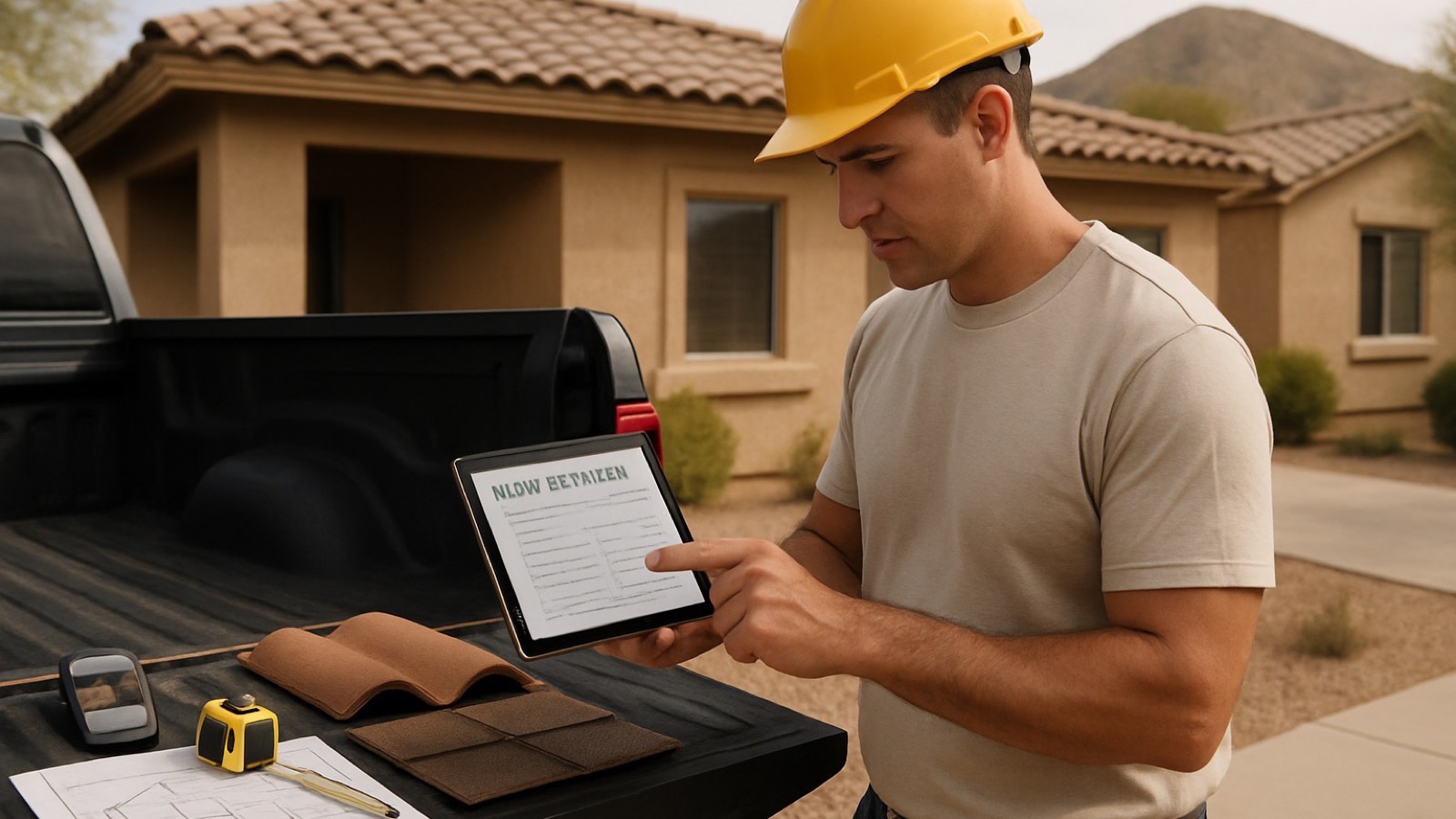
AI estimating software for roofing contractors in Arizona should help roofers move faster without turning every roof into a risky guess. The useful version organizes job photos, roof measurements, plan sheets, inspection notes, voice notes, material choices, repair scope, exclusions, and follow-up into a bid draft the contractor reviews before it ever reaches the customer.
For Phoenix roofing contractors, the issue is not just speed. Arizona roofs come with heat, sun exposure, tile details, flat-roof drainage, foam coating questions, monsoon-season leak calls, brittle underlayment, HOA expectations, access limits, and homeowners comparing several quotes. A fast bid still has to protect the contractor from missed scope.
AI estimating software for roofing contractors in Arizona: the short answer
For Arizona roofing work, AI estimating software is most useful when it acts like an organized junior estimator. It can help turn roof photos, measurements, plans, videos, and field notes into a structured estimate draft with line items, assumptions, alternates, exclusions, and follow-up reminders.
The contractor still needs to verify the roof area, pitch, slope count, material, code or permit requirements, access, tear-off, decking, underlayment, flashing, penetrations, drainage, labor, disposal, and final price. AI should make missing scope easier to see, not hide it.
A cleaner Arizona roofing estimate usually needs to show:
- Roof type: tile, shingle, metal, foam, modified bitumen, TPO, coating, or mixed system
- Tear-off or recover assumptions, disposal, protection, staging, and access
- Underlayment, flashing, valleys, eaves, rakes, vents, pipe jacks, skylights, parapets, and scuppers
- Decking or substrate repairs, dry rot, cracked tiles, foam repairs, ponding, and leak investigation limits
- Alternates for uncertain repairs and clear exclusions for hidden damage
- Follow-up tasks after the estimate, not just a price check-in
Why this matters for Phoenix and Arizona roofing contractors
Roofing estimates in Arizona can look straightforward from the street and get complicated once the roof is walked. A Phoenix homeowner might send three roof photos and say, “We need a quote before monsoon season.” That is not enough to price cleanly. The contractor needs to know whether the job is a full reroof, a repair, a coating, a tile lift-and-reset, a foam restoration, or a leak investigation with unknown substrate conditions.
Arizona climate changes the scope conversation. Strong sun can accelerate wear on exposed materials. Summer heat affects work windows, crew planning, storage, and safety. Monsoon storms create urgent leak calls where the customer wants speed, but the contractor still needs to document what was inspected, what is assumed, and what hidden damage may require a change order. Dust, rooftop equipment, tile breakage, skylights, parapets, scuppers, and old penetrations can all change the bid.
Phoenix-area jobs also create business workflow pressure. Roofers may be bidding owner-occupied homes, rental turns, HOA neighborhoods, insurance-related repairs, GC-led remodels, and light commercial flat roofs in the same week. If the intake lives across texts, photos, voicemails, drone images, and plan PDFs, the office can lose an important detail before the proposal is sent.
A practical AI-assisted roofing estimating workflow
Use this workflow before sending an Arizona roofing proposal.
1. Capture the full roof story
Collect wide photos of every roof plane, close-ups of problem areas, valleys, edges, penetrations, vents, skylights, chimneys, parapets, scuppers, gutters, fascia, soffit, attic access when relevant, and ground-level access. Add drone photos or a roof report when available. Upload plan sheets for new construction or additions. Record a short voice note while the walkthrough is fresh.
A useful Phoenix field note might sound like: “Two-story tile roof, leak at rear patio, several cracked tiles, underlayment age unknown, include inspection and limited tile reset around valley, exclude hidden decking or underlayment replacement until opened, add alternate for full lift-and-reset, access from side gate, HOA may require color match.”
That note gives the estimate more useful context than roof square count alone.
2. Separate measure, system, repair, and risk
Roofing bids get risky when every detail is buried under one line called “roof work.” Break the draft into sections the contractor can check quickly:
- Measurement and takeoff: roof area, pitch, waste, ridge, hip, valley, eave, rake, starter, and edge details
- Existing system: tile, shingle, foam, metal, coating, flat roof membrane, mixed materials, and visible condition
- Scope: tear-off, lift-and-reset, repair, coating, flashing, underlayment, decking, ventilation, and cleanup
- Details: penetrations, pipe jacks, vents, skylights, parapets, scuppers, gutters, fascia, and access
- Commercial terms: alternates, allowances, exclusions, payment schedule, warranty language, and follow-up
This structure helps a busy owner-estimator review the bid without missing the line items that protect margin.
3. Use photos and plans to flag missing scope
AI can help compare the intake package against common roofing estimate categories. If the note says “replace shingles” but photos show rotten fascia, multiple penetrations, or low-slope tie-ins, the draft should flag those areas for review. If a flat roof photo shows ponding near a scupper, the estimate should not ignore drainage. If a tile repair has unknown underlayment condition, the proposal should say what is included and what requires approval after exposure.
The point is not to let software guess hidden damage. The point is to make unclear assumptions visible before the contractor sends a number.
4. Build alternates for uncertain repairs
Arizona roofing contractors should avoid stuffing every unknown into the base price or leaving it vague. Use alternates and allowances when the scope is uncertain. For example, the base bid can include a defined leak repair, with alternates for additional tile replacement, underlayment replacement, decking repair, foam patching, flashing rebuilds, or a broader roof section replacement if the opened area shows more damage.
That gives the customer a clearer proposal and gives the contractor a cleaner paper trail when hidden conditions appear.
5. Follow up with scope decisions
After the bid goes out, follow up on the decisions that change cost: material selection, tile color match, warranty option, repair versus replacement, HOA review, permit responsibility, access, staging, start date, and any alternates. A follow-up that reminds the customer what is included is stronger than a generic “just checking in.”
Common roofing estimating mistakes to avoid
Watch for these problems on Arizona roofing bids:
- Pricing from roof area alone without checking pitch, waste, valleys, penetrations, access, and disposal
- Forgetting flashing, pipe jacks, skylights, vents, scuppers, fascia, gutters, and tie-ins
- Treating underlayment, decking, foam substrate, or dry rot as vague “repairs”
- Failing to document heat, access, staging, HOA, and work-window assumptions
- Sending one lump-sum number with no alternates for uncertain hidden conditions
- Following up only on price instead of the scope choices that drive the final decision
A better roofing estimate does not have to be complicated. It has to make the right assumptions easy to review.
How Estimado AI helps
Estimado AI is being built as AI estimating software for contractors who want faster bids without giving up control. For roofing contractors, that means using job photos, blueprints, videos, and voice notes to help create structured estimate drafts with scope sections, line items, alternates, exclusions, and customer-ready language.
Estimado is not a fully autonomous estimator. The contractor stays in the loop, reviews quantities, edits the scope, confirms labor and material assumptions, approves the proposal, and decides when to send it.
If your roofing company wants a cleaner way to turn roof photos, plans, voice notes, repair scope, and follow-up tasks into reviewed bid drafts, join the Estimado AI waitlist.
You can also compare related workflows on the Estimado blog, including AI estimating software for roofing contractors in Texas, AI estimating software for roofing contractors in Florida, and AI estimating software for Arizona contractors.
Next step
If roofing estimates are slowed down by scattered photos, unclear repair scope, hidden-condition risk, and weak follow-up, tighten the intake first. Better job information makes AI-assisted estimating more useful and helps Arizona roofing contractors respond faster without bidding blind.
FAQ
Can AI estimate a roof from photos?
AI can help organize roof photos, plan sheets, field notes, repair descriptions, material choices, and proposal language. A roofing contractor still needs to verify measurements, roof condition, hidden damage risk, labor, materials, permits, and final price before sending the estimate.
What should Arizona roofing contractors include in an estimate?
A strong Arizona roofing estimate should define the roof system, takeoff assumptions, tear-off or repair scope, underlayment, flashing, penetrations, drainage, access, disposal, alternates, exclusions, and change-order triggers.
Is roofing estimating software useful for experienced contractors?
Yes, when it reduces office work and keeps the bid organized. Experienced contractors can use AI-assisted workflows to structure photos, measurements, scope notes, alternates, follow-up tasks, and customer-facing proposal language faster.
Should leak repairs have alternates?
Often yes. Leak repairs can uncover hidden underlayment, decking, flashing, or substrate problems. Alternates and allowances help the customer understand what is included and what may require approval after the roof is opened.
Does Estimado AI send roofing estimates automatically?
No. Estimado is designed to help prepare estimate drafts. The contractor reviews, edits, approves, and decides when to send the final estimate.