AI Estimating Software for Framing Contractors in Texas: Faster Houston Bids From Plans, Photos, and Scope Notes
A practical workflow for Texas framing contractors who need faster Houston bids from plans, photos, structural notes, lumber lists, connectors, exclusions, and follow-up.

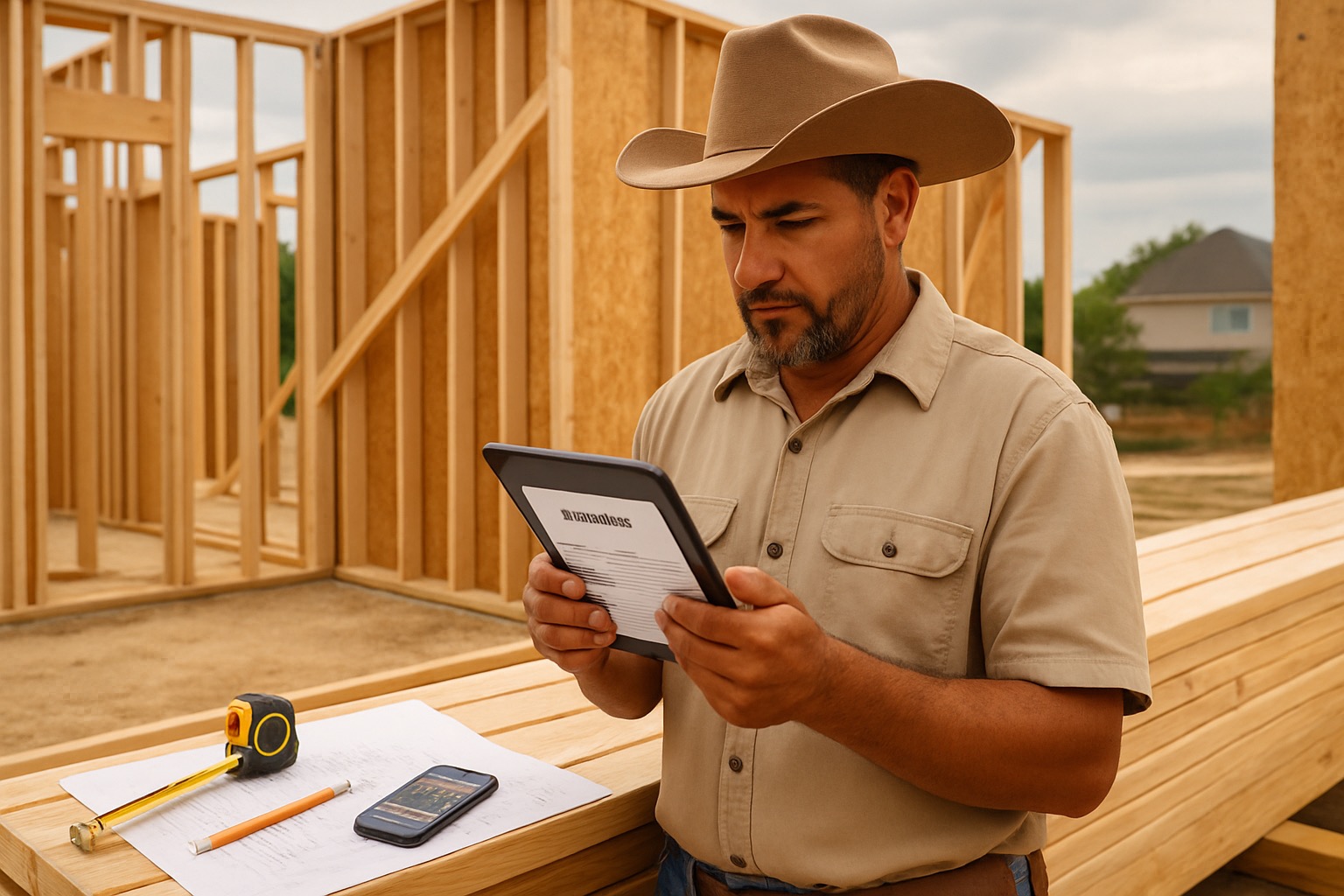
AI estimating software for framing contractors in Texas should help framers turn scattered job information into a clear bid draft faster: plan sheets, site photos, videos, voice notes, structural callouts, wall layouts, openings, sheathing, hardware, exclusions, and follow-up tasks. It should not replace the contractor's field judgment or send a proposal without review.
For a Houston framing contractor, the practical win is simple: collect the right scope, separate base framing from add-ons, flag structural unknowns, review quantities and labor, then follow up before the bid goes cold.
AI estimating software for framing contractors in Texas: the short answer
For Texas framing work, AI estimating software is useful when it acts like an organized junior estimator. It can help gather plans, job photos, customer notes, takeoff quantities, alternates, assumptions, and proposal language so the contractor is not rebuilding the same kind of estimate every night.
A strong framing estimate still needs a contractor reviewing the details. The software should help answer questions like:
- Is the scope new framing, remodel framing, structural repair, blocking, backing, sheathing, punch work, or metal stud framing?
- Are plans clear on wall heights, openings, headers, beams, roof tie-ins, stairs, soffits, exterior sheathing, and hold-down details?
- Are connectors, straps, anchors, clips, fasteners, corrosion-resistant hardware, or engineered details included?
- What work is excluded: engineering, permit fees, truss design, hidden rot, termite damage, demolition, drywall repair, or MEP relocation?
- Does the bid include mobilization, layout, supervision, material handling, cleanup, equipment, and return trips?
The value is not magic pricing. The value is a faster, cleaner estimating process that keeps scope and risk visible before the contractor approves the final number.
Why this matters for Houston and Texas framing contractors
Framing in Texas is not just counting studs and plates. Houston framers deal with humidity, heavy rain, storm-repair work, slab and masonry tie-ins, additions on older homes, fast-moving commercial buildouts, and customers who often want a number before every structural detail is final.
Consider a Houston addition. The customer sends architectural drawings, a few site photos, and a message that says, “frame new bedroom addition and tie into existing roof.” The framing contractor still has to understand wall lengths, roof tie-in complexity, beam and header notes, sheathing type, blocking, hardware, access, material staging, and what happens if the existing structure is out of square. If the proposal only says “labor and materials for framing,” too much risk is left open.
Texas also has regional differences that should show up in the estimate. A Houston job may involve local permit and inspection expectations. Coastal-area work may raise windstorm, connector, and fastening questions that should be confirmed against project documents and local requirements. Remodel work may expose old water damage, termite damage, prior unpermitted work, or framing that does not match the plans. A cleaner bid states those assumptions instead of hiding them in a lump sum.
A practical AI-assisted framing estimate workflow
Use this workflow before sending a Texas framing bid.
1. Capture the complete scope package
Start with architectural plans, structural sheets, wall sections, door and window schedules, roof details, truss notes if available, addenda, and any highlighted scope notes. For remodel work, add wide job photos plus close-ups of tie-in areas, damaged framing, roof lines, slab edges, stairs, porch framing, decks, and spots where demolition may expose hidden conditions.
Record a short voice note while the job is fresh. A useful Houston field note might say: “Garage conversion, frame two interior walls, fur out block wall, add backing for cabinets, owner supplying windows, drywall by others, hidden termite damage excluded, need to verify header size with engineer.” That note helps the estimate reflect the actual job instead of a generic framing line item.
2. Break the framing bid into clear sections
Framing bids get messy when everything is treated as one number. Break the estimate into sections the contractor can review:
- Mobilization, layout, supervision, and material handling
- Wall framing, plates, studs, headers, cripples, backing, and blocking
- Floor, ceiling, stair, porch, deck, or roof framing where included
- Exterior sheathing, fastening assumptions, housewrap coordination, and dry-in handoff
- Connectors, straps, anchors, clips, hold-downs, fasteners, and hardware allowances
- Equipment, scaffold, lift access, dumpster, protection, and cleanup if included
- Alternates, exclusions, allowances, and change-order conditions
This structure makes it easier to catch missing scope before the customer sees the proposal.
3. Treat structural unknowns as risk, not filler
Photos and plans can speed up estimating, but they do not prove everything behind a wall or under a roof line. If the job involves existing framing, rot, termite damage, prior unpermitted work, settlement, storm damage, water intrusion, or an engineer's detail that is not final, do not bury that uncertainty.
An AI-assisted workflow should flag unknowns for contractor review. For example, it can remind the framer to confirm whether concealed damage is excluded, whether engineering is by others, whether hardware is per plan or allowance, whether revised structural drawings will trigger a price update, and whether the contractor is responsible for inspection scheduling.
4. Separate base bid, alternates, and follow-up
Texas customers often need options. A Houston remodel bid might include a base price for interior framing, an alternate for exterior sheathing replacement, and another alternate for additional backing after cabinet layout is finalized. A light commercial buildout might separate metal stud framing, backing, doors and frames coordination, and ceiling soffits.
After the bid is sent, follow up while details are still current. A good follow-up asks about approval status, missing engineering, window and door lead times, access dates, inspection sequence, or which alternates the customer wants included. AI can help draft and track those reminders, but the contractor should still decide the message and timing.
Common framing estimating mistakes to avoid
The biggest mistake is sending a framing number before the scope is pinned down. Watch for these common problems:
- Counting lumber without reviewing connectors, straps, anchors, hold-downs, and fastening specs
- Missing backing, blocking, soffits, stairs, decks, porch framing, furring, or punch work
- Forgetting layout time, material handling, supervision, cleanup, lifts, or return trips
- Pricing remodel work without exclusions for hidden rot, termite damage, water damage, or out-of-square conditions
- Leaving engineering, truss design, permit fees, inspections, and change orders vague
- Ignoring weather windows, material staging, occupied-property constraints, or trade coordination
- Sending the estimate with no follow-up plan
A good framing bid should make the included work obvious and make the unknowns visible.
How Estimado AI helps
Estimado AI is being built as AI estimating software for contractors who want faster bids without giving up control. For framing contractors, that means using blueprints, job photos, videos, and voice notes to help prepare a structured estimate draft with scope, quantities to review, assumptions, exclusions, and customer-ready language.
Estimado is not a fully autonomous estimator. The contractor stays in the loop, checks quantities, confirms materials and labor, reviews risk, edits exclusions, approves the final proposal, and decides when to send it.
If your framing crew needs a cleaner way to turn plans, field photos, hardware notes, and scope decisions into reviewed bid drafts, join the Estimado AI waitlist.
You can also compare related Texas workflows on the Estimado blog, including AI estimating software for drywall and framing contractors in Texas, AI estimating software for roofing contractors in Texas, and AI estimating software for siding contractors in Texas.
Next step
If framing estimates are slowing down because plans, photos, hardware notes, exclusions, and follow-ups are spread across texts and notebooks, tighten the intake process first. Better job information makes AI-assisted estimating more useful, and it helps Texas framing contractors respond faster without bidding blind.
FAQ
Can AI estimate a framing job from blueprints?
AI can help organize plan information, scope notes, quantities, and proposal language from blueprints. A framing contractor still needs to review structural details, connector assumptions, labor, materials, exclusions, and plan conflicts before sending the bid.
What should a Texas framing estimate include?
A Texas framing estimate should define the included framing areas, lumber or metal framing assumptions, sheathing, backing, blocking, connectors, anchors, access, equipment, cleanup, schedule assumptions, exclusions, and how engineering or plan revisions affect price.
Is framing estimating software useful for experienced framers?
Yes, when it reduces office work instead of pretending to know the job better than the contractor. Experienced framers can use AI to organize plans, field photos, voice notes, line items, alternates, exclusions, and follow-up tasks faster.
Should framing contractors bid by square foot only?
Square-foot pricing can be a quick benchmark, but it should not replace scope review. Wall heights, roof tie-ins, openings, hardware, sheathing, access, remodel risk, engineering details, and schedule constraints can change the real cost.
Does Estimado AI send framing estimates automatically?
No. Estimado is designed to help prepare structured estimate drafts. The contractor reviews the estimate, edits where needed, approves the final version, and decides when to send it.