AI Estimating Software for Flooring Contractors in Texas: Faster Houston Bids From Photos, Plans, and Voice Notes
Texas flooring contractors can use AI-assisted estimating to turn photos, plans, and voice notes into clearer bid drafts without losing control of scope.

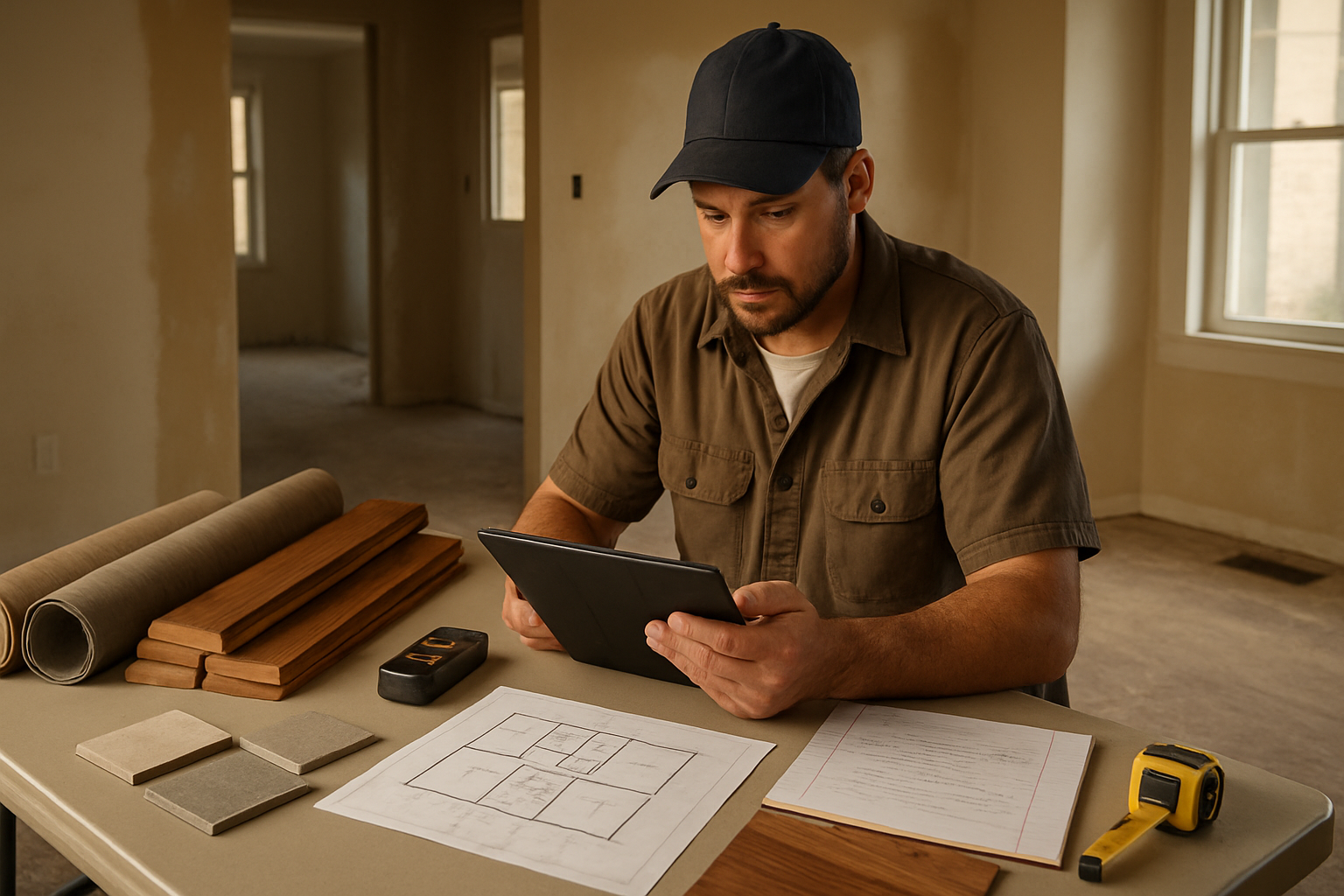
AI estimating software for flooring contractors in Texas should help a flooring contractor turn scattered job information into a reviewed bid draft faster. For Texas flooring companies, especially crews bidding around Houston, that means pulling together photos, measurements, floor plans, product notes, moisture concerns, demo scope, transitions, baseboards, and follow-up into one clear estimate before the lead goes cold.
The point is not to let software guess the final number. A useful AI estimating workflow helps organize the job, flag missing scope, draft line items, and prepare a professional estimate that the contractor still reviews, edits, and approves before sending.
What AI estimating software for flooring contractors in Texas should do
Flooring estimates look simple until the job details start stacking up. Square footage matters, but so do waste, pattern direction, slab condition, stairs, closets, furniture moving, tear-out, haul-off, trim, transitions, leveling, moisture testing, and product-specific installation requirements.
Good AI estimating software for flooring contractors in Texas should help answer five practical questions:
1. What rooms, surfaces, and materials are included in the bid?
2. What inputs came from job photos, blueprints, videos, voice notes, or field measurements?
3. What prep work, demo, disposal, trims, transitions, and exclusions need to be named?
4. What assumptions could change the price if they are wrong?
5. What follow-up should happen after the estimate is sent?
That matters in Texas because flooring contractors often work across slab-on-grade homes, remodels after water damage, rental turns, production-builder punch work, and larger plan-based projects. Houston adds its own practical estimating pressure: humidity, storm exposure, flood history in some neighborhoods, and concrete slabs that may need moisture checks or prep before the chosen flooring system is safe to install.
Why this matters for Houston flooring bids
Houston flooring contractors may bid LVP, laminate, engineered hardwood, tile, carpet, and stair work in the same week. The estimate needs to move fast, but it also has to make the scope clear enough that the customer knows what is included.
A typical Houston remodel bid might include living room LVP, tile removal in a kitchen, quarter-round replacement, transitions at bedrooms, furniture moving, floor leveling allowance, and a note that hidden slab cracks or moisture issues are not included until verified. A plan-based multifamily or light commercial bid may require room-by-room takeoff, finish schedule review, tile patterns, base, thresholds, stair nosings, attic stock, phasing, and unit alternates.
When those details sit in text messages, photos, supplier quotes, PDF plans, and the owner’s memory, the estimate slows down. Worse, important assumptions get buried. AI can help by turning those inputs into a structured draft that is easier for the contractor to review.
For broader AI estimating examples, Estimado keeps a trade-focused library on the Estimado AI blog, including national guidance for AI estimating software for flooring contractors.
A practical AI-assisted flooring estimating workflow
Use AI like a junior estimator at your right hand. It should organize and draft, not replace your field judgment.
1. Capture the flooring job clearly
Before you leave the site, collect the inputs your estimator would ask for:
- Photos of every room, doorway, closet, stair, transition, damaged area, and existing floor type
- Close-up photos of slab cracks, moisture signs, uneven areas, thresholds, baseboards, and tight cuts
- Measurements or plan sheets, with room names matched to photos
- Voice note explaining the customer’s requested material, demo scope, prep concerns, timeline, and any exclusions
- Notes on furniture moving, appliance moving, toilet removal, trim, disposal, attic stock, and product selection
A 60-second voice note can prevent a 20-minute office call later. Say what is included, what is excluded, and what still needs confirmation.
2. Convert inputs into a draft scope
The draft estimate should separate the work into useful sections: area takeoff, material allowance or selected product, demo, prep, installation, trim, transitions, stairs, disposal, exclusions, and optional add-ons.
For photo-based jobs, the draft should identify where assumptions came from. For blueprint jobs, it should tie quantities back to sheets, finish schedules, room tags, and alternates. If a plan set conflicts with a finish schedule, the estimate should raise a clarification instead of burying the issue.
3. Make flooring assumptions visible
Flooring bids get expensive when hidden assumptions become field surprises. A cleaner AI-assisted estimate should help you surface items like:
- Waste factor by material type and layout complexity
- Floor leveling or patching as included, excluded, or allowance-based
- Moisture testing and mitigation responsibility
- Baseboard removal, reinstall, replacement, caulking, and paint touch-up scope
- Furniture, appliance, toilet, and door-cutting scope
- Transitions, reducers, stair nosings, t-moldings, and thresholds
- Haul-off and disposal of existing flooring
The contractor should still confirm the quantities, labor rate, markup, and risk. The win is that the review starts from a complete draft instead of a blank screen.
4. Review the Texas-specific risk points
Before sending a Texas flooring estimate, run a short risk check:
- Is the home slab-on-grade, pier-and-beam, or wood subfloor?
- Is there any sign of prior water intrusion, swelling, cupping, or moisture staining?
- Does the selected product require acclimation, moisture limits, or specific underlayment?
- Are Houston humidity and jobsite conditions relevant to storage or installation timing?
- Are local permit, building owner, HOA, or commercial site rules involved?
- Are patching, painting, baseboard work, and door trimming clearly included or excluded?
Simple flooring replacement may not need the same permitting discussion as structural or MEP work, but commercial sites, multifamily buildings, flood-related repairs, and larger remodels often have rules worth checking before the bid is treated as final.
5. Follow up with the actual scope
Many flooring contractors lose momentum after the estimate goes out. A useful follow-up should reference the job, not sound generic.
Instead of “just checking in,” your follow-up can remind the customer that the estimate includes demo, prep allowance, transitions, quarter-round, and haul-off, while moisture mitigation or subfloor repair will be confirmed if needed. That type of follow-up answers objections and makes the bid easier to approve.
Common flooring estimating mistakes AI can help reduce
AI will not save a weak process, but it can make common gaps easier to catch:
- Bidding square footage without naming prep, trim, transitions, and disposal
- Forgetting stairs, closets, pantries, angled rooms, or doorways
- Treating tile, LVP, laminate, hardwood, and carpet waste the same way
- Not documenting moisture concerns on slabs
- Leaving floor leveling vague until after tear-out
- Forgetting furniture, appliances, toilets, doors, or baseboard scope
- Sending a fast estimate with no structured follow-up plan
The goal is not to make every flooring estimate longer. The goal is to make the bid clear enough that the contractor, crew, and customer all understand the same scope.
How Estimado AI helps flooring contractors estimate faster
Estimado AI is built for contractors who want a faster way to turn project inputs into professional estimate drafts. For flooring contractors, that means using job photos, blueprints, videos, text notes, and voice notes to help create a structured scope, material list, labor breakdown, and customer-ready estimate for review.
The contractor remains the senior estimator. Estimado can help organize the information, draft the estimate, and surface missing details, but you still review the quantities, adjust labor and pricing, confirm assumptions, and approve before anything goes to the customer.
That contractor-in-the-loop model matters for flooring because two jobs with the same square footage can have very different demo, prep, moisture, trim, stair, access, and customer-expectation risks.
If your flooring company wants to quote faster without giving up control of scope, pricing, or customer approval, join the Estimado AI waitlist and see how AI-assisted estimating can fit your bid process.
Next step
Start by standardizing the inputs: photos, measurements, product selection, voice note, assumptions, estimate review, and follow-up. Once that process is consistent, AI estimating software can help a Texas flooring company move faster without giving up control of the final bid.
FAQ
Can AI estimating software price flooring jobs without contractor review?
It should not. Flooring estimates need contractor judgment on prep, moisture, labor, product requirements, waste, exclusions, and jobsite risk. AI can draft and organize the estimate, but the contractor should review and approve before sending.
What inputs help AI create a better flooring estimate?
Photos of each room, transitions, existing flooring, slab or subfloor issues, stairs, closets, and trim are useful. Measurements, floor plans, product choices, and a short voice note describing the requested scope make the draft stronger.
Is AI estimating useful for both residential and commercial flooring?
Yes. Photo-based workflows can help with residential remodels and replacement jobs, while plan-based workflows can help with finish schedules, room tags, alternates, and larger commercial or multifamily takeoffs.
How should Texas flooring contractors handle moisture assumptions?
Do not hide them. If moisture testing, mitigation, acclimation, or slab repair could affect the job, the estimate should state what is included, what is excluded, and what needs confirmation before final approval.
What is the main benefit for a small flooring company?
The main benefit is reducing the delay between site visit and quote. A cleaner workflow helps turn field information into a reviewed draft faster and gives the contractor a better system for follow-up.