AI Estimating Software for Plumbing Contractors in Florida: Faster Jacksonville Bids From Photos, Plans, and Voice Notes
A practical Florida plumbing estimating workflow for turning job photos, blueprints, videos, and voice notes into faster, cleaner bids without losing contractor control.

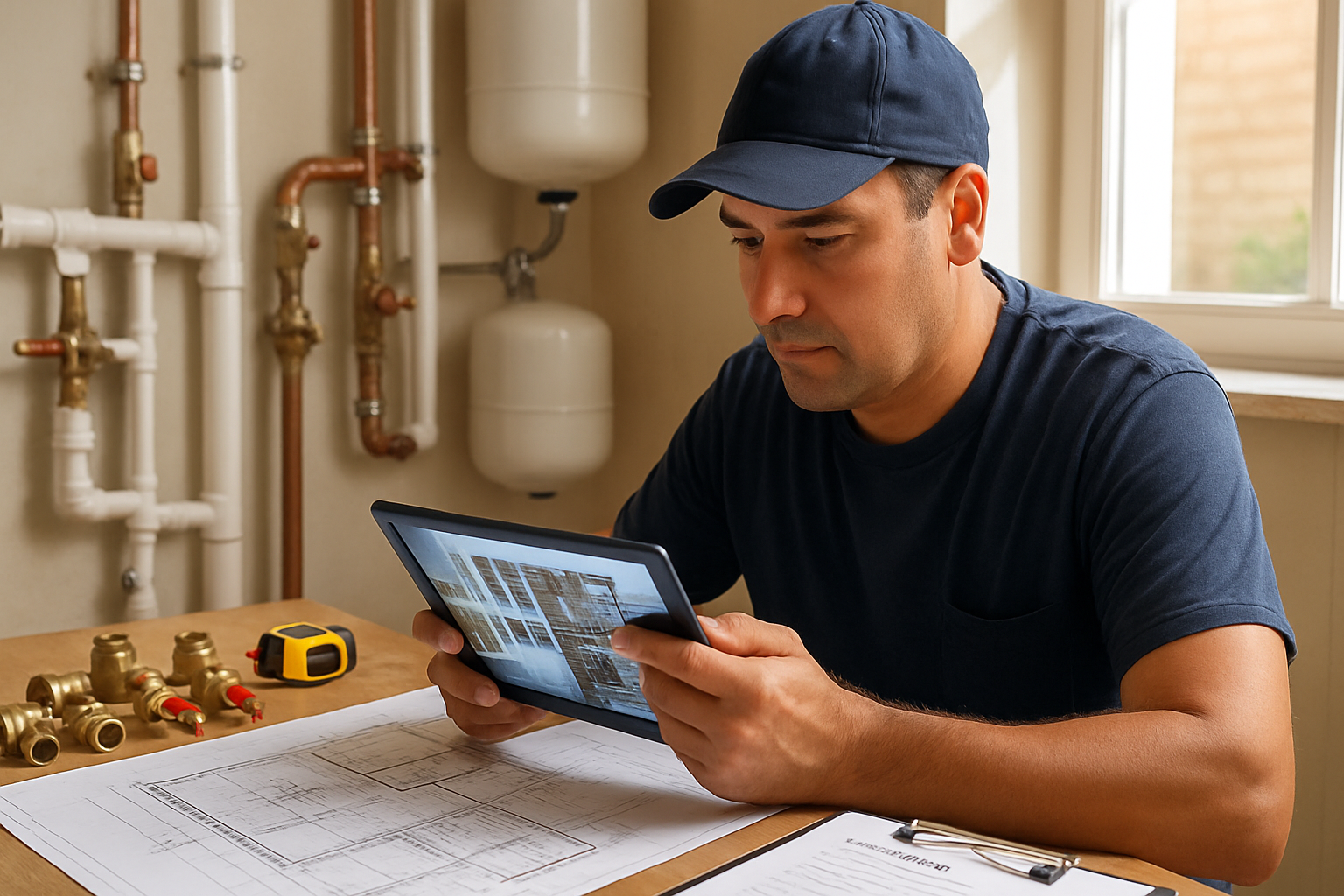
AI estimating software for plumbing contractors in Florida should help you turn messy job information into a clear bid faster: photos from a service call, fixture schedules from a plan set, a voice note from the field, and the scope you know needs to be included. For Jacksonville plumbing contractors, the goal is not to let software guess the final number. The goal is to organize the scope, catch missing items, build a cleaner estimate, and follow up before the job goes cold.
Plumbing bids can get expensive fast when a line item is missed. A fixture swap may also need shutoff coordination, drywall access, disposal, valve replacement, inspection time, or a return trip. A remodel rough-in may look simple until the drawings, existing slab, wall access, and owner exclusions are checked together. A good AI-assisted estimating workflow keeps those details visible before you send the proposal.
Direct answer: what AI estimating software for plumbing contractors in Florida should do
AI estimating software for plumbing contractors in Florida should help with four jobs:
1. Read the job inputs: photos, videos, voice notes, customer messages, blueprints, fixture schedules, and field measurements.
2. Build a draft scope: what is included, what is excluded, what is unknown, and what needs a clarification before pricing.
3. Organize quantities and line items: fixtures, valves, pipe runs, fittings, demolition, patch-back notes, testing, inspections, mobilization, and cleanup.
4. Prepare a professional estimate: a customer-ready bid that the contractor reviews, edits, approves, and sends.
The contractor still owns the final call. Plumbing work has too many site-specific risks for blind automation. The value is speed, consistency, and fewer missed scope details.
Why this matters for Florida plumbing contractors
Florida plumbing contractors deal with a mix of fast remodel work, older homes, slab-on-grade construction, coastal conditions, condo rules, and code/inspection requirements that can change the real cost of a job. In Jacksonville, a plumbing estimate might start with a simple kitchen remodel lead and turn into a scope that touches water lines, drain relocation, venting, disposal, fixture setting, and coordination with cabinets, tile, and drywall.
That is where rushed estimating hurts. If your estimate only says “move sink plumbing” but does not spell out access, patching responsibility, shutoff coordination, fixture owner-supplied assumptions, permit assumptions, or what happens if hidden damage is found, you can win the job and still lose money.
A tighter estimating process helps you:
- respond to leads while the customer is still comparing options;
- make the scope easier for homeowners, GCs, and property managers to understand;
- separate included work from allowances and exclusions;
- avoid giving away extra trips, testing, disposal, or fixture setting labor;
- create a follow-up trail after the estimate is sent.
For more contractor-focused estimating topics, Estimado keeps building practical articles on the Estimado AI blog. The bigger idea is simple: estimating should be a repeatable workflow, not a scramble at the end of the day.
A practical Jacksonville plumbing bid workflow
Use this workflow when a plumbing lead comes in from a remodeler, homeowner, property manager, or general contractor.
1. Capture the job without trusting memory
Before pricing, collect the raw inputs in one place:
- jobsite address and access notes;
- photos of fixtures, walls, floors, attic/crawl/slab conditions when visible;
- short video walkthrough if the job has multiple rooms;
- voice note from the field explaining what the customer wants;
- plan sheets, fixture schedule, finish schedule, and any plumbing notes;
- measurement notes, fixture counts, and owner-supplied material assumptions.
The most useful field note is not fancy. It might be: “Jacksonville bath remodel, replace tub with shower, move valve to opposite wall, homeowner buying trim kit, we provide rough valve, tile contractor opens wall, need quote for rough-in and final set.” That note gives estimating software a real starting point.
2. Break the job into plumbing scope areas
Do not estimate one lump called “plumbing.” Break the scope into buckets:
- demolition and access: what must be opened, removed, capped, or protected;
- water supply: hot/cold lines, valves, shutoffs, manifolds, insulation where needed;
- drain, waste, and vent: trap arms, vent tie-ins, slope concerns, cleanouts;
- fixtures and trim: install, connect, test, and note owner-supplied items;
- equipment: water heater, recirculation, pumps, filtration, or specialty items;
- testing and inspection: pressure test, leak test, permit/inspection assumptions;
- coordination: drywall, tile, cabinets, concrete cutting, patching, disposal, return trips.
This structure keeps your bid readable and helps prevent accidental free work.
3. Flag Florida and Jacksonville-specific risk before pricing
Not every job needs a long risk section, but Florida plumbing work often has conditions worth checking:
- Is the work in a condo, HOA, historic district, or commercial space with access restrictions?
- Will slab cutting, trenching, or concrete patch-back be required?
- Are fixtures owner-supplied, and who is responsible if parts are missing or incompatible?
- Does the bid assume normal working hours, or does the building require after-hours water shutoff?
- Are permit fees, inspections, and reinspection time included or excluded?
- Is corrosion, previous unpermitted work, or hidden damage possible once walls open?
Put these notes in the estimate before the customer signs. That protects the relationship because the customer can see what is included and what would trigger a change order.
4. Build the estimate line by line
For a plumbing estimate, the line items should be clear enough that another plumber in your company can understand the job without hearing the sales call. A rough bid might include:
- mobilization and site protection;
- isolate water and cap/remove existing fixture;
- rough-in hot/cold supply lines to new location;
- modify drain and vent as required by existing conditions;
- install contractor-provided valve or customer-provided fixture trim;
- pressure/leak testing;
- final fixture setting after finishes;
- cleanup and disposal;
- exclusions for drywall, tile, cabinets, concrete patching, or finish repair if handled by others.
Labor still needs contractor judgment. AI can help draft the line items and organize quantities, but the plumber should review crew hours, trip count, difficulty, warranty risk, and local pricing before sending.
5. Send a clean proposal and follow up
A professional plumbing proposal should answer three questions quickly:
1. What exactly are you doing?
2. What is not included?
3. What needs to happen next?
After sending, follow up with a short message that references the scope, not just the price: “I sent the estimate for the Jacksonville bath plumbing rough-in and final set. It includes the valve relocation, drain adjustment, testing, and final trim set. Drywall/tile patching is excluded based on our conversation. Want me to hold an opening for next week?”
That kind of follow-up is easier when the estimate was structured well in the first place.
Common mistakes in plumbing estimates
Leaving access and patching vague. If the wall, slab, cabinet, or ceiling needs to be opened, say who is opening it and who is putting it back.
Forgetting return trips. Many plumbing remodel jobs require rough-in, inspection, and final trim. If you price it like one visit, your margin can disappear.
Not separating owner-supplied fixtures. Customer-provided fixtures can create missing-part and compatibility problems. Spell out assumptions.
Ignoring permit and inspection assumptions. If permit fees, inspection scheduling, or reinspection time are excluded, say so plainly.
Bidding from photos without asking for missing measurements. Photos are useful, but they do not always show pipe size, wall access, fixture specs, or slab conditions. Good software should surface missing information instead of pretending it knows.
How Estimado AI helps plumbing contractors move faster
Estimado AI is being built as AI estimating software for contractors who want estimating help without handing over control of the final bid. A plumbing contractor can bring photos, blueprints, videos, voice notes, or written scope notes into the workflow. Estimado helps organize the project, draft the scope, identify missing information, and prepare estimate structure for contractor review.
The important part is review. Estimado is not meant to replace the plumber’s judgment or send proposals automatically. Think of it like a junior estimator that gets the first draft organized so the contractor can make the final pricing decisions faster.
If you want a faster way to turn plumbing photos, plans, videos, and voice notes into estimates you still control, join the Estimado AI waitlist.
Next step
If your plumbing estimates are getting stuck in texts, photos, plan sheets, and late-night notes, start by standardizing the workflow above. The faster you can turn job information into a clean scope, the faster you can respond, protect your margin, and move the customer to a decision.
FAQ
What is the best AI estimating software for plumbing contractors in Florida?
The best fit is software that understands contractor estimating inputs: photos, plans, videos, field notes, scope assumptions, material lists, labor review, and customer-ready proposals. For Florida plumbing contractors, it should also make it easy to document permits, inspections, access limits, owner-supplied fixtures, and exclusions.
Can AI estimate plumbing jobs from photos?
AI can help interpret job photos and organize an estimate draft, but photos are not enough for every plumbing bid. Measurements, fixture specs, pipe access, slab conditions, and code or inspection requirements may still need contractor review or clarification.
Should plumbing contractors use AI to set labor prices?
AI can help structure the bid, but labor pricing should stay under contractor control. Crew speed, job difficulty, drive time, inspection requirements, risk, and warranty exposure vary too much for a blind labor guess.
How can Jacksonville plumbers make estimates faster?
Use a repeatable workflow: collect photos and notes, divide the scope into water supply, drain/vent, fixtures, access, testing, and exclusions, then send a clear proposal with follow-up. AI estimating software can speed up the draft and reduce blank-page estimating time.
Does Estimado AI send estimates automatically?
No. Estimado is designed around contractor review. The system helps create the estimate draft, but the contractor reviews, edits, approves, and sends the final proposal.