AI Estimating Software for Electrical Contractors in California: Faster Los Angeles Bids From Plans, Photos, and Scope Notes
A practical estimating workflow for California electrical contractors who need faster, cleaner Los Angeles bids from plans, job photos, and scope notes.

AI estimating software for electrical contractors in California is useful when it helps an electrical contractor move from messy job intake to a reviewed, customer-ready bid without skipping the field judgment that protects margin. In California, that means more than counting devices. A solid estimate has to account for plans, photos, panel schedules, Title 24-related details, local permit expectations, access constraints, and the unknowns that can turn a simple bid into a callback.
For a Los Angeles electrical contractor, the goal is not to let software guess the final number. The goal is to organize the scope faster, catch missing information earlier, and send a clearer proposal while the lead is still warm.
AI estimating software for electrical contractors in California: the practical takeaway
The best use of AI estimating software for electrical contractors in California is as a structured estimating assistant. It should help read project inputs, pull out likely scope items, organize quantities, draft clarifying questions, and prepare a proposal framework. The contractor still reviews the scope, adjusts labor, confirms material choices, and approves the bid before it goes to the customer.
For electrical work, this matters because small omissions are expensive. Missing a subpanel relocation, exterior trenching, fixture control requirement, attic access condition, fire-rated penetration, or inspection note can erase profit. AI-assisted estimating is strongest when it keeps those items visible instead of burying them in a rushed spreadsheet.
Why California electrical bids need tighter scope control
California electrical contractors deal with a mix of older housing stock, remodels with incomplete drawings, dense urban access, local inspection requirements, energy-code details, and customers who expect fast responses. In Los Angeles, a contractor may be bidding a service panel upgrade in an older bungalow in the morning, a tenant improvement with reflected ceiling plans after lunch, and an EV charger request from job photos at the end of the day.
Those jobs may use the same trade skill, but they do not estimate the same way. A panel upgrade estimate needs service size, existing panel condition, grounding and bonding review, meter/main details, utility coordination, patching responsibility, and permit assumptions. A lighting retrofit needs fixture counts, switching, controls, ceiling access, lift needs, disposal, and after-hours work if the space is occupied. A remodel rough-in needs circuit counts, device locations, wall conditions, slab or attic access, and who owns drywall repair.
That is why state-specific content should not be a city-name swap. California context affects the estimate. Contractors should cite and verify the current rule set with the authority having jurisdiction, but the estimating workflow should make space for licensing, permit, inspection, energy-code, and utility coordination assumptions before pricing.
A faster Los Angeles electrical estimating workflow
Use this workflow when a lead comes in from blueprints, photos, videos, or a voice note.
1. Capture the job intent before counting anything
Start with what the customer actually wants: service upgrade, EV charger, lighting retrofit, kitchen remodel rough-in, panel cleanup, troubleshooting, tenant improvement, or new circuit installation. Then separate must-have scope from nice-to-have alternates.
A short voice note can help: “Customer wants a 200A panel upgrade, existing panel is on the side yard, stucco wall, overhead service, wants EV charger in detached garage, photos show limited attic access.” That context keeps the estimate from becoming a blind material list.
2. Build the scope by electrical system
Organize the estimate into buckets:
- Service, meter, panel, grounding, and bonding
- Branch circuits, conduit, wire, boxes, breakers, and device counts
- Lighting, switching, dimming, occupancy sensors, and controls
- Low-voltage or specialty systems when included
- Exterior, garage, trenching, weatherproofing, and site work
- Demo, patching exclusions, cleanup, haul-off, permits, and inspections
This structure makes it easier to spot missing items. If the customer asks for recessed lights and the estimate has fixtures but no switch legs, patching assumptions, ceiling access, or dimmer/control decision, the scope is not ready.
3. Turn plans and photos into a review checklist
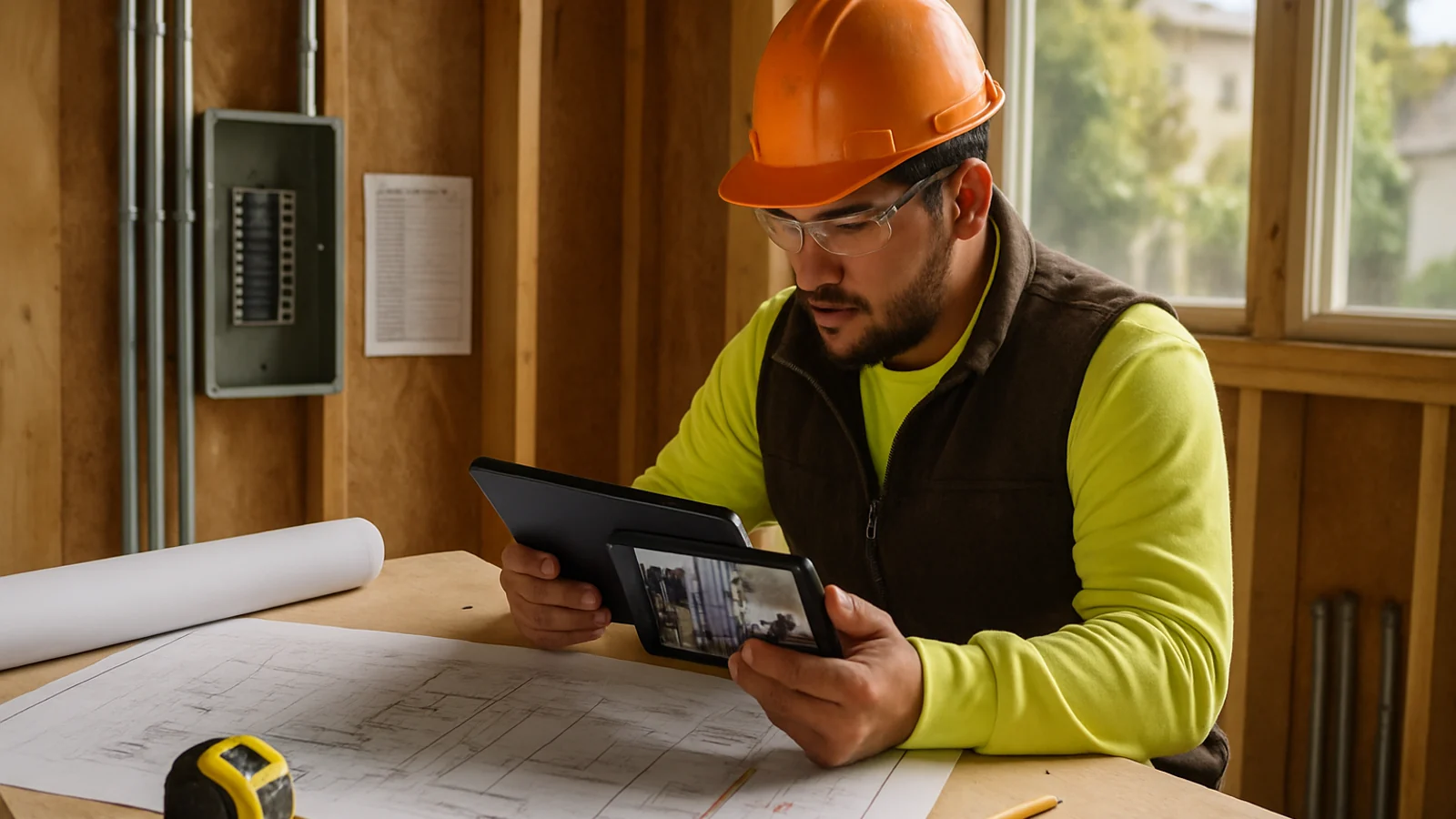
Blueprints can show device locations and panel schedules, but photos show the real jobsite. For Los Angeles remodels, photos often reveal stucco, crawlspace limits, old panels, tight parking, finished surfaces, hillside access, or occupied-space constraints that do not appear on a plan.
Before pricing, ask:
- Are panel schedules, reflected ceiling plans, and electrical notes included?
- Are fixture models, device finishes, and owner-furnished materials clear?
- Is the work permitted, and who is responsible for permit fees?
- Are inspections, utility shutdowns, or service coordination required?
- Is access normal, or will the crew need ladders, lifts, trenching, or after-hours work?
- What surfaces are opened, and who patches them back?
4. Price labor separately from the AI draft
AI can help organize the scope, but labor judgment belongs to the contractor. Electrical labor depends on crew speed, ceiling access, wall type, service condition, inspection friction, occupied-space protection, and how your company prices risk.
A clean estimate should let you review labor by line item, not just apply one blended number. A simple EV charger in an open garage is not the same labor problem as a charger fed from an old panel across a finished house.
5. Send a professional proposal and follow up fast
Speed matters, but clarity matters more. A good electrical proposal should state what is included, what is excluded, what assumptions were made, what information could change the price, and what the next step is. After sending, follow up with a specific question instead of a generic “checking in.”
Example: “I included the panel upgrade, grounding/bonding, permit allowance, and EV charger circuit based on the photos. If the utility requires relocation or the wall needs extra repair, I listed that as a separate condition. Do you want the base scope or the EV charger alternate included first?”
Common mistakes that hurt electrical contractor bids
- Bidding from device counts only and missing access, controls, patching, inspections, or utility coordination.
- Treating California permit and energy-code assumptions as an afterthought instead of a proposal line.
- Letting photos sit in a text thread instead of tying them to scope notes.
- Sending a lump-sum number with unclear exclusions, then negotiating from a weak position.
- Forgetting follow-up until the customer has already talked to another contractor.
- Using AI output as a final estimate instead of a draft that needs contractor review.
How Estimado AI helps electrical contractors
Estimado AI is built as AI estimating software for contractors, not a magic price button. For electrical contractors, the useful workflow is simple: bring in plans, job photos, videos, or voice notes; turn them into an organized estimate draft; review the scope, labor, materials, exclusions, and questions; then approve before anything is sent.
That keeps the contractor in control while reducing office back-and-forth. It also creates a more repeatable process for intake, estimating, proposal writing, and follow-up. For more estimating workflow articles, browse the Estimado contractor estimating blog.
If your electrical team wants a cleaner path from job intake to reviewed proposal, join the Estimado AI waitlist.
Next step
If your current process depends on scattered texts, handwritten notes, and late-night spreadsheet work, start by tightening intake. For the next electrical bid, collect the plans, photos, voice notes, exclusions, permit assumptions, and follow-up question in one place before pricing. That one habit makes any estimating tool more valuable.
FAQ
Is AI estimating software accurate enough for California electrical work?
It can be helpful when used as a draft and checklist tool, but the contractor still needs to review scope, labor, material assumptions, local requirements, and jobsite risk. Electrical estimating has too many field variables for blind approval.
Can AI help estimate electrical jobs from photos?
Yes, photos can help identify existing panels, access conditions, finished surfaces, conduit paths, garage or exterior conditions, and visible constraints. Photos should be paired with measurements, notes, and contractor review before pricing.
What should electrical contractors include in a California proposal?
Include the scope of work, key materials, labor assumptions, permit and inspection assumptions, exclusions, alternates, payment terms, and what conditions can change the price. Local requirements should be verified with the authority having jurisdiction.
Should Los Angeles electrical contractors use AI for follow-up?
AI can help draft clear follow-up messages tied to the actual proposal, but the contractor should keep the conversation personal. The best follow-up clarifies a decision, alternate, missing detail, or next step.