AI Estimating Software for Landscaping Contractors in Florida: Faster Jacksonville Bids From Photos, Site Notes, and Follow-Up
A practical Florida landscaping estimating workflow for contractors who need cleaner Jacksonville bids from site photos, walkthrough notes, scopes, and follow-up tasks.

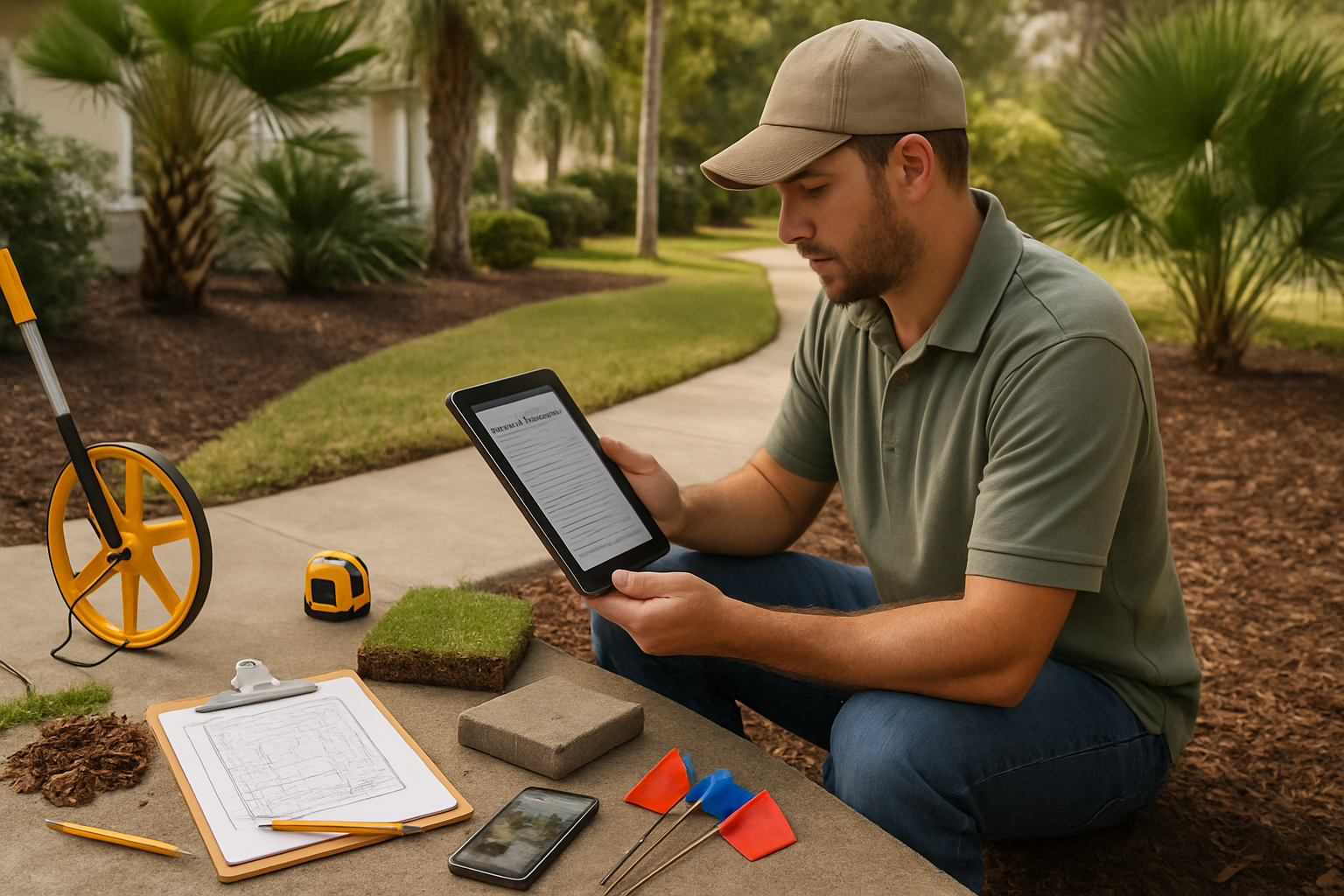
AI estimating software for landscaping contractors in Florida should help a landscaping contractor turn messy job intake into a reviewed bid draft faster. For Jacksonville landscaping work, that usually means organizing site photos, a short walkthrough video, voice notes, rough measurements, plant or sod choices, mulch or rock quantities, irrigation questions, drainage concerns, access notes, cleanup, and follow-up tasks before the proposal goes out.
The point is not to let software guess your price. The useful workflow is to capture the job clearly, break the scope into reviewable pieces, flag missing details, draft a clean proposal, and keep the contractor in control of quantities, labor, markup, exclusions, and final approval.
The short answer for Florida landscaping contractors
AI estimating software for landscaping contractors in Florida is most useful when it turns photos, sketches, plans, videos, and voice notes into a structured landscaping estimate draft. That draft should separate site prep, demolition or removal, grading, soil amendments, sod, plants, mulch or rock, edging, pavers, irrigation adjustments, drainage work, hauling, mobilization, optional maintenance, and exclusions.
For a Jacksonville contractor, one lead may be a simple front-bed refresh with mulch and shrubs. Another may be a full backyard upgrade with sod replacement, drainage correction, paver edging, irrigation repairs, palm trimming coordination, and HOA requirements. Those jobs should not be priced from the same one-line guess. The estimate needs enough structure to protect margin and explain exactly what the customer is buying.
Why landscaping bids are different in Florida
Florida landscaping has real state-specific estimating context. Heat, humidity, sandy soils, heavy rain, irrigation performance, stormwater flow, coastal exposure, and fast plant growth can all affect scope. A bid that looks easy in photos may require additional grading, drainage stone, soil amendment, irrigation head adjustments, or plant substitutions once the site is reviewed.
Jacksonville also has a wide mix of job types: older neighborhoods with tight side yards and mature trees, new subdivisions with HOA standards, rental properties that need fast refreshes, and waterfront or low-lying lots where drainage matters. The estimate should identify whether the work is a one-time install, a cleanup, a renovation, a hardscape add-on, or a maintenance package, because the labor, equipment, disposal, and follow-up are different.
Contractors should verify current local requirements for tree work, irrigation, drainage, right-of-way work, HOA approvals, and any permitting issue that may apply to the specific job. The estimate should not pretend those items are confirmed if they still need customer or local review.
A practical AI-assisted landscaping estimate workflow
Use AI estimating software as a bid-prep system, not as a replacement for your estimator. A strong Florida landscaping workflow looks like this:
1. Capture the site while you are there. Take wide photos of the front, back, side yards, access path, driveway, existing beds, turf condition, irrigation heads, slopes, low spots, trees, hardscape edges, and disposal area. Add close-ups of problem areas.
2. Record a quick voice note. Say what the customer wants, what you observed, what is included, what is not included, and what you still need to confirm. Voice notes are useful because they capture details you may forget by the time you are back in the truck.
3. Pair visuals with measurements. Use a measuring wheel, plan sheet, sketch, or takeoff to connect photos to actual quantities. Estimate bed square footage, sod area, linear feet of edging, paver or walkway areas, plant counts, mulch depth, rock depth, haul-off volume, and equipment access.
4. Break the job into scope buckets. Separate mobilization, site protection, removals, grading, soil prep, sod, plant material, mulch or stone, edging, irrigation adjustment, drainage, hardscape tie-ins, cleanup, and disposal. This makes the estimate easier to review and easier to explain.
5. Flag assumptions before pricing. If irrigation coverage, hidden roots, buried utilities, drainage, plant availability, wet soil, stump removal, HOA approval, or customer selections are unclear, write that into the scope. AI can help surface the questions, but the contractor decides how to price or exclude them.
6. Send a clean bid and follow up. Landscaping customers often compare options: base cleanup, upgraded plant package, sod replacement, hardscape add-on, or maintenance plan. A structured proposal makes alternates easier to present and makes follow-up more specific.
What to include in a Florida landscaping estimate
A landscaping bid should be clear enough that the customer understands what is included and the contractor can defend the number. Include:
- Work areas included in the price, such as front beds, backyard, side yard, driveway edge, or entry area
- Existing material removal, demo, trimming, haul-off, and disposal scope
- Site prep, grading, soil amendment, compaction, weed barrier, and cleanup assumptions
- Plant names or approved substitutions, sizes, counts, spacing, and warranty limits if offered
- Sod type, square footage, ground preparation, watering expectations, and excluded repairs
- Mulch, rock, soil, edging, pavers, drainage material, irrigation parts, and delivery assumptions
- Equipment access, tight-yard constraints, pool screens, fences, gates, slopes, and parking notes
- Irrigation, drainage, tree, utility, HOA, permit, or right-of-way items to verify when relevant
- Payment terms, schedule assumptions, alternates, exclusions, and follow-up date
This does not mean every proposal should be long. It means the estimate should spell out the details that change cost, responsibility, and schedule.
Common landscaping bidding mistakes
The first mistake is pricing only the visible finish material. Mulch, plants, sod, or pavers are easy to notice, but margin often disappears in prep, removal, grading, disposal, access, irrigation fixes, delivery, and cleanup.
The second mistake is not separating install work from maintenance work. A cleanup, landscape renovation, sod install, irrigation repair, and monthly service package have different labor patterns and different customer expectations.
The third mistake is vague plant and material assumptions. If the customer thinks they are getting larger plants, a specific palm, deeper rock, more sod prep, or a different paver edge than you priced, the job can turn into a dispute.
The fourth mistake is sending the bid with no follow-up plan. A Jacksonville homeowner, property manager, or builder may need help choosing between a basic refresh and an upgraded scope. A structured estimate gives you a reason to follow up with options instead of asking, “Did you see the quote?”
How Estimado AI helps
Estimado AI is built around how contractors collect job information in the real world: photos, blueprints, short videos, voice notes, and written scope details. It helps turn those inputs into an organized estimate draft with scope, quantities, materials, assumptions, and customer-ready proposal language for contractor review.
For landscaping contractors, the value is a cleaner path from site visit to bid draft. Photos can be connected with measurements, plant and material scopes can be broken into line items, missing information can surface earlier, and follow-up tasks can be easier to track. The contractor remains the senior estimator, reviews every important number, edits the scope, and approves before anything is sent.
If your landscaping company wants a faster way to turn site photos, sketches, voice notes, material lists, and follow-up tasks into reviewed bid drafts, join the Estimado AI waitlist.
For related Florida estimating workflows, compare the Estimado guides for siding contractors in Florida, painting contractors in Florida, and flooring contractors in Florida. You can also browse more practical guides on the Estimado blog.
FAQ
Can AI estimating software create a landscaping estimate from photos?
AI-assisted estimating can help organize visible landscaping scope from photos, especially when the contractor also provides measurements, sketches, material choices, and voice notes. If quantities, drainage, irrigation, access, or plant selections are unclear, the software should flag those items for contractor review instead of guessing.
What should Florida landscaping contractors include in a bid?
A Florida landscaping bid should define the work areas, removals, site prep, grading, plants, sod, mulch or rock, edging, irrigation adjustments, drainage assumptions, access, disposal, exclusions, customer responsibilities, and schedule assumptions.
Is landscaping estimating software useful for experienced contractors?
Yes, when it reduces admin and catches missing-scope questions instead of pretending to know the trade better than the contractor. Experienced landscapers can use AI to organize intake, draft line items, write clearer assumptions, and follow up faster.
Does Estimado AI send landscaping estimates automatically?
No. Estimado is designed to help prepare structured estimate drafts. The contractor reviews scope, quantities, labor, materials, exclusions, markup, and final pricing before deciding when to send the proposal.