AI Estimating Software for Insulation Contractors in Arizona: Faster Phoenix Attic, Wall, and Air-Sealing Bids
Arizona insulation contractors can use AI-assisted estimating workflows to turn Phoenix job photos, plans, and voice notes into cleaner attic, wall, and air-sealing bids.


AI estimating software for insulation contractors in Arizona is useful when it helps a real contractor move from messy job inputs to a clean scope, material list, labor review, and follow-up plan. For Phoenix insulation crews, that usually means organizing attic photos, plan notes, existing insulation depth, air-sealing details, access issues, and customer requests before the bid goes out.
The goal is not to let software guess the job for you. The goal is to get a better first draft faster, then let the insulation contractor make the final call.
AI estimating software for insulation contractors in Arizona: the key takeaway
AI estimating software for insulation contractors in Arizona should help with four things: collecting job information, turning that information into a structured scope, separating materials and labor decisions, and making the proposal easier to review before sending.
A good insulation bid is not just “add insulation in attic.” It should say what area is included, what is excluded, what existing material is being worked around or removed, what air sealing is included, whether ventilation baffles or access work are part of the job, what product is being proposed, and what assumptions the contractor is making.
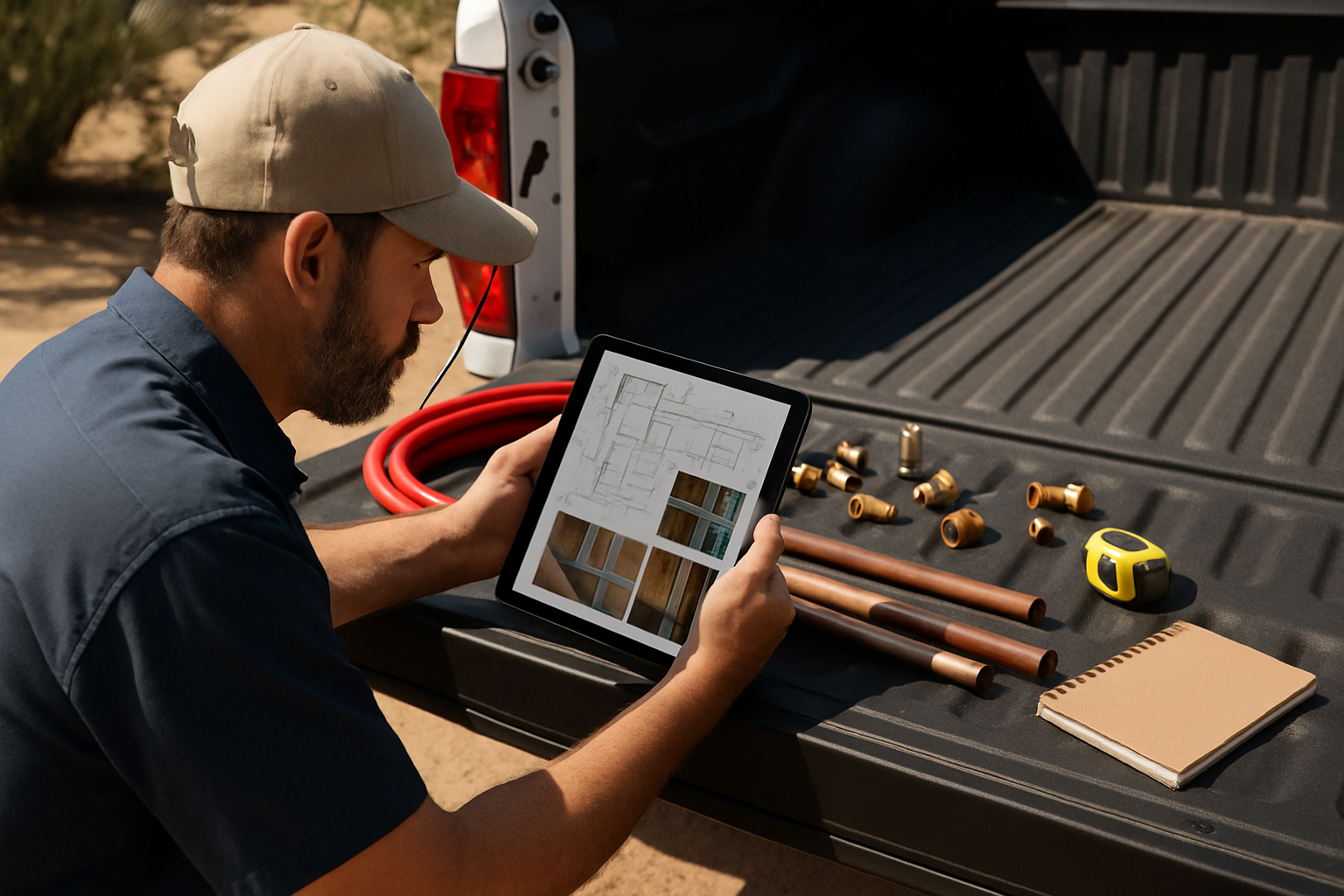
That is where AI can help. It can read a homeowner’s message, summarize a voice note from the walkthrough, organize photos, pull dimensions from plans when available, and create a draft estimate packet. The contractor still needs to verify conditions, price labor, and approve the final number.
Why Arizona insulation bids need tighter scope
Arizona insulation work is not a generic estimating problem. Phoenix-area jobs often involve intense attic conditions, older homes with uneven existing insulation, additions with mixed assemblies, flat or low-slope roof conditions, garages, block walls, and customers who care about comfort but may not understand what is actually included in the bid.
That creates scope risk. If one contractor includes attic air sealing, access prep, protection, and cleanup while another only prices blown-in insulation, the two bids may look similar to the customer but represent very different work.
A cleaner estimate protects both sides. The homeowner or GC sees what they are buying. The contractor avoids eating time on missed details. And the office has a better follow-up conversation because the proposal has line items instead of vague promises.
For Arizona work, contractors should also be careful about jurisdiction-specific requirements. Building and energy-code requirements can change by city, project type, and whether the job is repair, retrofit, remodel, or new construction. The estimate should leave room for permit, code, or inspection requirements when they apply, and the contractor should verify those details with the relevant local authority.
A practical AI-assisted workflow for insulation estimates
Here is a practical workflow an insulation contractor can use with or without Estimado AI.
1. Capture the job inputs in one place
Start with the basics: address, contact, job type, attic or wall areas, existing insulation type and depth, access notes, photos, plan sheets, customer concerns, and any promised follow-up date. If the salesperson records a voice note after the walkthrough, include it with the job file instead of leaving it buried on a phone.
2. Separate the assemblies before pricing
Break the job into assemblies before thinking about the final number. Common insulation estimate sections include attic blow-in, batt insulation, spray foam, wall cavities, garage walls or ceilings, rim joists, removal, air sealing, ventilation accessories, attic access work, protection, and cleanup.
This keeps the bid from becoming one vague lump sum. It also makes it easier to review what changed when the customer asks for an alternate.
3. Identify the unknowns early
Unknowns cost money when they are found after the proposal is accepted. Call out missing access, blocked attic areas, damaged ductwork, knob-and-tube concerns in older properties, moisture issues, pest contamination, recessed light conditions, and any area that could not be inspected.
AI can help create this risk list from photos and field notes, but the contractor should decide which items belong in the estimate, which need a clarification, and which should be excluded.
4. Build quantities from the best available source
For plan-based work, use drawings and schedules when available. For retrofit work, use measured areas, attic sketches, photos, and field notes. Do not let software invent dimensions when the job file does not support them. If a measurement is missing, the right answer is to ask for it or mark it as an assumption.
5. Price materials and labor separately
Material quantity and labor production are different decisions. Insulation contractors know that attic access, working conditions, prep, removal, cleanup, crew availability, and drive time can change labor even when square footage looks simple. Keep labor review in the contractor’s hands.
6. Turn the estimate into a proposal the customer can understand
A professional bid should explain the work plainly. It should include included areas, product assumptions, exclusions, alternates, payment terms, and how long the proposal is valid. If the job includes a GC or property manager, it should be organized enough for them to compare scope without calling three times.
7. Follow up with context, not just “checking in”
After sending the bid, the follow-up should reference the customer’s real concern. For example: “I included attic air sealing and baffles in the proposal because the photos showed low insulation near the eaves.” That is stronger than a generic follow-up and helps the customer understand the value of your scope.
Scope items insulation contractors should not bury
These are the line items and notes that often deserve their own place in an Arizona insulation estimate:
- Existing insulation depth and condition
- Areas included and areas excluded
- Attic access limitations
- Removal or vacuum-out work
- Air sealing around penetrations
- Baffles, ventilation clearances, and blocked eaves
- Recessed light or fixture conditions
- Garage wall, garage ceiling, or bonus-room areas
- Product type and target performance requirement when known
- Protection, cleanup, and disposal
- Permit, inspection, or code-related assumptions when applicable
- Alternate pricing for upgrades or add-on areas
Separating these items makes the bid easier to defend. It also helps your team avoid selling one scope and installing another.
Common mistakes with insulation estimating software
The biggest mistake is treating software like a replacement for job judgment. Even the best draft needs contractor review.
Another mistake is pricing too early. If the scope is unclear, a fast number is just a fast risk. Make the system organize the job first, then review quantities, product assumptions, and labor.
A third mistake is burying exclusions. If attic access is limited, old material is not being removed, ventilation work is not included, or damaged areas are excluded, say it plainly. Clear exclusions are not negative; they are part of a professional bid.
Finally, do not send the same generic proposal for every Arizona insulation lead. A Phoenix attic retrofit, a Scottsdale remodel, a Mesa garage ceiling, and a new-construction package can all require different scope notes even if the trade is the same.
How Estimado AI helps
Estimado AI is built as AI estimating software for contractors who want faster estimate drafts without giving up control of the final bid. For insulation contractors, that means using blueprints, job photos, videos, and voice notes to help create a structured scope, material breakdown, labor review points, and customer-ready proposal draft.
Estimado is not a fully autonomous estimator. The contractor remains the senior estimator. The system helps organize the work, surface missing details, and draft the estimate packet; the contractor reviews, edits, prices, approves, and sends.
For a Phoenix insulation company trying to respond faster, that can mean fewer job details lost between the field and the office, cleaner proposals, and better follow-up after the bid is sent.
Next step
If your crew is ready to turn job notes into cleaner insulation estimate drafts without adding another office person, join the Estimado AI waitlist. You can also read more contractor estimating guides on the Estimado blog.
FAQ
Can AI estimating software replace an insulation contractor’s judgment?
No. AI can help organize photos, plans, measurements, scope notes, materials, and follow-up steps, but the contractor still reviews the job, confirms assumptions, sets labor, and approves the final estimate before sending it.
What should Arizona insulation contractors include in a better estimate?
A better estimate should separate attic, wall, garage, crawlspace, removal, air sealing, access, ventilation, protection, cleanup, and exclusions. It should also state the target R-value or performance requirement when known and call out assumptions that need owner or GC confirmation.
Is Phoenix insulation estimating different from other markets?
The estimating method is similar, but Phoenix jobs often put more pressure on attic conditions, radiant heat, ventilation details, access limitations, and building-envelope performance. Contractors should still verify current code and permit requirements for the specific city or jurisdiction.
What inputs make an AI-assisted insulation estimate more accurate?
Clear photos, plan sheets, room or attic measurements, existing insulation depth, access notes, desired scope, product type, special conditions, and voice notes from the walkthrough all help produce a cleaner draft for contractor review.